
We earn a commission if you buy through these links. Learn more
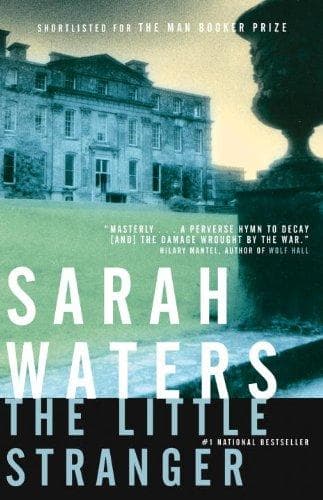
The Little Stranger
by Sarah Waters, Jaime Zulaika Goicoechea
Guide by the Books of the Day editors · Updated · How we write our guides
A patient, unsettling post-war ghost story in which a country doctor's measured voice makes you doubt what he sees, and what the reader should believe.
What Creators Say About The Little Stranger
2 creators reviewed The Little Stranger on YouTube between 2018 and 2021, with 2.8M views between them. Their opinions are their own; we picked these reviews, we didn't write them.
What It's About
The Little Stranger is a ghost story set in Warwickshire in the years after the Second World War. Its narrator is Dr Faraday, a country doctor whose days are spent among farm families and cottages. As a boy he once visited Hundreds Hall, the grand house where his mother worked, and he has never quite forgotten it. Years later he is called back to treat a maid, and he finds a family clinging to a home that no longer suits them: a widowed mother, two adult children, and a house that is damp, cracking and short of money.
Waters builds the book slowly. Most of its pages are ordinary: rounds, dinners, awkward conversations, and the small humiliations of a family who must sell their belongings and pretend otherwise. The dread arrives in pieces, such as an odd noise, a fresh mark, or a sense that something is in the house. Because everything is filtered through Faraday's eyes, the reader is never sure what to trust, and that uncertainty drives the book.
Reading it feels like sitting in a cold room with a careful, slightly unreliable companion. The prose is observant and controlled, and the pace is deliberate, so the rewards come from attention to class, memory and the way a house can come to feel like a person. Expect a long build and a restrained tone rather than jump scares.
Read this if you…
- enjoy slow, atmospheric novels where mood builds gradually
- are interested in class and the decline of old English families after the war
- like narrators whose reliability you have to work out for yourself
Skip it if you…
- want a fast-paced horror novel with frequent scares
- need every mystery explained and tied off by the last page
Key Ideas
- 1
The house as a failing body
Hundreds Hall is more than a setting. Its peeling walls, failing plumbing and shrinking staff mirror the family's slide, and the house gradually takes on a personality of its own. Waters uses decay as a way to make the reader feel the weight of a place that has outlived its purpose.
- 2
Class anxiety in a changing England
The Ayres cling to status that the postwar world is quietly removing, while Faraday, a doctor from a modest background, is admitted to their world but never fully belongs. The book examines envy, deference and resentment without lecturing, letting the social tensions surface through small gestures and remarks.
- 3
A narrator who cannot be fully trusted
Faraday presents himself as rational, decent and scientific, yet his feelings about the family, and about Caroline in particular, colour everything he reports. Part of the book's pleasure is noticing where his account bends, and asking what he is leaving out.
- 4
A ghost story that stays a question
The supernatural elements are real enough to unsettle, but Waters keeps their meaning open. Readers are asked to weigh grief, guilt, illness and social pressure against the possibility of a genuine haunting, and the book rewards those who find the ambiguity more interesting than a clean answer.
Limitations
The pace is slow, and many readers find the first half a long wait for the supernatural to take hold. Faraday's voice is intentionally guarded and can feel frustrating, especially if you want more access to the other characters' inner lives. Some readers find the ending divisive because it refuses to settle the central question cleanly. The book is also very much a novel of its time and milieu, so its portrait of postwar gentry and rural life reflects a particular, carefully observed viewpoint rather than a broad social panorama.
Questions Readers Ask
- Is The Little Stranger scary?
- It is more unsettling than frightening. Most of the tension comes from atmosphere, small disturbances and the reader's uncertainty about what is happening. There are a few moments of real unease, but readers who want sustained, visceral horror may find it restrained. It suits people who enjoy dread that builds slowly rather than shocks.
- How does it compare to Sarah Waters's other novels?
- Her earlier books such as Fingersmith and Affinity are more plot-driven and wear their Victorian settings and twists openly. The Little Stranger is quieter and more psychological, set in a later period, and it leans harder on the narrator's perspective. If you liked her sense of place and social detail, you will likely enjoy it, though it asks for more patience.
- Who is this book best for?
- It suits readers who enjoy literary gothic fiction, historical novels about class, and ghost stories that leave room for doubt. It is a good choice if you liked The Haunting of Hill House for its unreliable atmosphere. It is less suited to readers who need a clear supernatural explanation or a brisk plot.
- Published
- 2009
- ISBN
- 9780143144809
- Difficulty
- intermediate
- Category
- Fiction
Book details and cover from Google Books.
Ready to read The Little Stranger?
Get your copy on Amazon, or listen to it on Audible. We earn a commission if you buy through these links.