
We earn a commission if you buy through these links. Learn more
The librarian of Auschwitz
by Salva Rubio, Antonio Iturbe
Guide by the Books of the Day editors · Updated · How we write our guides
A short, accessible novel built around Dita Kraus, a teenager who helped keep a secret library alive in Auschwitz, making it a strong first Holocaust story for young readers.
What Creators Say About The librarian of Auschwitz
1 creator reviewed The librarian of Auschwitz on YouTube in 2022, with 974 views between them. Their opinions are their own; we picked these reviews, we didn't write them.
What It's About
The Librarian of Auschwitz follows Dita, a Czech teenager who arrives at Auschwitz-Birkenau in 1944 after being moved from Terezín with her father. Her job, as she comes to understand it, is to protect something the camp is built to erase: books. In a barracks housing children, she and others hide volumes that the adults and young people around them rely on for lessons, comfort and a sense of who they are.
Iturbe writes in a plain, direct style that suits the subject. He does not dwell on gore; the horror comes through in what is taken, what is hidden and what is risked. The narrative alternates between the camp's daily cruelty and small acts of defiance, and the constant threat of discovery keeps the pages moving. Readers should expect a story built around a real person and a historically grounded setting, with fiction filling in dialogue and inner life.
Reading it feels like sitting with a survivor's account that has been shaped for a younger audience. It is emotionally heavy but never wallowing, and its focus on the value of stories gives it a hopeful undertone without making light of what happened. It works best as a first book about the Holocaust for teenagers, or as a companion to more demanding memoir.
Read this if you…
- want an accessible entry point into Holocaust history for teenagers
- are interested in stories about reading and books under extreme pressure
- want a hopeful, human story that does not look away from the darkness
Skip it if you…
- need a detailed historical account, since this is a novel built around a real person
- want a graphic or unflinching depiction of the camps, or complex writing aimed at adults
Key Ideas
- 1
Books as quiet resistance
In the camp, a book is dangerous to own and precious to share. The novel shows how reading gave people a way to keep their identities, memories and hope intact when nearly everything else was stripped away. Its lesson is not that books saved lives directly, but that keeping them mattered to the people who depended on them.
- 2
A teenager's courage under constant threat
Dita is not a hero in a grand, fearless sense. She is a young person making careful, frightened choices, balancing loyalty to her father, fear of discovery and a wish to help others. The book keeps the risk concrete, so her courage reads as effort rather than invincibility.
- 3
Memory as a way of surviving
Through the library and the lessons it supports, the story shows how remembering and sharing stories helped children hold on to who they were. Learning and reciting became forms of self-defense against an institution designed to reduce people to numbers.
- 4
Holocaust history for a young audience
The book introduces the realities of the Terezín transports and camp routine without graphic detail. It is designed to be approachable, so it sets the historical frame clearly and leaves deeper exploration to readers, parents and teachers.
Limitations
Because the novel is written for younger readers, it simplifies some of the camp's brutality and political context, so readers wanting a fuller picture of Auschwitz will need other sources. Some critics find the dialogue and inner thoughts fictionalized and at times sentimental, and the real-person framing can blur the line between documented fact and invention. Treat it as a story inspired by real events rather than a verified record.
Questions Readers Ask
- Is The Librarian of Auschwitz based on a true story?
- It is inspired by Dita Kraus, a real woman who as a teenager helped look after a secret collection of books in the camp's children's barracks. The author drew on her recollections, but the dialogue, scenes and many details are invented. It is best read as historical fiction grounded in a real life. Readers who want the documented account should look for Kraus's own memoir.
- What age is it suitable for?
- It is generally marketed to teenagers and older children, though many adults read it too. The language is plain and it avoids graphic violence, but the subject is still very heavy. Parents may want to read it alongside a younger child and be ready to talk through what happened.
- How does it compare to Night by Elie Wiesel?
- Night is a shorter, more searing first-person memoir with much harsher material. The Librarian is gentler, more plot driven and aimed at younger readers. Read Night for the rawest account of the camps, and this as a way in, especially if the subject is new to you.
- Published
- 2017
- ISBN
- 9781529104776
- Difficulty
- beginner
- Category
- Children's Books
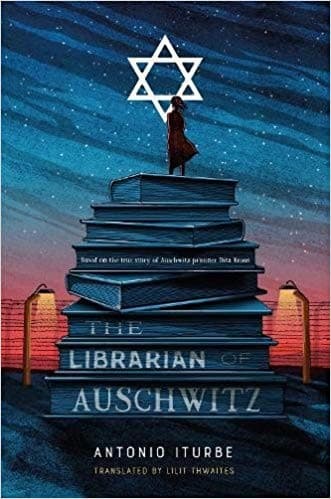
Book details and cover from Google Books.
Ready to read The librarian of Auschwitz?
Get your copy on Amazon, or listen to it on Audible. We earn a commission if you buy through these links.