
We earn a commission if you buy through these links. Learn more
The keeping quilt
A short, tender picture book that turns a patchwork quilt into a living record of family history, made for sharing aloud with children and adults alike.
What It's About
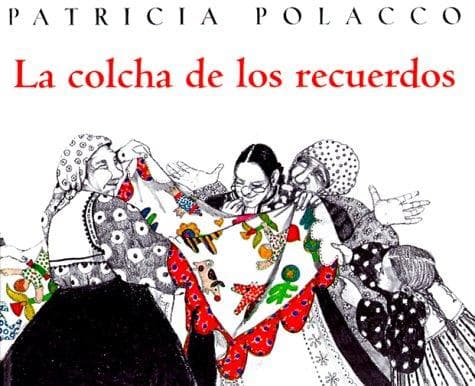
The Keeping Quilt is a picture book by Patricia Polacco about a family quilt and the people who have slept under it, eaten beside it, and celebrated with it across several generations. The story moves between a child's present and the earlier life of the family, which began with a woman who left her homeland with little more than the clothes she wore. The quilt itself is the center: it is stitched from fabric scraps, including pieces of familiar clothing, and it stays in everyday use rather than being locked away.
Polacco's approach is gentle and conversational, closer to someone telling a story at a kitchen table than delivering a lesson. The text is spare, and the illustrations do much of the work, showing the passing years through clothing, rooms, and faces. Adults reading aloud will notice how the book handles loss and memory without melodrama, and children tend to respond to its focus on a physical object they can picture touching and using.
The experience is brief and warm rather than complex. It works best as a read-aloud, and it rewards a second reading, when you notice details in the pictures you missed the first time. It will not give you a sweeping historical narrative or a deep portrait of any single character. What it offers instead is a tight, emotionally clear look at how an ordinary object can hold a family's history.
Read this if you…
- want a short picture book to share with a child about family history
- like stories where an everyday object carries generations of memory
- enjoy quietly sentimental books that are honest about change and loss
Skip it if you…
- need a plot with conflict, suspense, or a fast pace
- are looking for detailed historical context about immigration or the specific traditions involved
Key Ideas
- 1
An heirloom made from ordinary cloth
The quilt is built from scraps of everyday clothing rather than fine fabric, which makes the point that family value lies in use and memory, not in price. Polacco keeps returning to the quilt at moments of celebration and grief, so it becomes a kind of running record. Readers watch the object gather meaning as it moves from one occasion to the next.
- 2
Memory carried through objects
The book treats a physical object as a carrier of stories. The child learns the family's past by handling the quilt and hearing about it, not from a formal history lesson. Each use reminds the people in the room who came before them, which is the book's quiet central argument.
- 3
Leaving a homeland with what you can carry
The family's origins in another country frame the whole story. Polacco keeps the emotional weight on what was brought along and what was made from it, rather than turning hardship into spectacle. The result feels personal and restrained instead of historical in the textbook sense.
- 4
Pictures that carry the passage of time
Because the text is short, the paintings do much of the storytelling. They show the years changing across generations, so a reader can follow the family's growth and loss without the words spelling everything out. Looking closely at the images is part of the reading experience.
- 5
Loss handled with restraint
Grief appears in the book, but it is treated gently and in a way that suits young readers. Polacco acknowledges that people die and that memory has to do the work of keeping them close, without dwelling on pain. Many families find this a useful opening for conversation.
Limitations
The book is short and sentimental, and some readers find it too gentle or idealized, with emotional moments that arrive quickly. It does not go deeply into the specifics of the family's origins or the historical circumstances of their move, so readers who want that context will need other sources. Its focus on one family's traditions and Eastern European roots means it is a personal story rather than a broad survey, and its style reflects the picture books of its era.
Questions Readers Ask
- Is The Keeping Quilt only for children?
- It is written for young children, usually read aloud to ages four to eight, but adults often find it moving. The themes of inheritance and memory tend to land more strongly for readers who have family objects of their own. It is short enough to read in one sitting, so there is little cost in trying it yourself before sharing it.
- Is it a good book for talking with kids about family history?
- Yes. It gives a simple, concrete way to open conversations about ancestors and objects with sentimental value. A useful follow-up is to ask the child which object in your home holds a story, then let them tell you about it. The book's plain language makes that kind of exchange easy.
- Does the book still hold up today?
- Its style is traditional and its setting is the past, but the core idea about passing down objects and memories is timeless. Most readers today still find the emotional logic clear and affecting. The main thing that dates it is the era of its illustrations and its straightforward, unhurried pace.
- Published
- 1988
- ISBN
- 9781442490703
- Difficulty
- beginner
- Category
- Fiction
Book details and cover from Google Books.
Ready to read The keeping quilt?
Get your copy on Amazon, or listen to it on Audible. We earn a commission if you buy through these links.