
We earn a commission if you buy through these links. Learn more
The keeper of lost things
by Ruth Hogan
A gentle, funny and often moving novel about a man who collects other people's lost objects and believes each one holds a story worth returning, ideal for readers who like warm fiction with a bittersweet edge.
What It's About
The Keeper of Lost Things is a warm, gently melancholy novel built around a simple obsession: a man who gathers the small objects people drop, misplace, or leave behind, and who believes each one deserves to find its owner. The book follows what happens after that habit outlives its collector. Items, notes and an unfinished mission are passed to people who barely understood what he was doing, and they must decide what to do with a life's worth of other people's lost things.
Hogan moves between several characters and timelines, letting older threads surface through the objects themselves. The structure is loose and conversational rather than tightly plotted, so the pleasure comes from watching connections build slowly. The prose is accessible and often funny, with a fondness for odd, decent people who have been a little lost themselves.
Reading it feels more like a cosy, slightly wistful afternoon than a page-turning thriller. It asks for patience with coincidence and sentiment, and it rewards readers who enjoy novels where ordinary objects carry emotional weight. Expect a few tears alongside the smiles, and a steady sense that the book cares more about human kindness than about solving puzzles.
Read this if you…
- enjoy warm, character-driven fiction with a bittersweet tone
- like novels where everyday objects carry quiet emotional weight
- want a book that is comforting without being saccharine
Skip it if you…
- need fast plotting, twists or a strong sense of suspense
- find coincidence and sentimentality hard to accept in a novel
Key Ideas
- 1
Objects as carriers of forgotten lives
A dropped glove or a cracked trinket becomes a doorway into someone's past. Hogan uses ordinary belongings to suggest how much of a life is held in small, easily overlooked things, and how a single item can prompt a stranger to remember who they were.
- 2
Grief and the search for meaning
Many characters are shaped by loss that they have not fully faced. The novel explores how grief can make people withdraw or stall, and how small acts of attention, such as returning an object, can slowly reopen a life that had narrowed.
- 3
Connection between strangers
The book is interested in how people who would never normally meet become linked through a shared task. Its characters are brought together by curiosity and obligation, and the friendships that form feel earned rather than forced, even when the plotting leans on chance.
- 4
Unfinished work and inheritance
What we leave behind is not only money or property but also obligations, half-finished projects and other people's expectations. The novel asks what it means to inherit someone else's mission, and whether carrying it out can change the heirs as much as the dead.
Limitations
Critics often note that the book leans heavily on sentiment and fortunate coincidence, and that some characters are drawn more as types than as fully rounded people. The multiple threads can feel scattered at times, and the emotional beats are signposted clearly, which may feel predictable to experienced readers. It is not a deep exploration of grief or of the practical realities of finding owners for lost property. Readers wanting something more challenging or formally daring will likely find it gentle to the point of being safe.
Questions Readers Ask
- Is The Keeper of Lost Things a sad book?
- It has sad moments and a melancholy undercurrent, since it deals with death and loss. However, the overall tone is warm and often funny, and the emotional arc tends toward hope rather than despair. Most readers finish it feeling uplifted, though they may need a moment with a box of tissues along the way.
- Is it a good choice for a book club?
- Yes, it works well for groups. Its many characters, its focus on objects and its clear emotional themes give plenty to discuss, from whether the coincidences are believable to what each reader would keep if they were the collector. Its length and accessible style also make it easy for members to finish.
- Published
- 2017
- ISBN
- 9781470855291
- Difficulty
- beginner
- Category
- Fiction
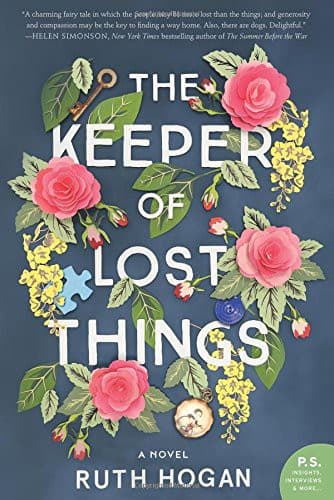
Book details and cover from Google Books.
Ready to read The keeper of lost things?
Get your copy on Amazon, or listen to it on Audible. We earn a commission if you buy through these links.