
We earn a commission if you buy through these links. Learn more
The Jungle
Guide by the Books of the Day editors · Updated · How we write our guides
Sinclair's 1906 muckraking novel turns a Chicago meatpacking town into a furious, unforgettable portrait of immigrant labor, and it still hits hard today.
What Creators Say About The Jungle
2 creators reviewed The Jungle on YouTube between 2018 and 2020, with 200.8K views between them. Their opinions are their own; we picked these reviews, we didn't write them.
What It's About
The Jungle follows Jurgis Rudkus, a Lithuanian immigrant who arrives in Chicago full of hope for himself and his newly married family. He soon finds that the city's stockyards and packing plants grind down anyone without money, connections, or the English to argue their case. The novel tracks his family through unsafe factory floors, rigged housing, brutal seasonal layoffs, and the everyday cruelty of a system built to extract maximum output from desperate workers.
Sinclair writes in a close, emotional third person that favors accumulation over subtlety. Scenes pile up: the slaughterhouse floor, the fraudulent real estate deals, the courtrooms and saloons where the poor are preyed upon. The prose can be melodramatic, and the story is openly designed to persuade. Yet the sensory detail is vivid, and the sense of a family being crushed one misfortune at a time is hard to shake. Reading it feels less like following a plot and more like being walked through a machine that never stops.
The book was written as an argument for socialism, and that purpose shapes everything from its characters to its final movement. Sinclair wanted to expose working conditions, and the public outcry over the food industry helped spur federal food and meat inspection laws. Whether you read it as a historical document, a piece of social argument, or a gripping story of endurance, it rewards attention to how Sinclair builds anger out of ordinary, specific detail.
Read this if you…
- want a vivid, angry picture of early twentieth-century industrial life
- are interested in how novels helped drive real political and regulatory change
- enjoy social fiction that keeps you emotionally invested in a family's survival
Skip it if you…
- need restrained, subtle prose or a tightly controlled plot
- want a neutral history of the meatpacking industry rather than a partisan novel
Key Ideas
- 1
Capitalism as a machine that consumes people
Sinclair presents the packing industry as a system where workers are treated as interchangeable parts. Injury, illness, and death are simply costs to be absorbed. The novel's power comes from showing how individual choices and efforts are steadily overwhelmed by structures that reward cutting corners and punish anyone who slows down.
- 2
Immigrant vulnerability and exploitation
The family's struggle depends heavily on language barriers, unfamiliar laws, and a lack of trusted institutions. Landlords, employers, and lawyers exploit these gaps, and the book makes clear that newcomers often had no one to appeal to. Sinclair treats this vulnerability as the product of economic arrangements rather than personal failure.
- 3
Food safety and the hidden costs of cheap meat
Much of the novel's notoriety rests on its descriptions of how meat was processed and sold. Sinclair wanted readers to care about the workers, but many people fixated on the sanitation horrors. The book connects consumer comfort with the conditions of the people who produce what we eat, a link that remains relevant.
- 4
Literature as deliberate political persuasion
Sinclair openly wrote to advance a cause, and the narrative is shaped to lead toward a political conclusion. The result is a novel where character and plot sometimes serve the argument. Readers interested in how fiction can be used as an instrument of reform will find the book's design as interesting as its content.
Limitations
The novel's politics are overt, and the final stretch turns into lengthy socialist argument that many modern readers find preachy. Characters can feel more like symbols than fully developed people, and the prose often leans on repetition and heavy emotion. Sinclair also focuses almost entirely on the Chicago packing district and its immigrant workers, so broader labor movements and the lives of other communities receive little attention. Some of its factual claims were disputed by contemporaries, and it should be read as advocacy as much as reportage.
Questions Readers Ask
- Is The Jungle still worth reading today?
- Yes, especially if you care about labor conditions, immigration, or the history of food regulation. Its sentimentality and polemics may feel dated, but the depiction of exploitation and precarious work still resonates. Read it knowing it was written to persuade, and it becomes a powerful historical document as well as a forceful story.
- How does it compare to modern labor novels?
- Compared with more recent social novels, The Jungle is blunter and less formally experimental, with a heavier hand on moral message. Contemporary writers often build more ambiguity into their characters. If you like the emotional force of Sinclair but want subtler craft, you might look for newer novels that handle similar material with more restraint.
- Published
- 1791
- ISBN
- 9798782660192
- Difficulty
- intermediate
- Category
- Fiction
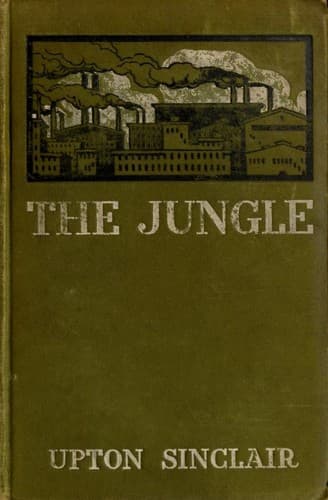
Book details and cover from Google Books.
Ready to read The Jungle?
Get your copy on Amazon, or listen to it on Audible. We earn a commission if you buy through these links.