
We earn a commission if you buy through these links. Learn more
The Jewel
by Amy Ewing
Guide by the Books of the Day editors · Updated · How we write our guides
A sharp, fast YA dystopia about a girl sold into a gilded city of the elite, where her body is valued for what it can produce. Worth it for pace and atmosphere, though the world is thinly drawn.
What Creators Say About The Jewel
2 creators reviewed The Jewel on YouTube in 2014, with 9.5K views between them. Their opinions are their own; we picked these reviews, we didn't write them.
What It's About
The Jewel is the first book in Amy Ewing's YA trilogy, published in 2014. Its heroine, Violet Lasting, comes from the poorer provinces and is taken to the luxurious city at the center of the realm, where wealthy households buy young women as surrogates. The premise is grim, but the book keeps its focus on Violet's day-to-day experience: the rules she must follow, the people who control her, and the small ways she tries to hold onto herself.
The writing is brisk and first-person, with a strong interest in texture. Ewing spends a lot of time on the glittering surfaces of the city, the clothes, the gems, and the rituals of the upper class, and the contrast with the cruelty underneath gives the story its tension. Chapters tend to end on a hook, so the book moves quickly, and it is easy to read in a few sittings.
Reading it feels like a mix of a gothic court drama and a survival story. It is less interested in complicated political systems than in how power feels from the bottom up, especially to someone whose value is measured in what her body can do. Expect a romance thread and a strong emotional throughline rather than dense worldbuilding or subtle prose.
Read this if you…
- enjoy fast-paced YA dystopia with a strong first-person voice
- like gilded, court-style settings and the tension of life among the powerful
- want a story that takes reproductive exploitation seriously without being a slow literary novel
Skip it if you…
- want intricate political worldbuilding or a detailed magic system
- find romance-driven plots and love triangles tiresome
Key Ideas
- 1
Bodies treated as property
The central unease of the book comes from seeing a girl's body treated as a resource to be purchased, scheduled, and monitored. Ewing makes that ownership feel routine to the people doing it, which is more disturbing than any single act of cruelty. The reader is asked to notice how normal the system has become for the characters inside it.
- 2
Luxury as a cage
The city is lavish, with beautiful clothing, jewels, and grand architecture, but nearly every pleasure comes with a leash attached. Ewing uses this contrast to show how comfort can make captivity harder to name. Violet's shifting feelings about her surroundings drive much of the story's emotional energy.
- 3
Class and the outsider's view
Because Violet arrives as a provincial outsider, she sees the elite's customs and hypocrisies with fresh eyes. Her perspective lets the book satirize privilege without turning it into a lecture. The divide between those who are born into power and those who are bought into it runs through every scene.
- 4
Survival through small resistance
Violet's defiance is mostly quiet: she bends rules, keeps secrets, and looks for allies where she can. The book is more interested in these small acts of self-preservation than in grand rebellion. This makes her a relatable protagonist, though some readers may want bolder action sooner.
Limitations
Critics often note that the worldbuilding is thin. The rules of the society, the reasons for the surrogacy system, and the wider political landscape are sketched rather than explained, which can leave readers with questions. The romance is central to the plot and can feel formulaic, and some of the characterization leans on familiar YA types. The book also borrows heavily from better-known dystopias about women's bodies, so readers who know those works may find fewer surprises than they hoped.
Questions Readers Ask
- Is The Jewel suitable for adult readers or only teens?
- It is marketed as YA and reads that way, with a fast pace, a teen protagonist, and a romance-driven plot. Adults who enjoy YA dystopia will find it a quick, engaging read. Readers looking for the depth of adult dystopian fiction may find it lighter than they want, though the subject matter is dark and sometimes disturbing.
- How does The Jewel compare to The Handmaid's Tale?
- Both examine women's bodies as controlled reproductive resources, but they differ in approach. The Handmaid's Tale is a literary, slow-burning novel focused on ideology and interior reflection. The Jewel is a plot-driven YA story with a more conventional romance and adventure structure. If you want the serious, reflective version of this theme, Atwood is the better choice.
- Published
- 2014
- ISBN
- 9781406347494
- Difficulty
- beginner
- Category
- Fantasy
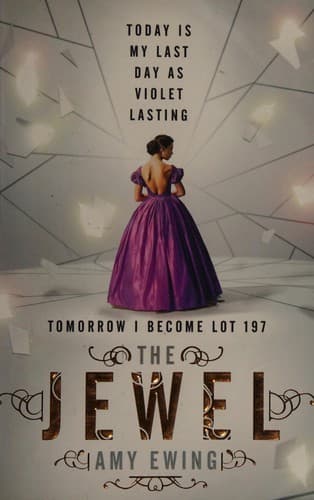
Book details and cover from Google Books.
Ready to read The Jewel?
Get your copy on Amazon, or listen to it on Audible. We earn a commission if you buy through these links.