
We earn a commission if you buy through these links. Learn more
The inner circle
Guide by the Books of the Day editors · Updated · How we write our guides
A fast Washington puzzle-thriller that turns archive research into a chase, best suited to readers who want momentum and clues more than deep character work.
What Creators Say About The inner circle
1 creator reviewed The inner circle on YouTube in 2024, with 99 views between them. Their opinions are their own; we picked these reviews, we didn't write them.
What It's About
The Inner Circle (2011) is a Washington thriller by Brad Meltzer built around Beecher White, an archivist who works with presidential papers at the Library of Congress. The story opens with a small, odd find in the archive that looks like a clerical puzzle and quickly becomes something larger. Following it pulls him out of the reading room and into the city's older history, where a group of people have strong reasons to keep the past buried.
Meltzer's approach is quick and plot-driven. Chapters tend to be short and often end on a hook, and the book keeps supplying clues, complications, and reversals at a steady clip. The setting does real work. Meltzer leans on the texture of archives, monuments, and government institutions, and he treats history as something people argue over, guard, and sometimes distort. The emphasis is on the mechanics of the mystery rather than on interior life, so expect plot first and character second.
Reading it feels like a long evening with a brisk, slightly theatrical storyteller. The audiobook, narrated by Scott Brick, suits the momentum well. Some readers will find the coincidences and the rapid escalation convenient, while others will enjoy how easily Meltzer moves from research to chase. It is the kind of book people often finish in a few sittings, and it works best when you are willing to let the momentum carry you past the occasional stretch of implausibility.
Read this if you…
- want a fast Washington thriller with a historical hook
- enjoy puzzle-driven plots built on clues and reveals
- like mysteries set among archives, monuments, and government institutions
Skip it if you…
- need rich characters and emotional depth more than plot momentum
- are bothered by coincidences and improbable escalation in thrillers
Key Ideas
- 1
History as something people fight over
The novel treats the historical record as contested ground. Documents, archives, and official accounts are not neutral, and the book keeps asking who controls the story of the nation and who benefits when parts of it stay hidden. This gives the thriller an argument underneath the action.
- 2
The archive as a place of power
Beecher's work is quiet and procedural, yet it places him near information that others would kill to control. Meltzer uses the reading room and the stacks to show how access, custody, and institutional trust can matter as much as weapons. Readers who enjoy seeing an ordinary profession become dangerous will find this appealing.
- 3
Secret societies and the pull of belonging
Groups that promise insider knowledge and loyalty recur throughout the story. The book examines why people join such circles, what they give up to stay in them, and how easily private oaths can override public duty. The theme gives the mystery its emotional tension.
- 4
Puzzle structure over psychological depth
The storytelling is built around clues, codes, and reveals that pull the reader forward. Characters are functional and sometimes thin, which keeps the pace high but limits how deeply anyone is explored. The distinctive pleasure is the sense of assembling a picture one piece at a time.
Limitations
The book is often criticized for its thin characterization. Beecher and the supporting cast serve the plot more than they develop as people, so emotional stakes can feel secondhand. Some readers also find the pacing relentless to the point of artifice, with convenient connections and sudden turns that stretch plausibility. Its portrait of history is shaped for entertainment rather than scholarship, so readers looking for an accurate account of the past should treat it as fiction with a historical backdrop.
Questions Readers Ask
- Is The Inner Circle a good first Brad Meltzer book?
- It is a reasonable entry point if you want a straightforward thriller with a Washington setting. The prose is accessible and the plot is easy to follow. If you prefer more developed characters, you may find it lighter than some of his other work, so it helps to set expectations for a plot-first read.
- Does the book require knowledge of American history?
- No. The historical references are woven into the plot and explained as the story goes. Some readers with a background in presidential history may enjoy spotting the details, but the mystery stands on its own without prior knowledge.
- How does it compare to Dan Brown's thrillers?
- Both feature a puzzle-driven plot that moves quickly through historical sites and hidden knowledge. Meltzer's version is more grounded in the everyday work of an archive, while Brown leans harder into symbology and set-piece spectacle. Readers who like one often enjoy the other.
- Published
- 2011
- ISBN
- 9781455500376
- Difficulty
- beginner
- Category
- Fiction
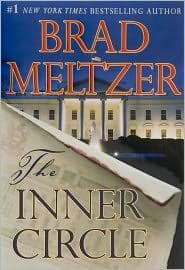
Book details and cover from Google Books.
Ready to read The inner circle?
Get your copy on Amazon, or listen to it on Audible. We earn a commission if you buy through these links.