
We earn a commission if you buy through these links. Learn more
The Immortalists
A family saga that starts with four children learning when they will die, then follows each of them through decades of love, risk, and reinvention, with an honest look at how much fate actually shapes a life.
What It's About
The Immortalists opens in 1969 New York, where four Gold siblings, still children, visit a woman who claims she can tell each of them the day they will die. The rest of the novel follows each sibling forward through several decades, one at a time, so the prophecy hangs over the book without dictating every turn. Simon goes to San Francisco in the 1980s, where the early years of the AIDS epidemic press on his life. Klara builds a career as a stage magician, Daniel turns to medicine, and Varya becomes a scientist studying aging.
The structure is the book's engine. Each section has its own tone and its own stakes, and Benjamin gives the siblings enough interiority that their choices feel earned rather than merely symbolic. The prose is clear and unfussy, and the shifts in time come with enough period detail to make each era distinct without leaning on nostalgia.
Reading it feels like sitting with four overlapping lives and noticing how the same childhood moment keeps resurfacing in different forms. It is absorbing and emotionally direct, the kind of novel you finish wanting to talk about. Expect a quieter book than the premise suggests: it is less a thriller about fate than a meditation on how much control anyone has over their own life.
Read this if you…
- want a character-driven family saga that spans several decades
- are curious about how belief in fate shapes real decisions
- want a novel that treats queer life and the 1980s AIDS crisis with human warmth
Skip it if you…
- need a fast plot with steady forward momentum, since the book moves through separate sections
- find fortune-telling or magic-themed premises gimmicky and want a more grounded story
Key Ideas
- 1
Belief in fate versus personal choice
The fortune-telling premise raises a question the novel keeps returning to: if you knew when you would die, would you live differently? Benjamin does not hand down a neat answer. Instead, she shows each sibling reacting to the prophecy in their own way, some clinging to it, some defying it, and some mostly forgetting it. The question becomes less about the supernatural and more about how people use stories to justify their decisions.
- 2
Four siblings, four separate lives
Rather than telling one continuous story, the book moves through four distinct lives, each with its own setting, career, and emotional weather. This makes the novel feel like a collection of linked portraits as much as a single narrative. The pleasure lies in seeing how the same family history shapes very different adults, and in noticing which traits persist across them.
- 3
Queer life and the AIDS crisis in the 1980s
Simon's section places the reader in San Francisco during the early years of the epidemic, when illness, stigma, and community loss were tightly intertwined. The novel handles this material with warmth and specificity rather than treating it only as tragedy. It gives a sense of how people built lives, friendships, and art while the world around them was failing to protect them.
- 4
Aging, science, and the hunger to outlast death
Varya's thread explores the scientific pursuit of longevity and the human desire to push back against mortality. The novel asks what it means to dedicate a career to delaying death while knowing it cannot be stopped. This thread gives the book a useful counterpoint to the more mystical elements, grounding the big questions in lab work and personal cost.
Limitations
Some readers find the sections uneven, with one or two siblings' storylines more gripping than the others. The fortune-telling frame can feel more like a device than a driving mystery, which may disappoint readers expecting a supernatural twist. The science of longevity is sketched lightly, so readers wanting technical detail will find it thin. Certain coincidences and turns of events can feel convenient. Finally, the AIDS-related material is emotionally heavy, and the book's later sections can feel somber for readers hoping for a lighter tone.
Questions Readers Ask
- Is The Immortalists a good book club pick?
- Yes. The premise invites debate about free will, fate, and whether knowing the future would change anything. The four separate storylines also give groups plenty to compare, since readers often have strong favorites among the siblings. The emotional content may spark longer conversations, so it suits groups comfortable with heavier themes.
- Do I need any background in magic or science to enjoy it?
- No. The magic in the novel is more about performance and illusion than technical detail, and the science is presented at the level of a character's daily work. You do not need prior knowledge of either to follow the story or feel its emotional impact.
- Published
- 2014
- ISBN
- 9781035437429
- Difficulty
- beginner
- Category
- Fiction
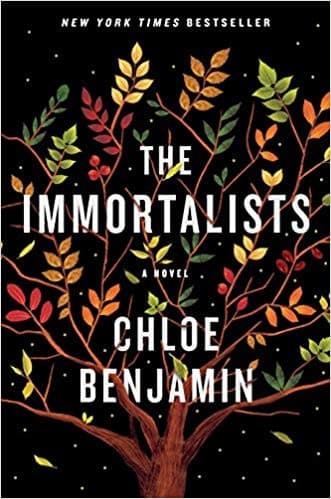
Book details and cover from Google Books.
Ready to read The Immortalists?
Get your copy on Amazon, or listen to it on Audible. We earn a commission if you buy through these links.