
We earn a commission if you buy through these links. Learn more
The Iceberg: A Memoir
Guide by the Books of the Day editors · Updated · How we write our guides
A raw, formally inventive memoir of a husband's brain tumour and death, asking what language and love can still do when the mind that used them starts to fail.
What It's About
The Iceberg is Marion Coutts's account of the final period of her husband Tom Lubbock's life after he was diagnosed with a brain tumour. Coutts is an artist, and she writes like one. The book is built from short, fragmented sections rather than a continuous narrative, moving between hospital routines, memories of their life together, and close attention to the words themselves.
The style is the main event. As Tom's speech and understanding are affected by the illness, Coutts becomes acutely aware of language as something that can slip away, and her prose registers that slippage. Some passages are blunt about bodies, care work and the logistics of dying; others are tender, playful or wry. The result is less a story you follow than a sequence of attentions you move through, and it can feel dense or repetitive, which is part of the design.
Reading it is emotionally demanding, but the book is short enough to finish in a sitting or two. It suits readers who enjoy experimental life-writing, who have cared for someone seriously ill, or who are interested in how illness reshapes communication between people. It is not a guide to brain tumours or to bereavement, and it does not offer consolation in the usual sense.
Read this if you…
- Want experimental memoir that bends its form around grief and illness
- Have cared for someone with a serious or terminal illness and want an honest account
- Are curious about how illness changes the way people communicate
Skip it if you…
- Want a clear narrative with a steady plot and a conventional arc
- Are not ready for a frank, physical account of decline and death
Key Ideas
- 1
Language as something that can fail
The book keeps returning to words: what they do when a mind starts to lose its grip on them, and what it means to keep talking to someone whose replies are changing. Coutts treats speech as a fragile shared resource, and the reader is made to feel how much of a marriage runs on it.
- 2
Care as labour and intimacy
Caring for a dying partner means washing, lifting, scheduling and watching, all of which Coutts describes without sentimentality. She shows how these tasks can be both exhausting and deeply intimate, and she refuses to separate the practical from the emotional.
- 3
Fragmentation as a form of grief
The broken, non-linear structure is not decoration. Short sections mirror a life that has stopped moving in straight lines, and they give the reader the same disorientation the author lived through, rather than a neat arc toward acceptance.
- 4
Love that survives its usual supports
Much of the book asks what a marriage is when the shared conversation, humour and daily routines are being removed. Coutts looks for love in the remaining forms of contact, which makes the book less about loss in the abstract and more about one specific relationship under strain.
Limitations
The fragmented structure is the book's strength, but many readers find it repetitive or hard to hold in mind, especially in the middle sections. It is a close, private account of one marriage and one illness, so it offers little on medical treatment, the wider experience of brain tumours, or how other families cope. Some readers will find the artistic framing self-conscious. It is also a book that asks a lot of its reader emotionally, which may feel either honest or heavy depending on where you are.
Questions Readers Ask
- Is The Iceberg a good book for someone grieving?
- It can be, but it is not a comfort read. Coutts writes frankly about decline and caregiving, and the fragmented form can be unsettling. Readers who are newly bereaved may find it too raw, while those who want to see grief described precisely often find it validating. It is worth reading a sample first to judge the tone.
- Do I need to know about art or Tom Lubbock's writing to read it?
- No. The book stands on its own. Coutts is an artist and her attention to form is central, but you do not need a background in art criticism or in Lubbock's journalism. Familiarity with contemporary experimental writing will help you enjoy the structure, but it is not required.
- Published
- 2016
- ISBN
- 9780802124609
- Difficulty
- intermediate
- Category
- Psychology
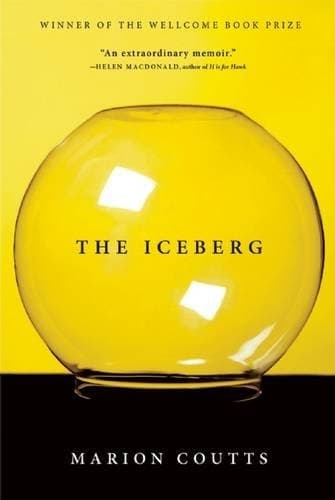
Book details and cover from Google Books.
Ready to read The Iceberg: A Memoir?
Get your copy on Amazon, or listen to it on Audible. We earn a commission if you buy through these links.