
We earn a commission if you buy through these links. Learn more
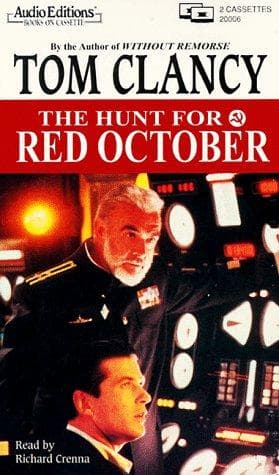
The Hunt for Red October
by Tom Clancy
A tense Cold War thriller where suspense comes from listening, reading intentions, and misreading signals, making it a classic for readers who enjoy procedural storytelling about professionals at work.
What It's About
The Hunt for Red October is a 1984 Cold War techno-thriller that follows a Soviet submarine captain, a CIA analyst, and US Navy crews as each side tries to work out what the other is doing. The story turns on a question that keeps shifting: what is the Soviet commander really planning, and who else is watching? Much of the novel takes place inside the tense routines of submarine warfare, so the suspense comes from sonar, guesswork, and chains of command rather than constant gunfire.
The style is dense and procedural. Clancy explains reactors, acoustic signatures, and naval protocol with a patience that some readers find thrilling and others find slow. Characters are sketched more than deeply explored, and the pleasure lies in watching competent people do difficult jobs well. Dialogue often carries a good deal of exposition, and the prose is functional rather than lyrical.
Reading it feels like sitting in on a briefing that grows more urgent with each page. It works best as an immersive, fast-moving read for anyone curious about how military institutions and machines operate under pressure. Expect a period book with a Cold War worldview that is part of its flavor and part of its age.
Read this if you…
- enjoy procedural thrillers where tension comes from information and strategy
- want a classic Cold War spy story with a naval setting
- like technical detail that makes a world feel concrete and believable
Skip it if you…
- want character-driven fiction with deep interiority and emotional complexity
- find long stretches of technical explanation tedious rather than engrossing
Key Ideas
- 1
Interpretation matters more than secret data
The book's central analyst succeeds by reasoning from doctrine, behavior, and habits rather than from hard secrets. The novel argues that asking the right question can outperform having the most information, and much of the tension comes from watching someone build a case from fragments others have dismissed.
- 2
Technology drives the plot
A new propulsion system makes one submarine far harder to detect than anything either side has fielded. The hunt therefore revolves around what can be heard, what can be trusted, and how a single unexpected capability can upend years of planning. The gadgetry is central, not decorative.
- 3
Professional pride on both sides
Clancy portrays Soviet and American crews as skilled professionals with their own codes, rituals, and grievances. That even-handed respect for competence gives the book more humanity than its genre sometimes allows, though the characters remain more functional than intimate.
- 4
Trust across bureaucracies and borders
Much of the drama involves whether people can read each other's intentions when institutions reward caution and suspicion. Decisions are made through layers of officials, orders, and rumors, so the book keeps asking how anyone acts decisively when the picture is incomplete.
- 5
Cold War certainty and its limits
Deterrence logic and mutual distrust shape nearly every decision, and the novel reflects the worldview of its era with conviction. Modern readers may find this period framing vivid, but it also means the politics feel anchored to a specific moment rather than timeless.
Limitations
Critics often point to the book's heavy technical exposition, which can slow the pace and sometimes reads as a catalogue of hardware. Characterization is thin, with most figures defined by their roles more than by inner life, and women are largely absent from the central action. The Cold War politics reflect the assumptions of 1984 and may feel dated or simplified to readers who did not live through that period. Some passages of dialogue are workmanlike rather than memorable.
Questions Readers Ask
- Do I need to read other Jack Ryan books first?
- No. This is the first novel featuring Jack Ryan, and it is written to stand on its own. Later books in the series assume some familiarity with his character, but this one introduces him and the setting clearly. Starting here is the natural way in, and you can continue with the series afterward if you enjoy the character.
- Is the book still worth reading now that the Cold War is over?
- Yes, for readers interested in how a techno-thriller is constructed or in the period's military and intelligence culture. The submarine and intelligence details are still engaging, though some technology and political assumptions are dated. Treat it as both a gripping story and a historical document of how the era saw itself.
- Published
- 1984
- ISBN
- 9781101008775
- Difficulty
- intermediate
- Category
- Fiction
Book details and cover from Google Books.
Ready to read The Hunt for Red October?
Get your copy on Amazon, or listen to it on Audible. We earn a commission if you buy through these links.