
We earn a commission if you buy through these links. Learn more
The Hundred Secret Senses
by Amy Tan
Guide by the Books of the Day editors · Updated · How we write our guides
A warm, sometimes funny family novel about two half-sisters who see the same world differently, and a sharp look at how cultures disagree about what counts as real.
What Creators Say About The Hundred Secret Senses
2 creators reviewed The Hundred Secret Senses on YouTube between 2017 and 2021, with 2.3K views between them. Their opinions are their own; we picked these reviews, we didn't write them.
What It's About
The Hundred Secret Senses is narrated by Olivia, a Chinese-American woman in California whose life is unsettled when her half-sister Kwan arrives. Kwan was raised largely in China and carries a worldview in which the living and the dead share space and some people can perceive what others cannot. Olivia has built a practical, skeptical life, and she finds herself caught between her sister's certainty and her own doubts, with their father and the family's past pulling at both of them.
Tan writes in a conversational first person that moves back and forth between present-day friction and memories of childhood. The book feels less like a plot driven forward than a slow buildup of conversations, misunderstandings, and small revelations. Expect long stretches of domestic detail, family history, and Chinese folk belief woven into ordinary American life. The tone shifts between tenderness and exasperated humor, and the pacing rewards patience more than it rewards urgency.
Reading it is like sitting with two voices that do not fully trust each other. It is less a puzzle than a portrait of intimacy, rivalry, and the gap that opens when people share blood but not background.
Read this if you…
- enjoy family novels where tension comes from conversation and misunderstanding rather than plot
- are curious about Chinese-American life and how immigrant beliefs sit alongside American routines
- like a narrator who is wry, self-critical, and not always right about what she sees
Skip it if you…
- want a fast plot, a clear mystery, or a satisfying payoff at the end
- expect a ghost story that is scary or that leans heavily on the supernatural
Key Ideas
- 1
Two ways of knowing the world
The title refers to the idea that people have perceptions beyond the familiar five senses. Kwan takes this seriously as part of daily life, while Olivia treats it as something to explain away. The novel is less interested in proving either view right than in showing what each costs the person holding it.
- 2
Sisterhood across a cultural gap
The two women grew up in different countries, languages, and expectations, yet they are tied by a shared father and a shared history. Their relationship swings between dependence, resentment, and real affection. Tan treats the sisters' mismatched assumptions about loyalty and honesty with more care than most family dramas do.
- 3
Chinese belief as lived practice
Folk beliefs about spirits, luck, and obligation appear as practical habits rather than exotic set pieces. Tan presents them through the textures of kitchens, family arguments, and everyday choices. Readers get a sense of how belief operates inside a family, not just what it looks like from outside.
- 4
Family history reaching into the present
Parents' pasts, old wounds, and unspoken stories shape how the characters act now. Olivia gradually realizes that she has been telling herself a version of her family's history that is convenient for her. The book asks how much of who we are is inherited from stories we never fully heard.
Limitations
Readers often find the middle long and repetitive, with domestic and historical detail that slows momentum. Some critics felt the supernatural material works more as a framework for the family's conflicts than as something the book fully explores. Tan's portrayal of Chinese belief and history is filtered through a narrator who is herself partly an outsider to it, which some readers find thoughtful and others find limiting. The novel dates from 1995, so its treatment of cultural tension and gender may read differently today.
Questions Readers Ask
- Is The Hundred Secret Senses a ghost story?
- Not in the usual sense. Spirits and ghosts matter to the characters and shape how they understand each other, but the book is mainly about family, identity, and misunderstanding. Readers looking for chills or a suspenseful supernatural plot will likely be disappointed.
- How does it compare to The Joy Luck Club?
- Both are Amy Tan novels about mothers, daughters, and cultural inheritance. This one is narrower, centered on two sisters with a single narrator, while The Joy Luck Club moves among several women. Readers who loved the layered structure of Joy Luck Club may find this book more focused but also less varied.
- Published
- 1995
- ISBN
- 9782221079218
- Difficulty
- intermediate
- Category
- Fiction
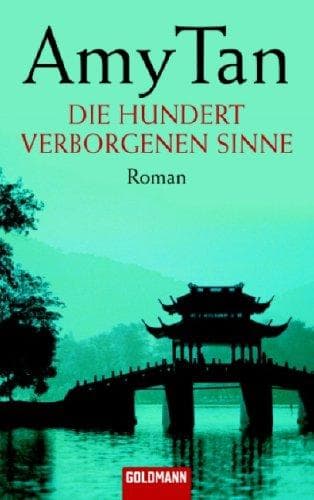
Book details and cover from Google Books.
Ready to read The Hundred Secret Senses?
Get your copy on Amazon, or listen to it on Audible. We earn a commission if you buy through these links.