
We earn a commission if you buy through these links. Learn more
The how of happiness
A research psychologist's practical guide to the idea that deliberate, well-chosen activities shape everyday wellbeing as much as the circumstances you were handed.
What It's About
The How of Happiness is Sonja Lyubomirsky's 2007 attempt to turn the research on wellbeing into a practical guide for general readers. Her central move is to shift attention from what happens to you toward what you do. She argues that circumstances matter less than most people assume, and that a meaningful share of day-to-day happiness is within reach through intentional effort.
The style is that of a research psychologist writing for non-specialists. She summarizes studies, explains why their findings matter in ordinary life, and then offers self-directed exercises and a framework for choosing which practices to try. The book moves from why people adapt to good and bad changes toward the practices themselves, with guidance on picking ones that suit your personality and circumstances.
Reading it feels part science lecture, part coaching session. It is hopeful without being breezy, and it asks you to test ideas in your own life rather than simply agree with them. Expect more reflection and homework than a typical self-help title, and expect to finish with a plan you can actually run rather than only a feeling of inspiration.
Read this if you…
- want an evidence-based starting point for building daily habits that support wellbeing
- are willing to do exercises and track what changes rather than just read
- are curious how much of your mood is shaped by what you do versus what you have
Skip it if you…
- are looking for a clinical treatment for depression or anxiety, which this book does not offer
- want a memoir, a narrative story, or a light book to read in one sitting
Key Ideas
- 1
The happiness pie
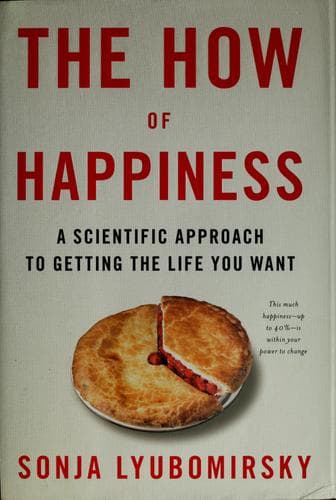
Lyubomirsky proposes a rough division of wellbeing: a large part tied to a genetic set point, a smaller part to life circumstances, and a substantial remainder to intentional activity. She offers these shares as approximate illustrations rather than precise measurements. The real value is the reframing, which suggests that the effort you put into your daily habits can change how you feel.
- 2
Why good changes fade: hedonic adaptation
People tend to get used to improvements such as a raise, a new home, or a new relationship, so the boost fades over time. The book uses this idea to explain why chasing external milestones often disappoints. It argues that variety and sustained, thoughtful effort matter more than a single big change.
- 3
Fit matters more than the activity itself
A practice works best when it matches your personality, values, and daily life. Lyubomirsky stresses choosing and tailoring activities rather than copying a list, and she treats the match between person and practice as a key variable. This makes the book more about self-experimentation than about following a universal formula.
- 4
A menu of intentional practices
The book groups happiness-boosting activities into categories such as expressing gratitude, performing acts of kindness, savoring positive experiences, and cultivating optimism. Each comes with advice on how to keep it fresh and sustainable. The guidance on timing and variety is often the most practical part of the book.
Limitations
Many of the studies are self-reported and short-term, and the effect sizes of individual interventions are modest. Later replication work has found that some popular practices, such as gratitude journaling, produce mixed results. The book is also written largely from a Western, middle-class research perspective, and it has aged since 2007. Readers should treat its percentages and recommendations as a useful framework rather than settled science.
Questions Readers Ask
- Is The How of Happiness still worth reading?
- Yes, for its core framing: that intentional activity can shape wellbeing and that people adapt to change. Some specific findings have been revised or challenged by later research, so it is best read as a thoughtful starting point. Pair it with newer work on the limits of positive psychology interventions for a more balanced picture.
- How does it compare to Authentic Happiness by Martin Seligman?
- Seligman's book focuses on the broader framework of positive psychology and signature strengths. Lyubomirsky's book is more hands-on, with a focus on specific activities and how to select them. If you want a conceptual map, start with Seligman. If you want practical experiments, Lyubomirsky is the more direct choice.
- Published
- 2007
- ISBN
- 9780143142973
- Difficulty
- beginner
- Category
- Psychology
Book details and cover from Google Books.
Ready to read The how of happiness?
Get your copy on Amazon, or listen to it on Audible. We earn a commission if you buy through these links.