
We earn a commission if you buy through these links. Learn more
The Hound of the Baskervilles
Guide by the Books of the Day editors · Updated · How we write our guides
A fog-bound Dartmoor mystery with a spectral hound, a Victorian gothic chill, and Holmes's sharpest deductions, making it a natural gateway into the whole detective genre.
What Creators Say About The Hound of the Baskervilles
2 creators reviewed The Hound of the Baskervilles on YouTube between 2019 and 2022, with 223.3K views between them. Their opinions are their own; we picked these reviews, we didn't write them.
What It's About
The Hound of the Baskervilles is a Sherlock Holmes novel, not a history, though it draws on the Victorian and Edwardian world of its first readers and is set on the real Dartmoor in Devon. Sir Henry Baskerville arrives to take up an inherited estate, shadowed by a family legend of a supernatural hound. Dr. James Mortimer brings the case to Holmes in London, and Holmes sends his companion Watson west to watch over the baronet and report back.
Watson narrates, so for much of the book Holmes is a distant presence, glimpsed through letters, telegrams and Watson's reports. Doyle builds dread through the empty moor, the mist, lonely houses and rumours from local people more than through forensic detail. The deductions still arrive, but they are rationed, which makes each one land harder.
Reading it feels like a fast, eerie campfire story with a rational spine. It moves quickly, and its period manners, class assumptions and sense of a countryside full of old secrets give it a flavour few modern thrillers have. Expect atmosphere first and logic second.
Read this if you…
- want a quick, atmospheric mystery with a gothic edge
- enjoy Holmes's deductive style and Watson's loyal narration
- want an early classic that shaped the modern detective novel
Skip it if you…
- need a fair-play puzzle with every clue laid out for you to solve
- dislike Victorian prose or want Holmes on the page for most of the book
Key Ideas
- 1
Legend versus reason
The novel sets an inherited family curse against Holmes's insistence that every alarming story has a human explanation. Doyle lets the superstition feel real long enough that the reader shares the characters' unease, then tests it against evidence. The tension between belief and observation drives the whole book.
- 2
Dartmoor as a menacing character
The moor is never just a backdrop. Its mists, bogs, granite tors and scattered farms isolate the characters and make every walk feel exposed. Doyle uses the landscape to suggest that the district holds old secrets, so readers sense danger before any fact confirms it.
- 3
Watson's narration and the distance it creates
Watson is an earnest, loyal narrator rather than a genius, so he cannot see everything and neither can the reader. Holmes's absence from the scene becomes part of the suspense, since Watson must act on partial information. The result is a more personal and anxious story than a case told from the detective's side.
- 4
Clues built from ordinary observation
Holmes's skill lies in noticing what others overlook: footprints, letters, the habits of servants and neighbours, small changes in routine. Doyle presents these details as ordinary facts that only look meaningless until they are arranged. It is a useful model for anyone curious about how careful attention works in practice.
Limitations
Holmes disappears from the action for long stretches, which can frustrate readers who came for him. The characterisation is thin: Baskerville and Mortimer are largely types, and the women are mostly secondary. Its attitudes toward class, empire and the countryside reflect their time, and the supernatural frame uses the conventions of popular fiction of the period. The final explanation relies on some convenient timing that a critical reader may question.
Questions Readers Ask
- Is The Hound of the Baskervilles history?
- No. It is a detective novel, first serialised in The Strand magazine in 1901 and 1902. Its value as a historical source is limited to showing Edwardian reading tastes and social attitudes, not documenting real events. If you want history from this period, a nonfiction work on the era will serve you better.
- How does it compare to Agatha Christie?
- Christie's novels usually build tighter, more elaborate puzzles around a closed circle of suspects, while Doyle relies on atmosphere and a single haunting premise. If you love Christie's fair-play structure, Hound may feel looser than expected. If you want a spooky, moody story with a sharp rational core, it is a better place to start.
- Do I need to read other Sherlock Holmes stories first?
- No. The novel works as a standalone, and Watson supplies enough background on Holmes. Reading the earlier stories does add texture, since you will know Holmes's habits and can see how Watson's voice changes his absence. But the book is designed to be read on its own.
- Published
- 1900
- ISBN
- 9781849904094
- Difficulty
- beginner
- Category
- History
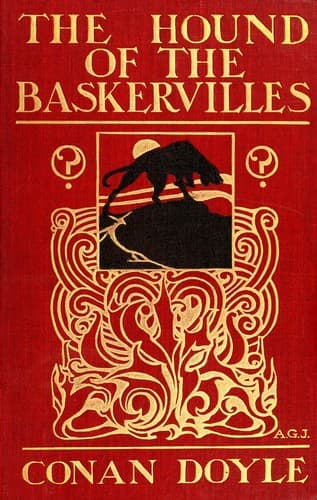
Book details and cover from Google Books.
Ready to read The Hound of the Baskervilles?
Get your copy on Amazon, or listen to it on Audible. We earn a commission if you buy through these links.