
We earn a commission if you buy through these links. Learn more
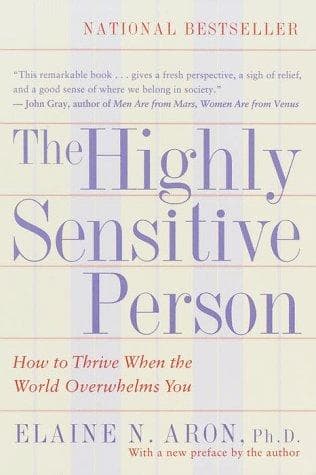
The highly sensitive person
Guide by the Books of the Day editors · Updated · How we write our guides
Elaine Aron's classic gives a name and a framework to sensory processing sensitivity, a trait that explains why some people feel overwhelmed by noise, crowds, and criticism while others barely notice.
What Creators Say About The highly sensitive person
2 creators reviewed The highly sensitive person on YouTube between 2010 and 2014, with 522.9K views between them. Their opinions are their own; we picked these reviews, we didn't write them.
What It's About
Elaine N. Aron presents high sensitivity as an inborn temperament called sensory processing sensitivity, which she estimates appears in roughly one in five people. She frames it as a neutral trait rather than a disorder, and she writes mainly for readers who suspect the description fits them, or someone they love.
The book works as part explainer, part self-assessment, and part practical guide. It describes how sensitive people tend to process information deeply, notice subtle details, feel emotions strongly, and become overstimulated when demands pile up. Readers get a questionnaire to gauge their own sensitivity, along with discussion of how the trait shows up in childhood, relationships, and workplaces, and suggestions for managing stimulation and recovering energy.
The reading experience is warm, reassuring, and conversational. Aron leans on examples from clients and her own life, which makes the ideas easy to recognize but can feel repetitive at times. It works best as a mirror and a toolkit rather than a rigorous scientific text, so expect a self-help tone throughout.
Read this if you…
- want a clear framework for why crowds, noise, or harsh feedback drain you more than others
- are a parent wondering whether a sensitive child needs different handling from their peers
- are comfortable with a warm, self-help style and want a practical starting point
Skip it if you…
- want a rigorous, peer-reviewed treatment with detailed and up-to-date neuroscience
- find personality labels unhelpful or prefer a short, tightly edited read
Key Ideas
- 1
Sensitivity as a trait, not a flaw
Aron argues that sensitivity is a normal, heritable difference in how the nervous system takes in information. Rather than being a weakness or a diagnosis, it is described as a way of being attentive to detail and meaning. The book uses this reframing to help readers stop judging themselves for needing quiet, slower decisions, or more time alone.
- 2
Four traits behind the sensitivity
Aron groups the trait into four features: deep processing of information, sensitivity to overstimulation, strong emotional reactions and empathy, and noticing subtle stimuli. Readers can use these categories to see which parts of their own experience match, and why some situations hit harder than they expected.
- 3
Overstimulation and the need for recovery
A central practical theme is that sensitive people often reach their limit faster in busy, loud, or emotionally charged settings. Aron emphasizes planning downtime, reducing unnecessary input, and recognizing early warning signs before exhaustion sets in. These suggestions are the most immediately usable part of the book.
- 4
Applying the trait at work and in relationships
The book connects the concept to everyday situations such as jobs, friendships, partnerships, and parenting. It looks at how sensitive people can communicate their needs, handle criticism, and avoid being misread as aloof or dramatic. Some examples feel dated, but the core advice on setting boundaries still applies.
Limitations
Critics point out that the research base for sensory processing sensitivity is thinner than the book suggests, relying heavily on self-report questionnaires and a limited set of studies. Some reviewers argue the trait overlaps with introversion or neuroticism and is not clearly distinct from them. The book also contains a fair amount of repetition and anecdote, and it does not deeply address clinical conditions such as anxiety or trauma that can look similar. Readers should treat it as a useful lens, not a settled scientific account.
Questions Readers Ask
- Is The Highly Sensitive Person a scientific book?
- It draws on research but is written for general readers rather than specialists. Aron cites studies and her own clinical experience, yet the tone is personal and practical. If you want detailed academic evidence, you will likely need to read the underlying research separately, since the book does not present it at full depth.
- Is the book still relevant today?
- Yes, mainly for its core framing and coping advice about overstimulation and recovery time. Some examples and references feel dated, and the research has developed since its original publication. Newer work on temperament and sensitivity can complement it well for readers who want a more current evidence base.
- Published
- 1996
- ISBN
- 9781559723503
- Difficulty
- beginner
- Category
- Psychology
Book details and cover from Google Books.
Ready to read The highly sensitive person?
Get your copy on Amazon, or listen to it on Audible. We earn a commission if you buy through these links.