
We earn a commission if you buy through these links. Learn more
The Heart is a Lonely Hunter
Guide by the Books of the Day editors · Updated · How we write our guides
A patient, emotionally piercing portrait of isolation in a 1930s Southern town, built around a deaf man whom everyone projects their hopes onto.
What Creators Say About The Heart is a Lonely Hunter
2 creators reviewed The Heart is a Lonely Hunter on YouTube between 2020 and 2022, with 12.1K views between them. Their opinions are their own; we picked these reviews, we didn't write them.
What It's About
The Heart Is a Lonely Hunter is set in a mill town in the American South during the late 1930s, where the Depression has left people stuck in narrow lives. Its center is John Singer, a deaf man who communicates by sign and writing and who spends his days with a friend he cannot fully reach. Singer's quiet presence draws in four very different people: a restless teenage girl who dreams of music, a café owner who watches everything from behind the counter, a drifting labor agitator who talks politics compulsively, and a Black doctor who carries the weight of his community's needs. The novel moves among their points of view, so the reader sees how each of them pours their own longing into a man who says very little.
The prose is lyrical, interior, and often dense, with long sentences that linger on what characters feel but cannot say. Plot is secondary to atmosphere and inner life, and the book asks for slow, attentive reading. Its concerns with race, class, and spiritual hunger are woven into the characters' daily lives rather than laid out as arguments.
Reading it is an emotionally heavy experience. It rewards patience with moments of startling tenderness and insight, and it lingers long after the last page.
Read this if you…
- want a slow, character-driven novel about isolation and longing
- are interested in American fiction of the 1930s and 1940s that examines race and class from close range
- enjoy books where atmosphere and interior life matter more than plot
Skip it if you…
- need a fast-moving story with clear plot momentum
- find long, looping sentences and shifting perspectives exhausting
Key Ideas
- 1
Loneliness as a shared condition
McCullers treats loneliness less as a private misfortune than as something that connects people who never truly meet. Each character believes they are the only one who feels cut off, and the novel slowly shows how many of them are circling the same ache from different directions.
- 2
Singer as a blank screen
Because John Singer is silent and largely opaque, he becomes a mirror for others. Mick, Biff, Jake, and Dr. Copeland each see in him what they most need, whether a confidant, a witness, or an answer. The book is as much about their projections as about the man himself.
- 3
Politics and spiritual hunger
Jake Blount and Dr. Copeland pursue justice and meaning through very different routes, one through fervent argument and the other through patient, practical work. McCullers takes their convictions seriously while showing how easily hope turns into frustration in a town that resists change.
- 4
Adolescence and the pull of art
Mick Kelly's sections capture the restless hunger of a young person who senses a larger life beyond her family's money worries. Her longing for music gives the novel one of its most vivid strands of hope.
- 5
Rotating points of view
Shifting between five consciousnesses lets McCullers build a portrait of a whole town rather than a single protagonist. The technique can feel fragmented at times, but it is the source of the book's emotional range and its sense of many lives unfolding at once.
Limitations
The novel's racial depictions reflect the assumptions of a white Southern writer of its era, and some Black characters are seen through white or external eyes in ways modern readers will find uncomfortable or limiting. The political passages, especially Jake Blount's speeches, can feel didactic and dated. Some readers find the central figure of Singer too opaque to carry the book's emotional weight, and the plot is thin by contemporary standards. The melancholy tone is relentless for some and may feel repetitive over the book's length.
Questions Readers Ask
- Is The Heart Is a Lonely Hunter still worth reading today?
- Yes, for readers interested in loneliness, American Southern literature, and character-driven fiction. Its portrait of economic hardship and its emotional insight remain powerful, though readers should expect dated attitudes on race and a slower pace than many modern novels.
- How does it compare to To Kill a Mockingbird?
- Both are Southern novels from the same era concerned with race and social division, but McCullers is more interior and fragmented, with multiple viewpoints and no single narrator. Harper Lee's book is more plot-driven and moral in its framing, so it may suit readers who want a clearer narrative line.
- Who is this book best suited for?
- It suits readers who are comfortable with a quiet, melancholy novel and enjoy studying characters through their inner lives. It is a strong choice for those drawn to literary fiction about outsiders and for anyone who finds themselves thinking about a book long after finishing it.
- Published
- 1940
- ISBN
- 9789574504343
- Difficulty
- intermediate
- Category
- Fiction
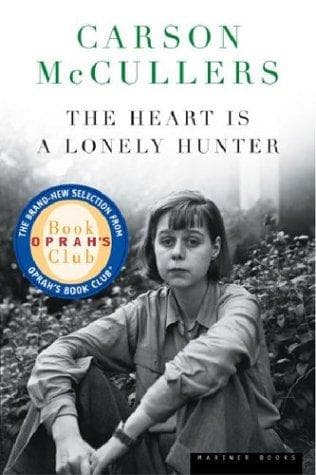
Book details and cover from Google Books.
Ready to read The Heart is a Lonely Hunter?
Get your copy on Amazon, or listen to it on Audible. We earn a commission if you buy through these links.