
We earn a commission if you buy through these links. Learn more
The Haunting of Hill House
Shirley Jackson's slow-building ghost story trusts psychology over gore, turning a fearful woman's inner life into the real subject of its dread.
What It's About
The Haunting of Hill House follows Eleanor Vance, a lonely woman in her thirties who has spent years caring for her mother. She accepts an invitation to spend a summer at Hill House, a large, unsettling mansion with a long reputation for unexplained events. A researcher has gathered a small group of guests there to document whatever happens, and Eleanor, along with the others, quickly finds the house's atmosphere hard to shake.
Jackson rarely gives the reader proof. The scares come from ambiguity, from the house's strange proportions, and from Eleanor's perceptions, which the narration keeps close to her and which the reader cannot fully trust. The dialogue among the guests is sharp, often funny, and full of friction, and it sets up a quiet tension that builds in the way a bad dinner party does. The prose is precise, measured, and faintly ironic.
The experience is more unsettling than frightening. Readers who want a steady supply of shocks may find it slow, but those who pay attention to small details, shifting alliances, and what goes unsaid will find it rewarding. It is a short novel that lingers, and it often reads differently on a second visit.
Read this if you…
- like slow-burn psychological horror more than jump scares
- are interested in loneliness and belonging as much as the supernatural
- enjoy books where the prose and atmosphere do most of the unsettling work
Skip it if you…
- want clear answers or a fully resolved supernatural mystery
- need fast pacing, gore, or frequent action
Key Ideas
- 1
Fear that grows from inside the mind
The house works less through visible monsters than through the people inside it. Jackson shows how loneliness, a need to belong, and a history of being unwanted can make a person easy to unsettle. The horror is partly a question of who is most vulnerable to the place, and why.
- 2
The house as a hostile presence
Hill House is built with odd angles, doors that resist being opened, and rooms that feel wrong in ways that are hard to name. Jackson treats the building almost as a character with its own intentions. Reading the novel is partly a matter of noticing how the architecture shapes the mood.
- 3
Ambiguity instead of explanation
Jackson never offers a tidy account of what is happening. Each event can be read as supernatural, psychological, or both, and the book leaves that choice open. Readers who want a clear answer may be frustrated, while those who enjoy interpretation will find plenty to think about.
- 4
Group dynamics and the search for belonging
The four guests bring their own needs, rivalries, and charm to the house, and their interactions are as tense as anything supernatural. The novel is sharp about how people perform warmth while protecting themselves, and how a group can turn on one of its members.
Limitations
The novel reflects its 1950s setting, including assumptions about women, marriage, and family duty that some readers will find dated or confining. Much of the book takes place inside Eleanor's head, so readers who prefer external plot may find the middle slow. Some critics feel the other characters are sketched more than developed. The deliberate ambiguity, which many readers admire, can also feel evasive to those who want the story to commit to an explanation.
Questions Readers Ask
- Is The Haunting of Hill House actually scary?
- It is more unsettling than frightening. There are no graphic scenes, and most of the dread comes from atmosphere, tension between characters, and the sense that something is wrong. Readers who enjoy quiet, creeping horror tend to find it effective, while those expecting jump scares may be disappointed.
- How does it compare to The Turn of the Screw?
- Both are classic ghost stories built on ambiguity, with narrators whose reliability is in question. Henry James's novella is more formally controlled and leaves its central question more openly divided. Jackson's novel is warmer in its characterization and more focused on social pressure and loneliness, which makes it feel more emotionally direct.
- Should I watch the adaptations before reading?
- Film and television versions, including the 1963 film The Haunting and the 2018 Netflix series, take considerable liberties with the story. Reading the novel first lets you experience its ambiguity and interior focus, which screen versions often replace with clearer visual explanations.
- Published
- 1959
- ISBN
- 9798518176904
- Difficulty
- beginner
- Category
- Fiction
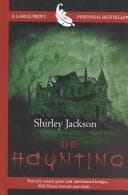
Book details and cover from Google Books.
Ready to read The Haunting of Hill House?
Get your copy on Amazon, or listen to it on Audible. We earn a commission if you buy through these links.