
We earn a commission if you buy through these links. Learn more
The Goldfinch
by Donna Tartt, Katia Benovich
A boy who survives a museum bombing and walks away with a famous painting anchors a long, haunting novel about grief, art, and the objects that shape us.
What It's About
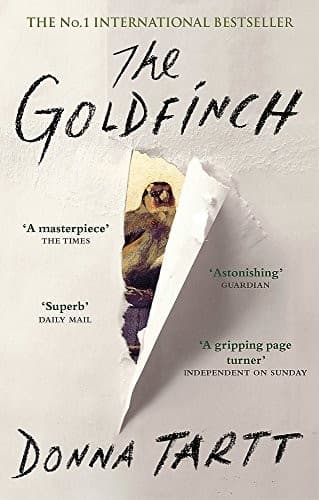
The Goldfinch (2013) is a long novel by Donna Tartt, who won the Pulitzer Prize for it in 2014. It follows Theo Decker from his early teens into adulthood. The story opens with a catastrophe at a New York museum that kills his mother and leaves him traumatized and alone. He is taken in by a wealthy family, then drifts through a series of unstable homes. Through all of it he carries one object he was never supposed to take, and it becomes both his secret and his anchor.
Tartt writes in a close, retrospective first person, with a voice that is observant, wry, and often self-punishing. She is interested in texture: furniture, antiques, the work of restoring old objects, and the shabby and glamorous corners of cities. The pacing is leisurely, and large sections are given over to ordinary days and to the slow buildup of habit and dependence.
Reading it feels less like riding a plot and more like settling into a long, absorbing life. Some readers find it immersive and emotionally bruising. Others feel the momentum stall for long stretches. Its strongest pull is the sense that one accident can reorganize an entire life, and that the people we fall in with shape us as much as our own choices do.
Read this if you…
- want a long, immersive novel about grief and its lasting effects
- are drawn to stories about art, antiques, and the people who handle them
- enjoy a narrator who is observant, self-critical, and emotionally complicated
Skip it if you…
- need a fast-moving plot with tight pacing from start to finish
- find coincidence and melodrama hard to accept in a novel
Key Ideas
- 1
Grief as a lasting, shaping force
Theo's loss does not resolve neatly or quickly. The book follows how grief distorts his judgment, makes him seek comfort in the wrong places, and keeps returning long after the event. Tartt treats mourning as something that changes the shape of a life rather than a phase to get through.
- 2
Art as consolation and as obsession
A painting gives Theo something beautiful to hold onto, but it also becomes a private possession that isolates him. The novel is attentive to how art moves people, how it can be loved too much, and how the desire to own a beautiful thing can quietly override what is right.
- 3
Chance, luck, and gradual moral drift
One chaotic moment sets the story in motion, but the larger question is how small compromises pile up. Tartt asks how much of a person's fate is accident and how much is choice, and she lets readers sit with that ambiguity rather than settling it for them.
- 4
Found family and the people who shape us
Theo's guardians and companions range from kind and steadying to careless and corrosive. The book pays close attention to how unlikely relationships can become a family of sorts, and how the wrong influences can do lasting damage even when they are loved.
- 5
Dense, detailed prose that rewards patience
Tartt's style is rich in sensory and material detail, with long passages on rooms, objects, and cities. Readers who enjoy immersive, character-driven prose will find much to savor. Readers who want fast forward motion may find the same density slows the story down.
Limitations
The most common criticisms are about length and pacing. The middle section, which moves through a rough period in Theo's life, is often described as sprawling, and some readers feel it repeats the same emotional beats. The plot leans on coincidence in places, and Theo's passivity frustrates many readers, though Tartt seems to intend that. The book is also less interested in social or political context than in one person's inner life, so readers wanting a broader view of the world it depicts may come away wanting more.
Questions Readers Ask
- Is The Goldfinch worth reading despite its length?
- For most readers who enjoy immersive fiction, yes. The length is a real commitment, and the middle stretches can feel slow. But the book rewards patience with a deeply felt portrait of grief and a narrator whose flaws are hard to forget. If you are a fast reader who wants momentum above all, consider sampling the first hundred pages before deciding.
- How does The Goldfinch compare to Donna Tartt's The Secret History?
- The Secret History is tighter, more propulsive, and closer to a campus mystery in structure. The Goldfinch is wider in scope, slower, and more concerned with the long aftermath of a single event. Readers who loved the atmosphere and moral unease of The Secret History often find the later novel rewarding, though it asks for more time and tolerance for digression.
- Published
- 2013
- ISBN
- 9782259221863
- Difficulty
- intermediate
- Category
- Fiction
Book details and cover from Google Books.
Ready to read The Goldfinch?
Get your copy on Amazon, or listen to it on Audible. We earn a commission if you buy through these links.