
We earn a commission if you buy through these links. Learn more
The Going to Bed Book
Guide by the Books of the Day editors · Updated · How we write our guides
A short, rhythmic board book that turns the nightly routine into a silly parade of animals, making it a dependable pick for winding down toddlers.
What Creators Say About The Going to Bed Book
2 creators reviewed The Going to Bed Book on YouTube in 2021, with 15.9K views between them. Their opinions are their own; we picked these reviews, we didn't write them.
What It's About
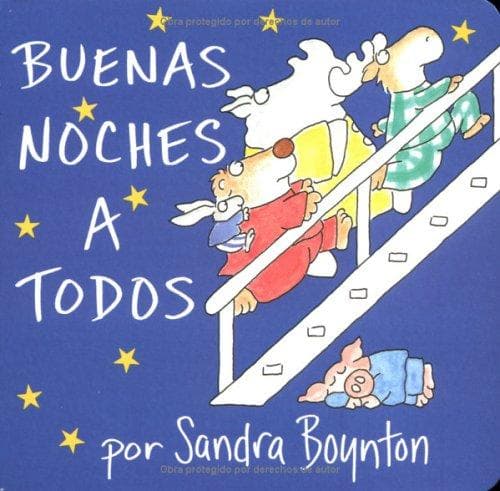
The Going to Bed Book is a board book for the youngest listeners, built around the steps of a bedtime routine: getting clean, changing into pajamas, brushing teeth, and settling down. Boynton's bold cartoon animals, drawn in her loose and cheerful style, carry each step, and the text is short enough to read aloud in a few minutes.
The approach is rhythm first. Lines are brief, rhymes land on a steady beat, and the pages invite a parent to slow down, pause, and let a toddler anticipate the next line. Much of the fun comes from the animals' antics, which add a touch of silliness to a routine that small children often resist. It is less a story with a plot than a read-aloud ritual.
Reading it is quick and interactive. Children tend to join in, make the animal sounds, and point at the pictures. Adults will likely find it works best as one step in a wind-down sequence rather than as a sleep aid on its own. Its ending is gentle, which is the point, though it offers little beyond that calm.
Read this if you…
- want a short bedtime book that toddlers can handle and parents can read in a few minutes
- are looking for a read-aloud that makes a nightly routine feel more playful
- have a child who fights the steps of getting ready for bed
Skip it if you…
- want a story with characters who change or a plot that builds toward a resolution
- need a bedtime book for older children or one with substantial text for independent reading
Key Ideas
- 1
A bedtime routine laid out as a sequence
The book walks through the familiar order of evening tasks, so a child hears each step named and sees it acted out. That repetition helps very young children learn what comes next and why. For parents, it doubles as a simple checklist that can be followed without much thought. The structure is the real teaching tool here, more than any single lesson.
- 2
Rhythm and rhyme as a settling tool
The steady meter and short couplets slow the pace of reading, which is exactly what a child needs before lights-out. A predictable beat can calm a restless toddler even when the child cannot follow the words. Parents often find that they read more softly as the rhythm takes over. The sound of the language does much of the work.
- 3
Humor that makes a chore feel light
Boynton's animals are goofy and a little rowdy, which turns brushing teeth or putting on pajamas into something closer to play. Kids are more willing to cooperate when the routine is framed as a joke they are in on. The humor is gentle rather than sharp, so it suits the age group without overwhelming it. It shows that a bedtime book can be funny without being loud.
- 4
Simplicity suited to very young listeners
There is very little text and no real plot, which makes the book sturdy and easy to manage for babies and toddlers. Its board pages can be handled, chewed, and flipped by small hands. The brevity means it fits into a crowded evening without feeling like a commitment. Its limits are the same as its strengths: it is made for one stage of childhood.
Limitations
The book is very slight, and adults who read it often many times may find the rhythm and jokes wear thin. It has no narrative arc, so readers who want a story with tension or emotional depth will be disappointed. Its routine is a generic one, which means it may not match a particular family's bedtime habits. Older children will likely see it as babyish. It also depends heavily on how the reader performs it, so a flat reading can drain much of its appeal.
Questions Readers Ask
- Is The Going to Bed Book suitable for babies and toddlers?
- Yes, it is designed for the youngest listeners. The sturdy board pages and very short text make it easy for babies and toddlers to handle and for parents to read quickly. Its bright animal images hold young attention well, and the repeated rhythms help children begin to recognize the bedtime routine. It is less suitable once children want longer stories.
- How does it compare to Goodnight Moon?
- Goodnight Moon is quieter and more contemplative, with a slow, lulling pace that suits a dim room. This book is bouncier and more playful, leaning on animal antics and jokes to get a child through the routine. Parents who want calm may prefer the classic, while those whose toddlers need a little energy to cooperate may find this one more useful.
- Is it still relevant for families today?
- Yes, the core purpose of the book, making the bedtime routine predictable and a little fun, has not aged. Its simple language and cartoon style still work well for young children. Families who prefer modern picture books with more diverse characters or richer stories may want to add other titles alongside it.
- Published
- 1982
- ISBN
- 9780689836237
- Difficulty
- beginner
- Category
- Children's Books
Book details and cover from Google Books.
Ready to read The Going to Bed Book?
Get your copy on Amazon, or listen to it on Audible. We earn a commission if you buy through these links.