
We earn a commission if you buy through these links. Learn more
The God of Small Things
Guide by the Books of the Day editors · Updated · How we write our guides
Arundhati Roy's Booker-winning debut braids a family's buried losses in Kerala into a lyrical, out-of-order puzzle about love that breaks rules.
What Creators Say About The God of Small Things
2 creators reviewed The God of Small Things on YouTube between 2019 and 2023, with 946.7K views between them. Their opinions are their own; we picked these reviews, we didn't write them.
What It's About
The God of Small Things follows a family in Ayemenem, a town in Kerala in southern India, and centres on fraternal twins, Estha and Rahel, and the summer that changed their household for good. Roy moves between the late 1960s and the early 1990s, so the story arrives in pieces: a moment is glimpsed, then explained, then returned to from another angle. The novel is set against the politics of the Communist movement in Kerala, the rules of caste and the Syrian Christian community, and the family's own quiet, private failures.
The prose is the main reason many readers finish it. Roy writes in a dense, musical style full of wordplay, repeated images, invented words and Malayalam phrases that she often leaves untranslated, so you read by feel as much as by plot. Sentences loop and double back, and small objects, a pickle jar or a pair of shoes, carry more weight than they should. It rewards slow reading and rereading, and it can feel exhausting if you want a plain story told plainly.
Expect a book that is more about atmosphere, memory and the injustice of a rigid social order than about a tidy mystery. The emotional force builds gradually, and the novel is more interested in how a family hides its damage than in pinning blame on any one person. It is short for its ambition, and it stays with you after the last page.
Read this if you…
- want a literary novel where the style is as important as the story
- are interested in how caste, class and family silence shape private lives
- don't mind rereading a passage to catch what you missed
Skip it if you…
- want a fast-moving plot with clear cause and effect
- find dense, lyrical prose tiring rather than rewarding
Key Ideas
- 1
Love that crosses the lines of caste
The central relationship breaks the boundaries of caste and class in a society that polices them closely. Roy shows how these rules are enforced not only by institutions but by ordinary relatives who would rather protect appearances than people. The cost falls unevenly, and the poorest characters pay the most for transgressions that others quietly excuse in themselves.
- 2
Memory told out of order
The book's structure is a deliberate scramble of two timelines. Roy returns to scenes with shifting emphasis, so what seemed clear earlier turns into something else. You assemble the family's history yourself, which is the point, because the characters themselves refuse to tell it straight and the gaps say as much as the events.
- 3
Language as a physical, playful thing
Roy invents words, bends grammar and uses capitalisation and typography to make language feel like a child's view of the world. The effect is lush and sometimes overwrought, but it also helps the reader feel the twins' confusion and wonder, and why adults seem to speak in codes.
- 4
Small things as carriers of meaning
Everyday objects, smells and gestures hold the family's history. Roy treats the domestic and trivial as the place where real feeling lives, while public events such as politics and religion arrive filtered through kitchens, cars and garden paths. The title points to this habit of finding the large inside the small.
Limitations
Critics have pointed to the prose, which some find overwrought, with heavy imagery and playful syntax that can crowd out the story. Some commentators also argued that the book centres the inner lives of its upper-caste family more fully than those of the lower-caste characters, whose experiences are more often seen from outside. The novel does not offer a broad social history of Kerala's politics, and its Malayalam terms and local references are not always explained, which can leave newer readers feeling on the outside of the joke.
Questions Readers Ask
- Who is this book best suited to?
- Readers who already enjoy literary fiction and don't need a clear plot to stay engaged. If you like writers such as Toni Morrison or Salman Rushdie, the density and the interest in history and politics will likely feel familiar. It also suits book clubs, since its structure and themes give plenty to argue about.
- Is it still worth reading today?
- Yes. Its concerns with caste, gender, and the way families protect reputations rather than people remain very present in India and elsewhere. The formal daring still feels fresh, though some of the lyrical excess may feel dated to readers used to leaner prose.
- Published
- 1997
- ISBN
- 9780006551096
- Difficulty
- intermediate
- Category
- Fiction
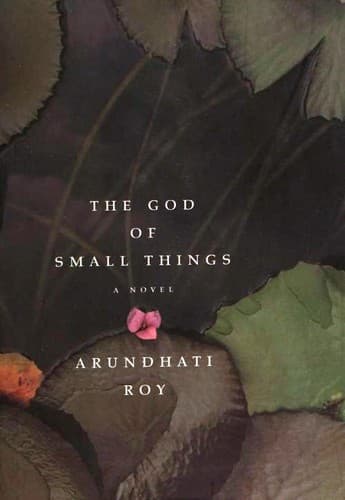
Book details and cover from Google Books.
Ready to read The God of Small Things?
Get your copy on Amazon, or listen to it on Audible. We earn a commission if you buy through these links.