
We earn a commission if you buy through these links. Learn more
The Giving Tree
by Shel Silverstein, Kjell Hill Silverstein
Guide by the Books of the Day editors · Updated · How we write our guides
A deceptively simple picture book about a tree that gives everything it has to a boy, and the question it leaves adults arguing about: is this love, or something less?
What It's About
The Giving Tree, first published in 1964, is a short picture book with very few words. Silverstein's text is spare, and his simple line drawings do much of the work, showing a boy and a tree across the seasons of a life. The story follows their relationship as the boy grows older and keeps coming back to the tree for something new, and the tree keeps saying yes.
Reading it takes only a few minutes, but the experience lingers. Children tend to hear it as a warm story about generosity. Adults often hear something sadder, a one-sided relationship in which one party gives and the other takes, and the book never stops to judge it. The narration stays neutral, which is why readers bring their own verdict to it.
It works best read aloud, with a pause before the final pages. Don't expect a plot with twists or a lesson spelled out. The book is built around a single image and a single emotional question, and it trusts you to answer it. Children often have strong opinions about the boy, and those opinions tend to change as they grow older.
Read this if you…
- want a short picture book that sparks a real conversation with a child or an adult
- are interested in how a simple story can carry a heavy moral question without answering it
- are revisiting it as a parent or teacher and want a fresh reading of a familiar book
Skip it if you…
- want a story with a clear moral and a neat, reassuring resolution
- need a book with developed characters, a plot, or a sense of the wider world, since this one offers very little of each
Key Ideas
- 1
Giving as the tree's whole identity
The tree defines itself entirely through what it can offer. It never seems to want anything for itself, and the book leaves open whether that is admirable, touching, or a kind of self-erasure. Paying attention to how the tree describes its own happiness is one of the most rewarding parts of a reread.
- 2
A relationship seen from one side
We see the boy's requests and the tree's responses, but we rarely see what the boy feels about receiving. The narration does not interpret the exchange for us. That gap is the source of most of the book's power and most of its controversy.
- 3
Words and pictures sharing one job
The text repeats its phrasing as the visits pile up, and the drawings shift with the seasons and the boy's age. Together they create a steady rhythm that children pick up quickly. The simplicity is deliberate and makes the emotional turns land harder than a longer story would.
- 4
Where love and self-sacrifice blur
The book asks readers to separate loving someone from disappearing for them. It offers no answer. Parents and teachers often use it to start conversations about healthy generosity, boundaries, and what a fair relationship looks like, precisely because the book itself stays silent on those points.
- 5
A book that changes with its reader
Because the story withholds judgment, the same pages can read as a sweet fable at five and as a sharp meditation on family, friendship, or parenting at thirty-five. Many readers notice that their reaction to it shifts over time, which says as much about the reader as about the book.
Limitations
The most common criticism is that the book romanticizes self-sacrifice and presents a lopsided relationship as the ideal form of love. Some critics argue it teaches children that giving everything to someone who keeps asking is virtuous. The boy is never given an inner life, so readers cannot tell whether he is grateful, careless, or simply unaware. The drawings and the male-centered framing also reflect the era in which it was made. Many readers still find it moving, but it rewards discussion rather than being a simple lesson.
Questions Readers Ask
- Is The Giving Tree suitable for young children?
- Yes. The text is very short and the vocabulary is simple, so it is commonly read to preschool and early-school children. The emotional weight tends to land harder for older kids and adults, so be ready for questions after reading. Many families find it works best as a shared reading rather than something a child reads alone.
- How does it compare to The Velveteen Rabbit?
- Both picture books center on a loving relationship between a child and an object that gives itself up in some way. The Velveteen Rabbit is warmer and more explicitly about becoming real through love. The Giving Tree is more ambiguous and leaves the question of whether its giving is healthy open for the reader to decide.
- Is it still relevant today?
- Yes. It remains widely read in homes and classrooms, and its ambiguity keeps it in conversation. Readers still argue about whether it celebrates generosity or warns against a lopsided relationship, and that debate is a large part of why people keep returning to it.
- Published
- 1963
- ISBN
- 9780329230074
- Difficulty
- beginner
- Category
- Children's Books
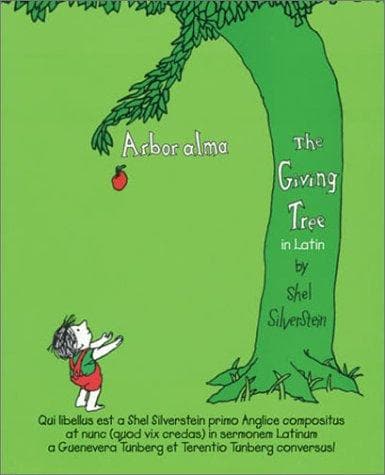
Book details and cover from Google Books.
Ready to read The Giving Tree?
Get your copy on Amazon, or listen to it on Audible. We earn a commission if you buy through these links.