
We earn a commission if you buy through these links. Learn more
The genius of birds
by Jennifer Ackerman, Illus. by John Burgoyne
Ackerman turns recent research on crows, parrots and songbirds into a lively case that birds think far more than we once assumed, though not always like us.
What It's About
The Genius of Birds is a popular science book about avian intelligence. Jennifer Ackerman, a science writer, pulls together research from field studies and laboratory experiments to ask what birds actually know, how they learn, and how their minds compare with ours. She moves from the physical brain, which is built differently from a mammal's but packs its neurons densely, to the behaviors that make people sit up: crows that shape and choose tools, jays that remember where they hid food, and songbirds that learn their songs much as children learn speech.
The approach is narrative and reportorial rather than academic. Ackerman spends time with researchers, describes experiments in plain language, and frames results with stories about the scientists and the birds. The tone is curious and warm, and she is generally careful about what the evidence shows, though she is willing to speculate about what it might mean.
Reading the book feels like being taken on a guided tour by someone who finds the subject thrilling. It works best as a first serious look at the field. Readers come away with a changed sense of how birds perceive and plan, and with a few striking examples they can repeat at dinner.
Read this if you…
- are curious about how animal minds work and want a well-informed, readable introduction
- enjoy vivid examples of crows, parrots and songbirds solving problems or learning from others
- want to rethink assumptions about the gap between human and bird intelligence
Skip it if you…
- want a rigorous, technical account of avian neuroscience or experimental method
- expect a field guide or practical advice about watching or caring for birds
Key Ideas
- 1
Intelligence built on a different brain
Birds lack the layered cortex that mammals have, yet their forebrain is packed with neurons that handle sensing, memory and decision-making. Ackerman argues that this different architecture still produces flexible, sophisticated thought, so judging bird minds by mammal standards misses much of what they can do.
- 2
Tool use and flexible problem solving
Crows and some other corvids make, modify and select tools, and they can work through multistep puzzles. Ackerman uses these cases to argue that such behavior reflects reasoning about cause and effect rather than fixed instinct, though she also notes how researchers have to rule out simpler explanations.
- 3
Memory, planning and food caching
Jays and other food-storing birds remember what they hid, where and roughly when, and they can adjust their hiding when they suspect another bird is watching. These abilities suggest a kind of mental time travel that once seemed reserved for people, and they raise questions about how memory works in any animal.
- 4
Song learning and social lives
Many songbirds learn their songs from tutors during a sensitive period and keep refining them, which resembles how children acquire language. Ackerman also looks at cooperation, play and social bonds, showing that birds' inner lives include learning from others and maintaining relationships.
Limitations
Ackerman leans heavily on a few well-studied groups, especially corvids, parrots and songbirds, so the picture is less representative of the roughly ten thousand bird species than the title suggests. Some comparisons to human abilities are more persuasive than others, and readers who worry about anthropomorphism may find the framing generous. Because the book is popular science, it simplifies debates over interpretation, and research has moved on since its publication, so specific findings may need checking against newer work.
Questions Readers Ask
- Is The Genius of Birds good for someone new to animal cognition?
- Yes. Ackerman explains experiments in everyday language and keeps the focus on striking examples rather than technical detail. It is a good first book on the subject. Readers who want more rigor can use its notes and bibliography to move on to academic reviews and original papers.
- How does it compare with books about animal minds in general?
- It is narrower than broad surveys of animal intelligence and more focused on birds, which makes it more vivid. It is less rigorous than specialist works, but its strength is storytelling. Readers who finish it often pick up a more analytical book next to balance the enthusiasm.
- Published
- 2016
- ISBN
- 9781665150200
- Difficulty
- beginner
- Category
- Psychology
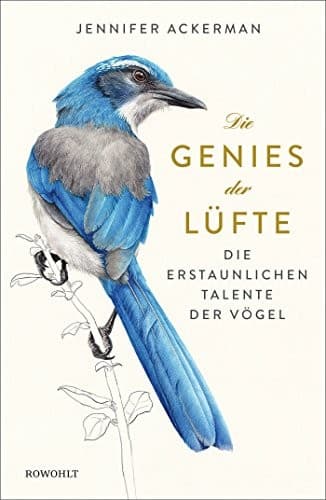
Book details and cover from Google Books.
Ready to read The genius of birds?
Get your copy on Amazon, or listen to it on Audible. We earn a commission if you buy through these links.