
We earn a commission if you buy through these links. Learn more
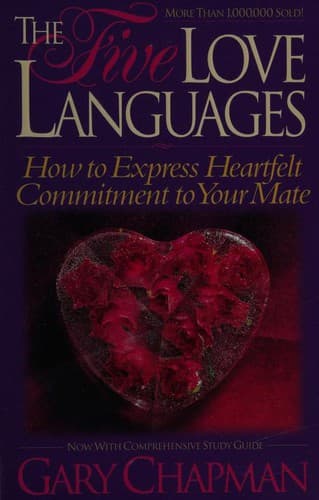
The Five Love Languages
A short, widely read marriage book that gives couples a simple vocabulary for why affection sometimes fails to land, even when both partners mean well.
What It's About
The Five Love Languages is a short marriage book first published in 1992, built on Gary Chapman's years of counseling couples. Its central claim is that people express and receive affection in distinct ways, and that many relationship struggles come from speaking past each other rather than from a lack of love. Chapman names five categories: words of affirmation, quality time, receiving gifts, acts of service, and physical touch. He argues that each person tends to have a primary language that registers most deeply.
The approach is anecdotal and practical rather than academic. Chapman draws on stories from his counseling practice, includes a self-assessment to help readers identify their own primary language, and then offers suggestions for expressing affection in a partner's language. The tone is warm, plain, and conversational, with an explicit Christian framing and frequent references to faith. The book is brief enough to read in an afternoon, and much of its value comes from applying the ideas afterward.
Reading it feels less like studying a theory than like being handed a lens. Readers often describe a moment of recognition, followed by a new way of interpreting a partner's small gestures. It works best as a starting point for conversation and self-reflection rather than a complete account of how relationships function. Expect a framework for noticing patterns, not a diagnosis of what is wrong in a marriage.
Read this if you…
- want a simple, low-commitment way to talk with a partner about needs and affection
- are newly married or in a long relationship that feels routine and want a practical starting point
- prefer short, accessible books with concrete suggestions over dense research
Skip it if you…
- want evidence from rigorous studies or a detailed account of how relationships work
- are looking for guidance on abuse, serious mental health issues, or deep incompatibility
Key Ideas
- 1
Affection has different dialects
Chapman's core idea is that people can care deeply and still miss each other because they express care in different forms. One partner may show love by doing chores, while the other hears it only in spoken praise. The book reframes many complaints as mismatches of expression rather than evidence that love has faded.
- 2
Five categories of emotional expression
The framework divides affection into words of affirmation, quality time, receiving gifts, acts of service, and physical touch. The categories are easy to remember and discuss, which is much of their appeal. Chapman suggests that most people have one or two that carry the most weight for them.
- 3
Giving and receiving are different skills
A central insight is that the way you naturally give love is often not the way you most want to receive it. Someone who gives generously through practical help may feel unappreciated when their partner responds with compliments. Recognizing this gap can change how couples interpret each other's efforts.
- 4
Learning a partner's language on purpose
The practical payoff is deliberate effort. Once a couple identifies each other's primary language, the book encourages them to make small, consistent gestures in that form. The emphasis is on regular, specific actions rather than grand romantic displays.
- 5
A simple tool for starting conversations
The book's self-assessment and shared vocabulary give couples a neutral way to discuss needs without blame. Many readers find it easier to say what they want using the framework than to start from criticism. Its usefulness depends on both partners being willing to engage.
Limitations
The book is largely based on Chapman's counseling experience and anecdotes, not systematic research, and critics say the five categories oversimplify complex emotional lives. Its Christian framing will not suit every reader, and it is written mainly with romantic marriage in mind, though later editions and companion books extend the ideas to other relationships. Some readers find the gifts category reads as materialistic. The book also does not address abuse, addiction, or serious mental health concerns, and it can make a relationship problem seem solvable by better gestures when deeper issues are involved.
Questions Readers Ask
- Is The Five Love Languages still relevant today?
- Its core idea, that people feel loved in different ways, remains widely useful and is easy to apply to any close relationship. Its examples and marriage-centered framing feel dated in places, and its claims are not backed by rigorous research. Treat it as a practical conversation tool rather than a scientific account of love.
- Who is this book best suited for?
- It suits couples who want a clear, shared vocabulary for affection, and people who tend to assume others show love the same way they do. It is less useful for readers who want deep psychological analysis or guidance on serious relationship problems, which call for a counselor.
- Published
- 1992
- ISBN
- 9780786274598
- Difficulty
- beginner
- Category
- Spouses
Book details and cover from Google Books.
Ready to read The Five Love Languages?
Get your copy on Amazon, or listen to it on Audible. We earn a commission if you buy through these links.