
We earn a commission if you buy through these links. Learn more
The farming of bones
Guide by the Books of the Day editors · Updated · How we write our guides
A harrowing, lyrical novel about the 1937 massacre of Haitians in the Dominican Republic, and a reminder that history's victims are often the ones left out of the record.
What Creators Say About The farming of bones
2 creators reviewed The farming of bones on YouTube between 2020 and 2023, with 3.8K views between them. Their opinions are their own; we picked these reviews, we didn't write them.
What It's About
The Farming of Bones is set in October 1937 along the border between the Dominican Republic and Haiti, when dictator Rafael Trujillo ordered the killing of thousands of Haitians living and working there, many of them cane cutters. The narrator, Amabelle Désir, has spent much of her life working as a servant in a Dominican household, and her story moves between that house, the cane fields, and the river that divides the two countries.
Danticat writes in a first-person voice that feels less like a plot being delivered than a memory being slowly assembled. She circles back, repeats phrases, and lingers on small physical details such as food, water, and the feel of hard work, so the violence arrives in fragments rather than as one set piece. The prose switches between Haitian Kreyòl and Spanish, which sharpens the sense of two worlds sitting uneasily side by side.
Reading it is a sorrowful, unhurried experience. The book is short, but it asks for patience and emotional stamina. It rewards readers who want to think about how a nation remembers its atrocities and who gets to tell those stories. The ending offers less resolution than a reckoning, so it is best approached without expecting closure.
Read this if you…
- want a novel that treats a little-known historical massacre with seriousness and care
- appreciate lyrical, repetitive prose that builds feeling slowly rather than through plot twists
- are interested in how language, race, and national identity intersect on a border
Skip it if you…
- need fast-moving plot or a clear, tidy resolution
- find violence against civilians too heavy to read about, even when it is handled without gratuitous detail
Key Ideas
- 1
Memory as witness and testimony
Amabelle's narration is an act of remembering on behalf of people who were murdered and then barely mourned. The book keeps asking who gets to speak for the dead and what it costs to carry their names. Much of its power comes from the sense that the telling itself is a form of resistance against official silence.
- 2
Language as a border
The novel shows how a single word could decide who lived. Soldiers used pronunciation tests to separate Haitians from Dominicans, and the difference between Kreyòl and Spanish becomes a matter of life and death. Danticat uses language to show that identity is often imposed from outside by people in power.
- 3
Intimacy and hierarchy in the household
Amabelle's life inside a Dominican family is close and affectionate, yet it is also built on servitude and unequal power. The book refuses to make these relationships simple. Loyalty, dependence, and complicity sit side by side, which makes the domestic scenes as uncomfortable as the scenes of violence.
- 4
Love and survival in the shadow of loss
A central relationship gives the novel its emotional anchor. Danticat treats desire, tenderness, and everyday routine as things worth preserving even when the world around them is collapsing. These quieter moments make the broader historical catastrophe feel personal rather than abstract.
- 5
History that official accounts left out
The book is concerned with what the state chose to erase. Trujillo's regime presented the killings in its own terms, and the novel works against that version by giving names, sensations, and inner lives to people who were reduced to numbers. Readers come away thinking about how many other atrocities go unrecorded.
Limitations
Some readers find the fragmented, circling style slow going, especially in the early chapters, and the repetition can feel deliberate to the point of frustration. The Dominican side of the story is mostly seen from outside, through servants and laborers, so the political machinery of the regime remains at a distance. Readers without some background in Caribbean history may need to look up context. The novel is short, which leaves a few supporting characters and threads thinner than the reader might like.
Questions Readers Ask
- Is The Farming of Bones based on a real event?
- Yes. The novel is set during the 1937 killing of Haitians in the Dominican Republic, which was ordered by dictator Rafael Trujillo. Danticat builds a fictional story around that real massacre, so the setting and broad events are historical while the characters and personal narrative are invented.
- How does it compare to Mario Vargas Llosa's The Feast of the Goat?
- Both novels deal with Trujillo's regime, but they take very different routes. Vargas Llosa moves between the dictator, his circle, and a former insider, offering a political portrait of power. Danticat stays close to a witness on the ground and focuses on the victims, so her book feels more intimate and grief-centered.
- Is this a good first Edwidge Danticat novel?
- It can be, but many readers start with Breath, Eyes, Memory, which is more personal and somewhat easier to enter. The Farming of Bones is darker and more historical. Readers who want to understand her interest in memory and violence may find it rewarding, but it is a demanding place to begin.
- Published
- 1998
- ISBN
- 9781569471418
- Difficulty
- intermediate
- Category
- Fiction
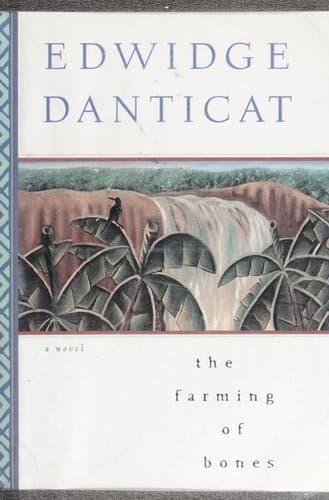
Book details and cover from Google Books.
Ready to read The farming of bones?
Get your copy on Amazon, or listen to it on Audible. We earn a commission if you buy through these links.