
We earn a commission if you buy through these links. Learn more
The English Patient
On screen: The English Patient (film, 1996)
Guide by the Books of the Day editors · Updated · How we write our guides
Ondaatje's Booker-winning novel turns a burned man's sickbed in an abandoned Italian villa into a lyrical meditation on memory, love, and the lines people draw between nations.
What Creators Say About The English Patient
2 creators reviewed The English Patient on YouTube between 2013 and 2019, with 26.9K views between them. Their opinions are their own; we picked these reviews, we didn't write them.
What It's About
The English Patient is set in the final months of the Second World War, mostly in a half-ruined villa in the Tuscan hills, where a Canadian nurse named Hana has agreed to care for a man so badly burned that he is hard to recognize. Around them gather a few others damaged by the war in different ways: a thief turned intelligence operative, and a young Sikh sapper whose job is defusing the explosives left behind by retreating armies. The setting is small, but the book's reach is enormous.
Ondaatje does not tell the story in a straight line. Scenes move between the villa and the Libyan desert of the 1930s, where the patient's past is pieced together from memories, letters, notebooks and the recollections of others. The prose is dense with image and sensation, and the book often reads more like a sequence of luminous moments than a conventional plot. Readers who want clear cause and effect may find the drift frustrating at first, because the chronology has to be assembled by the reader.
Reading it is a slow, sensuous experience, closer to poetry than to a thriller, though a current of suspense runs underneath. Ondaatje cares more about how people carry their histories, how maps and borders shape lives, and how tenderness can survive in a place built for destruction. Expect to reread some passages, and to let atmosphere do much of the work.
Read this if you…
- enjoy a novel that prizes atmosphere and language over tidy plot
- are interested in how war shapes people long after the fighting stops
- like love stories told in fragments, tangents and shifting timeframes
Skip it if you…
- need a clear, linear plot with a steady pace from start to finish
- want a straightforward historical account of the Second World War or the desert campaigns
Key Ideas
- 1
Memory as a fragmented, unreliable record
The novel treats remembering as an act of selection and reconstruction. Characters recall the past in pieces, and what they choose to hold onto or leave out shapes who they have become. Ondaatje makes the reader feel that history is never a finished object but something people keep rebuilding, sometimes out of necessity and sometimes out of longing.
- 2
Maps, borders and the arbitrariness of nations
Much of the backstory involves mapping the desert, a project that sounds scientific but is bound up with politics, rivalry and national ambition. The book keeps asking who gets to draw lines and what those lines cost the people caught on either side. Loyalty to a country, it suggests, can be a fragile thing next to loyalty to a person.
- 3
The damaged bodies and minds war leaves behind
Each of the villa's residents carries a visible or hidden injury from the war. Ondaatje is less interested in battle scenes than in the long tail of violence: scarred skin, disarmed nerves, guilt and exhaustion. The characters' attempts to care for one another in a shattered place give the book much of its emotional weight.
- 4
A lyrical style that favors image over plot
Ondaatje's sentences are sensory and musical, and he will linger on a single gesture or landscape for pages. Plot is present but secondary to mood and association. This makes the book distinctive, though it also means the emotional payoff comes through accumulation and attention rather than through a clear sequence of events.
Limitations
Many readers find the nonlinear structure disorienting, and the lyrical style can blur characters and events, especially in the middle sections. Some critics have argued that the novel's romanticized view of North Africa and the Middle East uses the desert as a backdrop for European emotional drama, and that its non-European characters receive less interior depth than the Western ones. The 1996 film is more streamlined, so readers who have seen it may be surprised by how different the book feels.
Questions Readers Ask
- Is The English Patient worth reading if I have already seen the film?
- Yes, though the experience differs. The film is more conventional and emphasizes the romance, while the novel is looser, more fragmented and more interested in memory, landscape and the minor characters. Many readers find the book richer and stranger, and it rewards a second reading that the film does not attempt.
- How does it compare to a more conventional war novel?
- Most war novels build toward battles or a clear sense of progress. This one stays mostly in a single villa and moves backward and sideways in time. If you enjoy traditional war fiction, you may find it slower, but it offers a more intimate look at what remains after the fighting ends.
- Published
- 1992
- ISBN
- 9788466337700
- Difficulty
- intermediate
- Category
- Fiction
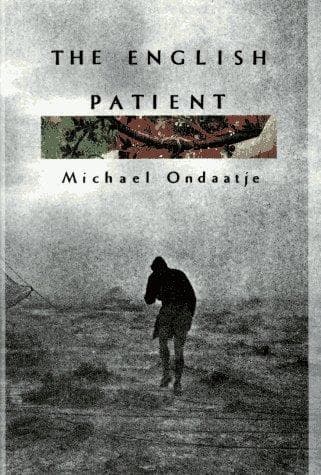
Book details and cover from Google Books.
Ready to read The English Patient?
Get your copy on Amazon, or listen to it on Audible. We earn a commission if you buy through these links.