
We earn a commission if you buy through these links. Learn more
The Endless Steppe
Guide by the Books of the Day editors · Updated · How we write our guides
A short, plainly told memoir-style novel of a Vilna girl's deportation to Siberia in 1941, worth reading for its restraint and its focus on everyday survival over melodrama.
What Creators Say About The Endless Steppe
2 creators reviewed The Endless Steppe on YouTube between 2015 and 2020, with 2K views between them. Their opinions are their own; we picked these reviews, we didn't write them.
What It's About
The Endless Steppe is a memoir-style novel based on the author's own childhood. Esther Hautzig was a girl in Vilna, then a city in Poland, when Soviet authorities deported her family to Siberia in 1941. The book follows the family from the journey east to a remote settlement where they are assigned to forced labor, and through the years of cold, hunger, and uncertainty that followed.
The writing is simple and direct, and it stays close to a young narrator's point of view. It does not try to explain the wider politics or history in depth. Instead it concentrates on daily tasks, small comforts, and the ways family members try to keep one another going. Hautzig's tone is restrained rather than melodramatic, so the hardships land through concrete detail rather than heavy-handed sentiment.
Reading it feels like listening to someone recall a hard stretch of life with clarity and without self-pity. The book is short and quick to finish, and it is often taught in schools, which makes it a gentle entry point to the Soviet deportations for younger readers. Adults may find it lighter on analysis than other accounts of the same period, but its emotional honesty is the main reason to read it.
Read this if you…
- want an accessible introduction to Soviet deportations and forced labor
- are looking for a personal account told in plain, unembellished language
- enjoy quiet, family-centered stories of endurance rather than action-driven plots
Skip it if you…
- want a detailed historical analysis of Soviet policy or the wider war
- prefer dense, literary prose or experimental structure
Key Ideas
- 1
Survival built from ordinary routine
Much of the book shows how getting through each day depends on mundane work: finding food, keeping warm, and doing whatever labor is assigned. Hautzig treats these routines as the real texture of life in exile, and the reader sees how endurance is mostly a matter of persistence in small things rather than heroic gestures.
- 2
The family as the last stable place
With home, property, and schooling stripped away, the family unit becomes nearly everything the narrator has. The relationships between parents, grandmother, and child carry much of the emotional weight, and the book pays close attention to how the household adapts, argues, and supports itself under pressure.
- 3
Dignity kept in small rituals
Even in deprivation, the family keeps certain habits and gestures that mark them as people rather than prisoners. These moments of care and self-respect are small, but they give the narrative its sense of hope and show what the family is struggling to preserve.
- 4
Childhood interrupted by state power
The book is a portrait of a girl whose adolescence is shaped by decisions made far above her. The lack of control over where she lives and what she can do is central, and the story asks the reader to notice how quickly ordinary expectations about school, friendship, and the future can be overturned.
Limitations
The book is brief and deliberately narrow in scope. It covers one family's experience and does not explore the broader history of Soviet deportations, the experiences of other groups in the same camps, or the political reasons behind them. Some readers find the prose too simple for adult tastes, and the emotional register is restrained enough that those expecting an intense, harrowing account may feel it holds back. Because it was written for younger readers, it also omits some of the grimmer details that more adult memoirs of this period include.
Questions Readers Ask
- Is The Endless Steppe suitable for adults or only children?
- It is written in a clear, accessible style and is widely read by younger readers, but adults often find it rewarding too. It works well as a first encounter with this history. Adults who want more historical depth or more graphic detail may want to pair it with a longer account of the same period.
- Is it based on real events?
- Yes. The book draws on the author's own childhood deportation from Vilna to Siberia. It is presented in a memoir-like style, though readers interested in the exact details should consult the author's other writing and independent historical sources.
- What should I read after this book?
- If you want a more detailed account of the same era, consider a longer adult history of Soviet deportations and forced labor. For a closer, more harrowing personal story, look for other survivor memoirs of Soviet camps, which tend to be far more unflinching in their detail.
- Published
- 1968
- ISBN
- 9780064470278
- Difficulty
- beginner
- Category
- Children's Books
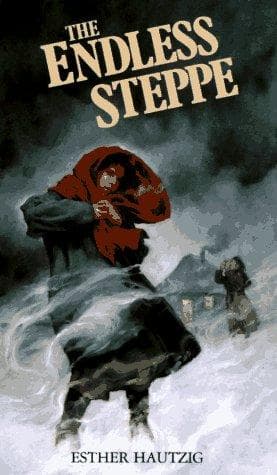
Book details and cover from Google Books.
Ready to read The Endless Steppe?
Get your copy on Amazon, or listen to it on Audible. We earn a commission if you buy through these links.