
We earn a commission if you buy through these links. Learn more
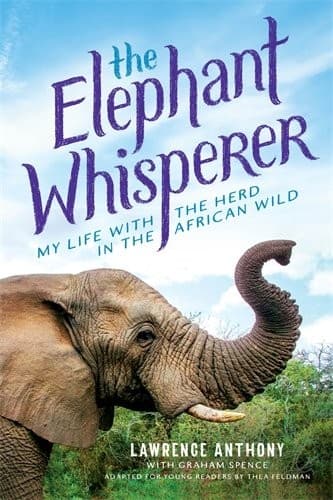
The elephant whisperer
A warm, fast-moving memoir by a game reserve owner who worked to settle a herd of wild elephants, offering a close-up view of animal behavior and the daily realities of conservation.
What It's About
The Elephant Whisperer is a memoir by Lawrence Anthony, a conservationist who ran Thula Thula, a private game reserve in KwaZulu-Natal, South Africa. Its central story concerns a group of wild elephants that arrived at the reserve with a troubled reputation and the difficult work of helping them settle there. Anthony writes as a participant rather than a detached naturalist, so the book reads more like a series of field episodes than a textbook.
The style is conversational and brisk. Much of the appeal comes from its attention to daily routines: tracking animals, reading their body language, and working alongside local staff whose knowledge of the land shapes the story. Anthony leans on anecdote and emotional moments. That is part of the pleasure, but it is also the book's weakness, since some claims about elephant feelings and communication rest on his personal impressions rather than systematic observation.
Reading it feels like sitting with a storyteller who admits his mistakes and keeps returning to one idea: patience and respect can accomplish more than force. Expect a mix of adventure, conservation problems, and tender scenes. It is written for adults and includes frank accounts of danger and violence, so despite the children's category tag, it suits teen and adult readers best.
Read this if you…
- love animal memoirs with a strong narrative pull
- are curious about how a working wildlife reserve actually runs
- want an accessible, personal introduction to elephant behavior and conservation
Skip it if you…
- need rigorous, peer-reviewed evidence about elephant cognition or emotion
- want a light picture book or a story written specifically for young children
Key Ideas
- 1
Patience works better than force
Anthony's central argument is that working with large, frightened animals depends on slowing down, observing closely, and letting trust build over time. The book shows how quick fixes and aggressive handling can make a difficult situation worse, and how small, consistent gestures can change an animal's behavior over weeks and months.
- 2
Elephants as emotionally complex animals
The book presents elephants as social creatures with strong family bonds, memory, and something like grief. Anthony describes them in human-adjacent terms, which makes them vivid and relatable. Readers who want rigorous evidence should treat these descriptions as one observer's interpretation rather than settled science.
- 3
Conservation depends on people as much as land
Reserves do not exist in isolation. Anthony's account returns repeatedly to local staff, neighboring communities, money, and the pressure of shrinking habitat. The point is practical: protecting wildlife requires managing human needs, relationships, and expectations alongside the animals themselves.
- 4
A reserve as a working, fragile enterprise
The book is also a portrait of running a private wildlife operation day to day. It covers the unglamorous side of the work, including logistics, staffing, and the constant risk that a single bad decision could cost lives. This grounding keeps the story from becoming pure sentiment.
Limitations
The book's biggest criticism is its tone. Anthony's prose is emotional and sometimes heroic, and critics have argued that it frames his own role more prominently than the animals' experience warrants. Many of its claims about elephant communication and feeling come from personal observation rather than controlled study. It also offers limited wider context on elephant conservation across Africa, the policy debates around culling and habitat, or the scientific research that has developed since its publication. Readers should take it as a vivid personal account, not a complete guide.
Questions Readers Ask
- Is The Elephant Whisperer suitable for children?
- It is a grown-up memoir, not a children's book in the usual sense. Its subject matter is accessible, and older teens who enjoy animal stories can read it without difficulty. It includes frank descriptions of danger and violence, so parents of younger readers may want to read it first or preview the more intense sections.
- How does it compare to scientific books about elephants?
- It is much more personal and narrative-driven. Scientific books on elephants rely on long-term field studies and careful measurement, while this book relies on one man's close experience with a particular herd. Readers who want the story and emotional texture will enjoy it, but those who want evidence should pair it with more rigorous research.
- Published
- 2009
- ISBN
- 9781627793094
- Difficulty
- beginner
- Category
- Children's Books
Book details and cover from Google Books.
Ready to read The elephant whisperer?
Get your copy on Amazon, or listen to it on Audible. We earn a commission if you buy through these links.