
We earn a commission if you buy through these links. Learn more
The Eight
Guide by the Books of the Day editors · Updated · How we write our guides
A sprawling, puzzle-driven thriller that braids a 1790s chess mystery with a 1970s computer-age hunt, rewarding readers who enjoy history, games, and fast plotting.
What Creators Say About The Eight
2 creators reviewed The Eight on YouTube between 2011 and 2016, with 3.2K views between them. Their opinions are their own; we picked these reviews, we didn't write them.
What It's About
The Eight is a long, ambitious novel from 1988 that runs two stories side by side. One follows a young woman in the years around the French Revolution, drawn into a search for a legendary chess set said to hold great power. The other follows a computer programmer in the early 1970s who finds herself pulled into a similar hunt after a run of strange events tied to a mentor. Neville moves between the two timelines, letting each thread pick up clues the other has dropped.
The approach is closer to an adventure serial than a literary character study. Chapters end on hooks, the action travels across several countries, and the logic of a chess game shapes the book's structure, with pieces, moves, and gambits serving as a metaphor for the plot. Neville clearly enjoys the mechanics of puzzles and codes, and she wants readers to enjoy them too. Period detail is worn fairly lightly, and the tone shifts between romance, espionage, and mystery.
Reading it feels like settling in for a big, immersive game of pursuit. Much of your attention goes to tracking who knows what, and the payoff comes from watching separate threads click together. It rewards patience and a willingness to accept coincidence and sweeping set pieces as part of the bargain.
Read this if you…
- love intricate plots that reward close attention and careful tracking of clues
- enjoy historical adventure with a modern thread running alongside it
- are curious about chess, codes, or puzzle-driven fiction
Skip it if you…
- want spare, economical prose or a tightly edited story
- get impatient with long stretches of setup and a large cast of characters
Key Ideas
- 1
Chess as a structural metaphor
The game is more than a MacGuffin. Its pieces, openings, and sacrifices echo the way characters maneuver against one another, and the book keeps returning to the idea that every move closes some options and opens others. Readers who know chess will notice the design more, but the logic is explained well enough that a newcomer can follow it.
- 2
Puzzles and codes as the engine
Much of the momentum comes from riddles, ciphers, and hidden meanings that characters must decode. Neville invites readers to work alongside them, so the pleasure lies partly in anticipating solutions before they arrive. The puzzles can feel contrived at times, but they give the narrative a distinctive pull.
- 3
Two women, two eras, one thread
The parallel heroines live in very different worlds yet face a similar problem: being underestimated in male-dominated spaces of power, games, and technical expertise. Their stories mirror and complicate each other, and the historical timeline gradually becomes a way of understanding the modern one.
- 4
Coincidence and fate as deliberate choices
The novel leans openly on coincidence, reunions, and the sense that certain people are bound to meet. Some readers will find this thrilling, a nod to the pulp tradition of adventure fiction. Others will feel the plot is steered more by design than by character, so how much you accept this shapes your enjoyment.
Limitations
The book is long, and many critics find its middle sections baggy, with plot threads that multiply faster than they resolve. Its reliance on coincidence can strain credibility, and some characters serve mainly as vehicles for the next clue. The 1970s computer material now reads as dated, both in technology and in how it frames women's expertise. Readers looking for deep psychological realism or rigorous historical accuracy may find it more entertaining than authoritative.
Questions Readers Ask
- Do I need to know chess to enjoy The Eight?
- No. The book explains what matters about the game as it goes, and the chess imagery works mainly as a structure and mood. Knowing the rules will add a layer of pleasure, especially in the chess-related passages, but the adventure and mystery stand on their own for most readers.
- How does The Eight compare to Umberto Eco's Foucault's Pendulum?
- Both are long, erudite novels that treat a historical puzzle as a route into bigger ideas. Eco is more interested in satire and the seductions of secret knowledge, while Neville is more committed to pace, romance, and plot mechanics. If you want a page-turner with a historical hook, The Eight is the more direct read.
- Published
- 1989
- ISBN
- 9780739354339
- Difficulty
- intermediate
- Category
- Fiction
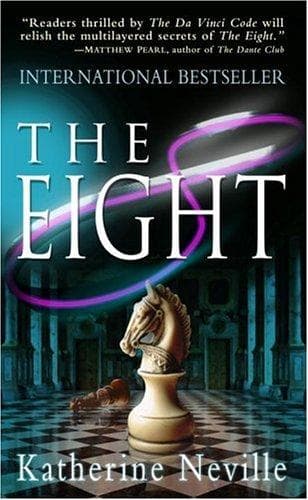
Book details and cover from Google Books.
Ready to read The Eight?
Get your copy on Amazon, or listen to it on Audible. We earn a commission if you buy through these links.