
We earn a commission if you buy through these links. Learn more
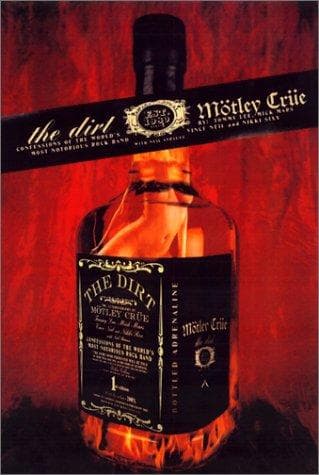
The dirt
by Mötley Crüe (Musical group), Tommy Lee
Guide by the Books of the Day editors · Updated · How we write our guides
A blunt, self-told history of 1980s glam metal excess, with four members contradicting each other on the same nights, worth reading for its raw chaos and for how little it protects its authors.
What Creators Say About The dirt
2 creators reviewed The dirt on YouTube between 2019 and 2021, with 2.2M views between them. Their opinions are their own; we picked these reviews, we didn't write them.
What It's About
The Dirt is the band's own account of its climb from Los Angeles club gigs to stadium success, and of the drugs, crashes, deaths of friends, and feuds that followed. Written with the journalist Neil Strauss and built from extended interviews, it reads like an oral history. The four members take turns narrating, and each voice carries its own memories, grudges, and version of events. That shifting perspective is the book's main engine: one member's swagger is often undercut a few pages later by another's account of the same night.
The prose is fast, blunt, and frequently funny in a sour way. There is little reflection and few tidy lessons. The authors mostly report what they did and what it cost them, with occasional flashes of regret that rarely last. Expect frank sex, heavy drug use, violence, and a steady stream of self-mythologizing. It works best as a read-in-a-few-sittings experience. The music gets comparatively little attention, so this is a book about behavior and personalities rather than songwriting or studio craft.
What you come away with is less a portrait of the music business than a picture of how easily excess can pass for identity when fame arrives young and nobody says no. Whether that is gripping or grim depends on how much you enjoy spending time with people who were rarely easy to like.
Read this if you…
- enjoy candid, oral-history style memoirs about rock bands
- want an unvarnished look at 1980s hard rock culture and its excesses
- like reading contradictory first-person accounts and weighing them yourself
Skip it if you…
- find graphic drug use, sexual content, or violence hard to read
- are looking mainly for detailed analysis of the band's music or songwriting
Key Ideas
- 1
Fame as an accelerant
The book shows how sudden success magnified every existing appetite. Money, access, and an audience that rewarded outrageousness turned small habits into serious problems within a few years. The authors present this less as a moral lesson than as a sequence of escalations, each one seeming reasonable at the time, which is why the account feels so uncomfortably plausible.
- 2
Memory as a battlefield
Because each member narrates, the same events appear in conflicting versions. Readers have to decide whom to believe, and the disagreements reveal as much about the bandmates' rivalries and self-image as the stories do. Treating the book as a set of competing testimonies, rather than a single authoritative record, is the most rewarding way to read it.
- 3
Oral history as a structure
Rotating first-person chapters give the book momentum and a loose, conversational rhythm. Short jumps between voices keep the pace high even through repetitive stretches of partying. The format also means the book lacks an outside narrator to frame events, so judgment is left almost entirely to the reader.
- 4
Excess as self-mythology
Much of the book is about how the band built a legend around its own outrageousness and then had to keep living up to it. The stories are polished for effect, and the authors are clearly aware of their reputation. Seeing where the myth is maintained, and where it cracks, is one of the book's more interesting features.
Limitations
The book is self-serving by design. Each member frames events to flatter himself, and the authors have every incentive to play up their wildness. Women are often portrayed through a lens that many readers now find crude and objectified, and the tone can feel celebratory about harm done to others. Because it covers the band's early years in detail, it says much less about later periods and about the music itself. Its style, slangy and very much of its era, may also feel dated to younger readers.
Questions Readers Ask
- Is The Dirt an accurate account of the band's history?
- Treat it as testimony rather than a verified record. The four members often disagree about the same events, and their memories are shaped by ego, sobriety, and the years between events and telling. Some episodes are corroborated by other sources, while others rest mainly on the band's word. Reading the disagreements closely is part of getting value from the book.
- Is there a film version, and should I watch it instead?
- Yes, a 2019 Netflix film adapted the book. It compresses the story, smooths some edges, and makes certain episodes more cinematic. If you want the raw, multi-voiced texture, the book is the better experience. If you want a faster overview of the same events, the film covers the highlights, though it takes its own liberties.
- Published
- 2001
- ISBN
- 9780060392888
- Difficulty
- beginner
- Category
- Biographies
Book details and cover from Google Books.
Ready to read The dirt?
Get your copy on Amazon, or listen to it on Audible. We earn a commission if you buy through these links.