
We earn a commission if you buy through these links. Learn more
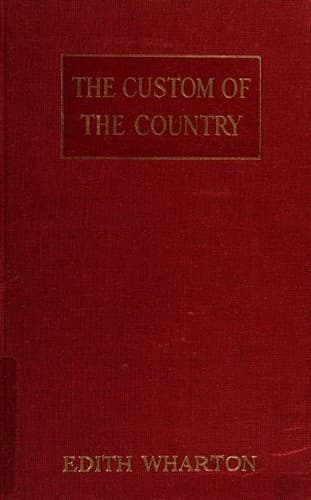
The Custom of the Country
Edith Wharton's sharp 1913 satire of ambition and class follows a beautiful, ruthless heroine who treats marriage as a ladder, and it stays unsentimental to the end.
What It's About
The Custom of the Country (1913) follows Undine Spragg, a beautiful and ambitious young woman from Apex, a booming Midwestern town with more money than manners. Undine arrives in New York with a bottomless appetite for status and pleasure, and she treats marriage less as a commitment than as a ladder. The novel tracks her through a series of marriages and divorces, each one measured by what it gains her in the social hierarchy.
Wharton writes with the precision of a social observer. Her narrator is cool and ironic, dissecting the rules of old New York and the newer, looser world of new money with equal sharpness. The prose is elegant and sometimes dense, with long sentences that pile up qualifications the way society pages pile up names. Reading it feels like watching a skilled portraitist paint someone you cannot quite like but cannot look away from.
What makes it distinctive is the refusal to make Undine a simple villain or a simple victim. Wharton lets her be charming, unsentimental, and often pitiless, while also showing the men and families who enable or are ground down by her. The experience is less a fast plot than a slow accumulation of disappointment, and its satire lands harder because it stays so calm.
Read this if you…
- enjoy sharp social satire about ambition, money, and class
- like novels of manners by Austen or Trollope but want a harder edge
- are curious how the Gilded Age handled marriage, divorce, and reputation
Skip it if you…
- want a fast-paced plot with suspense or a clear hero to root for
- find it hard to spend time with unlikable characters
Key Ideas
- 1
Marriage as a currency of social rank
In Wharton's New York, a marriage is a transaction that trades money, family name, and access to the right rooms. Undine sees this more clearly than the people around her and has no interest in pretending otherwise. The book asks what a woman is worth in a system where her husband's standing sets her price, and it shows how little romance survives that arithmetic.
- 2
Divorce as an ordinary tool, not a scandal
Undine treats divorce as a practical step, not a moral crisis. Wharton uses her attitude to expose how the social world punishes some people for leaving a marriage while excusing others who simply trade up. The contrast between Undine's casualness and the anxiety of the people she leaves gives the novel much of its bite.
- 3
Old money against new money
Wharton sets the inherited, carefully managed wealth of established families against the brash, fast fortunes of the newly rich. Neither side comes off as admirable. The old families are rigid and hypocritical, while the new money is hungry and crude, and the book finds comedy and sadness in both.
- 4
Irony that stays cool and exact
The novel's storytelling is distinctive because its narrator never shouts. The judgment comes through precise observation, a well-placed detail, or an understated remark. Readers who enjoy satire that works through restraint will find this more rewarding than overt condemnation, and the calm tone makes the characters' failures more unsettling.
Limitations
Undine is deliberately hard to like, and some readers find the cool, distanced narration keeps them at arm's length from everyone in the book. Wharton's social world is narrow, focused on wealthy white families in the East, and her treatment of Midwestern and immigrant characters can read as snobbish or dated. The satire targets a class and set of customs that have changed a great deal, so some of its sting depends on historical context. The long, qualified sentences also slow the pace for modern readers used to brisk prose.
Questions Readers Ask
- Is The Custom of the Country still relevant today?
- Yes. The core themes of marriage as a status move, anxiety about money and image, and the way reputation shapes women's choices remain familiar. The legal and social details of divorce have changed a lot since 1913, so some context helps, but the satire of ambition and social performance still feels sharp.
- How does it compare to The House of Mirth?
- Both are Wharton's satires of New York society, but they feel different. The House of Mirth is more melancholy and tragic, centered on a heroine who is undone by the rules she tries to follow. The Custom of the Country is more sardonic, and its heroine is far more ruthless and less inclined to suffer quietly.
- Published
- 1900
- ISBN
- 9781983478642
- Difficulty
- intermediate
- Category
- Fiction
Book details and cover from Google Books.
Ready to read The Custom of the Country?
Get your copy on Amazon, or listen to it on Audible. We earn a commission if you buy through these links.