
We earn a commission if you buy through these links. Learn more
The crayon box that talked
by Shane DeRolf
A short rhyming picture book in which a box of crayons speaks up about how different colors belong together, suited to read-aloud sessions with young children.
What It's About
The Crayon Box That Talked is a short picture book for young children, built around a simple premise: a box of crayons starts to speak, and what it has to say is about the value of being different. It is written in verse and aimed at preschool and early-elementary readers, so the experience is quick, playful, and mostly read aloud.
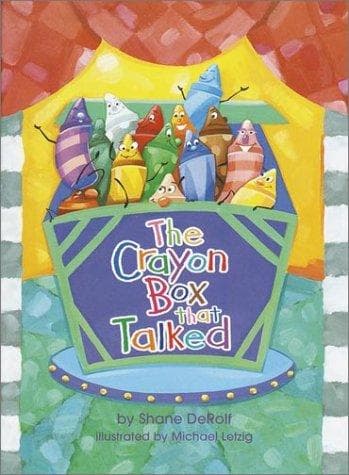
The story leans on the familiar image of crayons that do not match and do not always get along. Rather than a plot with twists, the book moves through a sequence of gentle observations, with the crayons' personalities and the colors' differences doing most of the work. The illustrations carry much of the warmth and humor, and they are where many young readers will spend the most time.
For adults, the value lies less in the story itself than in how easily it opens conversation about fitting in, sharing, and respecting differences. Expect a message delivered plainly and sweetly rather than with subtlety. It works well as a bedtime or classroom choice for a child who is starting to notice that others are not like them.
Read this if you…
- Are reading to a preschool or early-elementary child who is learning about fitting in
- Want a gentle, rhythmic book for read-aloud time or a classroom lesson on differences
- Enjoy simple picture books where the illustrations carry much of the meaning
Skip it if you…
- Are looking for a story with plot, tension, or a surprising ending
- Want a picture book with subtle or layered messages rather than a direct one
Key Ideas
- 1
Difference is presented as a strength
The book's central move is to treat the crayons' unlike qualities as the reason the box is worth having. Each color contributes something a picture needs, so sameness is framed as less useful than variety. For a young child, this reframes being different from a problem into an ordinary, even good, part of belonging to a group.
- 2
Personification makes the lesson easy to hear
Giving the crayons voices lets the book speak to children through characters they can imagine as friends. Instead of being lectured about tolerance, a child hears objects reflect on themselves. That indirect approach is the book's main craft choice and the reason it tends to hold a young listener's attention.
- 3
Verse keeps the read-aloud rhythm steady
The rhyming, rhythmic text is meant to be read out loud, and its cadence is part of the appeal. Parents and teachers will likely notice that the rhythm carries the story more than any plot does. Readers who enjoy sound and repetition will find the pages easy to return to.
- 4
Illustration does much of the storytelling
With so little text per page, the pictures shape how the message lands. Bright color and expressive crayon characters let children read the emotional beats for themselves. Adults sharing the book can pause on images and ask what each crayon seems to feel, which turns the reading into a short discussion.
Limitations
The book is brief, so its lesson is stated more than explored, and older readers may find the message obvious. Its handling of difference is broad and gentle rather than specific, and it does not address the deeper social dynamics that children sometimes face around exclusion or bullying. Like many books of this kind, it works best as an opening for conversation rather than a complete answer. Because this is a simple picture book, adults looking for literary depth will likely find it thin, though that is not really what it is for.
Questions Readers Ask
- What age is The Crayon Box That Talked best for?
- It is aimed at preschool and early-elementary children, roughly ages three to seven, and is most rewarding when read aloud. Younger listeners tend to enjoy the rhythm and pictures, while older children may find the message obvious. It suits adults who want a quick, warm book to share rather than one that demands close reading on their own.
- How does it compare to The Day the Crayons Quit?
- Both use crayons as characters, but they take different routes. The Day the Crayons Quit is comic and plot-driven, built around a series of complaints, while this book is quieter and focused on a single message about difference. If you want humor and a story with momentum, the other book is a better fit. If you want a calm, affirming read, this one is the gentler choice.
- Published
- 1997
- ISBN
- 9780679886112
- Difficulty
- beginner
- Category
- Fiction
Book details and cover from Google Books.
Ready to read The crayon box that talked?
Get your copy on Amazon, or listen to it on Audible. We earn a commission if you buy through these links.