
We earn a commission if you buy through these links. Learn more
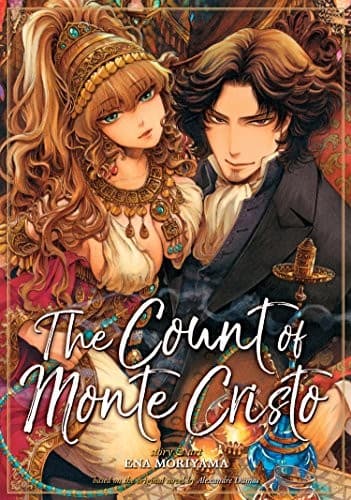
The Count of Monte Cristo
On screen: The Count of Monte Cristo (film, 2002)
A wrongly imprisoned sailor's patient, years-long plan for revenge makes this one of the most gripping adventure novels ever written, and its long build pays off.
What It's About
The novel opens in 1815 in Marseille, where Edmond Dantès, a young sailor on the verge of a promotion, is undone by envious rivals and a prosecutor protecting his own position. He is locked away in the grim Château d'If without a trial. The first stretch is a slow, sympathetic account of how a decent man's life is taken apart. Once he escapes, the book becomes a long, carefully staged campaign against the people who ruined him, and it ranges across Paris, Italy, and the Mediterranean.
Dumas wrote in the rhythm of a serial. Chapters end on hooks, the cast is large, disguises and coincidences pile up, and the plot is driven by theatrical reversals more than by psychological realism. Reading it feels closer to watching a vivid, morally charged melodrama than to reading a modern literary novel. Stretches of meticulous planning alternate with bursts of action, and the pleasure lies in watching a single mind arrange events like pieces on a board.
Underneath the spectacle is a serious question: can one person deliver justice, and what does a lifetime of vengeance do to the person who pursues it? The book is best approached as an immersive experience. Give it time, let its pace work on you, and expect a long read, particularly in unabridged translation.
Read this if you…
- Want a long, plot-driven classic with a revenge arc that actually pays off
- Enjoy watching a clever, patient schemer work through an intricate plan
- Like adventure stories with real moral weight and emotional stakes
Skip it if you…
- Need tight, modern prose and brisk pacing from the first page
- Find coincidence and melodrama hard to forgive in a novel
Key Ideas
- 1
Justice versus personal vengeance
The novel keeps asking whether a wronged man has the right to punish those who harmed him, and whether private retribution can ever be called justice. Dumas does not let the answer stay simple. The protagonist's sense of righteousness grows heavier as his power grows, and the reader is invited to weigh his grievances against the damage his schemes cause to people who were not guilty of the original injury.
- 2
Patience as a narrative and moral engine
Much of the book's force comes from waiting. Dumas lets resentment and planning simmer for long stretches before he releases a reversal, which makes each payoff feel earned. The same patience shapes the protagonist himself, who studies people, bides his time, and treats timing as a weapon. Readers who enjoy long setups will find this structure deeply satisfying.
- 3
Identity, disguise, and reinvention
Almost every major character wears a mask, and the protagonist's new persona is the most elaborate of them all. The book explores how much of a person is shaped by fortune, wealth, and social appearance, and how easily a constructed identity can take over the self it was meant to serve. The theme of performance runs through the social scenes, which are full of people judged by their surfaces.
- 4
Serial storytelling and cliffhanger momentum
The novel was first published in installments, and its construction reflects that. Chapters are built to end on suspense, subplots are introduced and resolved with an eye to the next instalment, and characters return after long absences. This gives the book a propulsive, almost theatrical energy. It also explains some of the coincidences, which serve the rhythm of the story as much as its logic.
Limitations
Critics often point to the coincidences, which are frequent and sometimes strain belief, and to a middle section that can feel repetitive as the revenge machinery turns over. Many of the female characters are thinly drawn and serve mainly as pieces in the men's stories. The moral framing reflects its era and can feel heavy-handed to modern readers. Quality varies widely between translations, and many abridged editions cut the slower character work that gives the book much of its depth.
Questions Readers Ask
- Should I read an abridged edition of The Count of Monte Cristo?
- Abridged versions make the book faster, but they usually cut the subplots and slower character passages that give the revenge its moral weight. If you can commit the time, choose a complete translation from a reputable modern edition. If time is tight, a well-made abridgment is still a good way to get the central story and its satisfying payoff.
- How does it compare to Les Misérables?
- Both are long nineteenth-century French novels with serial energy and a strong moral core. The Count of Monte Cristo is tighter in plot and more of a pure adventure, built around a single revenge arc. Les Misérables is broader, more discursive, and more interested in social and political questions. Readers who like Dumas's momentum often find Hugo's digressions a bigger test.
- Is it still worth reading today?
- Yes, if you enjoy storytelling for its own sake. The core questions about justice, obsession, and reinvention remain alive, and the pacing still rewards patient readers. Expect old-fashioned coincidence and melodrama, and accept them as part of the form. Readers who value the experience of a great plot will still find it hard to put down.
- Published
- 1920
- ISBN
- 9781467775298
- Difficulty
- intermediate
Book details and cover from Google Books.
Ready to read The Count of Monte Cristo?
Get your copy on Amazon, or listen to it on Audible. We earn a commission if you buy through these links.