
We earn a commission if you buy through these links. Learn more
The Code of the Woosters
Guide by the Books of the Day editors · Updated · How we write our guides
Wodehouse at his most cleverly plotted: a hapless gentleman gets roped into a country-house muddle, and the comedy of manners is sharper than almost anything else in English humour.
What Creators Say About The Code of the Woosters
2 creators reviewed The Code of the Woosters on YouTube in 2019, with 13K views between them. Their opinions are their own; we picked these reviews, we didn't write them.
What It's About
The Code of the Woosters is the 1938 Jeeves and Wooster novel in which Bertie Wooster, the amiable and not especially bright narrator, finds himself entangled in a scheme involving a valuable piece of silverware at a country house. Bertie's great talent is for getting into trouble, and his great asset is Jeeves, the valet whose brain does the work Bertie's cannot. The book runs as a rolling farce, with mistaken identities, tangled romantic arrangements, and a cast of aunts, rivals and an intensely earnest neighbour who expects everyone to keep to a strict code of conduct.
The style is what keeps readers coming back. Wodehouse narrates in Bertie's voice, a slangy, self-deprecating prose full of invented similes and comic exaggeration, and the jokes come from the gap between what Bertie believes is happening and what the reader can see. The dialogue is quick, the scenes are staged with the precision of a stage comedy, and even minor characters get a memorable turn of phrase.
The experience is light but not careless. Wodehouse builds his plots like clockwork, with many moving parts converging on one place at one time, and the pleasure lies in watching small disasters resolve with exquisite timing. It is best read in short sessions, when the voice is at its freshest, and it suits anyone who enjoys wordplay for its own sake.
Read this if you…
- enjoy comic writing where the sentences are the main attraction
- want a laugh-out-loud comedy without heavy emotional or moral weight
- already love Bertie and Jeeves and want one of their best-known adventures
Skip it if you…
- need a story with real emotional stakes, grief, or serious social argument
- find upper-class English settings, period slang, and light-hearted farce tiresome
Key Ideas
- 1
Loyalty as an absurd moral code
Bertie's sense of chivalry, the notion that a gentleman must never let a friend down, drives nearly every complication. Wodehouse applies a noble principle to hopeless situations, and the humour comes from the sheer disproportion between the grand code and the trivial mess it produces. Watching Bertie take his obligations seriously is the core joke.
- 2
Jeeves as the real engine of the plot
The valet quietly solves what his employer cannot, and the book's deepest pleasure lies in the unspoken arrangement between them. Jeeves rarely raises his voice or his eyebrows more than necessary, yet he steers events from behind the scenes. Readers who enjoy a clever servant outwitting a bumbling master will find the relationship the real heart of the book.
- 3
Language as the primary source of comedy
Much of the fun is in the sentences themselves: Bertie's slang, his comic similes, and his habit of describing people in unexpected images. Wodehouse plays with vocabulary constantly, so the reader laughs at phrasing even when nothing dramatic is happening. This makes the book a pleasure to read aloud or to dip into.
- 4
Satire of English country-house society
The novel satirises class, marriage and social performance among the leisured upper classes. It also lampoons political extremism through a uniformed group led by a bullying, self-important figure, but the satire stays light and never becomes a lecture. The social targets are more pointed than readers might expect from a farce.
Limitations
The world of the book is narrow and entirely upper-class, and its attitudes toward servants, women and class are very much of their time. Female characters are often sketched as types rather than people, and some readers find the plotting formulaic across the series. Bertie's voice is a delight in small doses but can grow wearing over a full novel for those who do not enjoy the style. The political satire is affectionate rather than probing, so readers looking for pointed commentary on the 1930s will find only a light touch.
Questions Readers Ask
- Do I need to read the earlier Jeeves and Wooster books first?
- No, the novel works on its own, and Wodehouse reintroduces the main characters and their relationships clearly enough for a new reader. Having read earlier books does add depth, because you will recognise recurring figures and running jokes. Most readers who enjoy this one go on to read the rest of the series in whatever order they find.
- How does it compare with other Wodehouse novels?
- It is widely regarded as one of the most accomplished of the Jeeves and Wooster books, with a tightly constructed plot and a strong supporting cast. If you enjoy it, Right Ho, Jeeves is a similar country-house comedy that many readers praise almost as highly. Readers new to Wodehouse can start with either.
- Is it still funny today?
- For most readers, yes, because the comedy depends on language, character and timing rather than topical references. The class and gender assumptions read as period pieces, and the satire of uniformed political groups is less pointed now than it was in 1938, but the verbal humour remains fresh.
- Published
- 1938
- ISBN
- 9780786167470
- Difficulty
- beginner
- Category
- Fiction
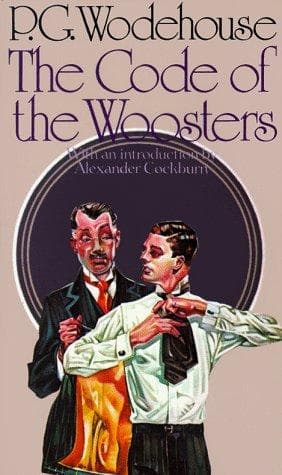
Book details and cover from Google Books.
Ready to read The Code of the Woosters?
Get your copy on Amazon, or listen to it on Audible. We earn a commission if you buy through these links.