
We earn a commission if you buy through these links. Learn more
The City of Ember (The First Book of Ember)
A short, gripping middle-grade mystery about an underground city whose lights are failing, and two young people who find a decaying set of instructions that may explain why.
What It's About
The City of Ember is a short middle-grade novel set in a walled underground city lit by electric lamps and run by a small council. The city was built as a refuge, and its founders expected it to last a set span of years, but by the time the story opens its storerooms are thinning and the power is growing unreliable. Most people have accepted this as ordinary life. The book follows two young teenagers who begin to suspect that something important has been lost, and that the people in charge may not be telling the whole story.
DuPrau builds the mystery through small discoveries rather than big set pieces. A damaged set of written instructions, a map, and a slow accumulation of clues drive the plot, and the reader pieces together what has gone wrong alongside the characters. The prose is spare and clear, with a steady pace, so the book reads quickly while still rewarding attention to detail.
Reading it feels like stepping into a small, closed world where each rule seems plausible and each unanswered question pulls you forward. It is less about action than about curiosity, routine, and the slow realization that a community has forgotten its own history. Adult readers may notice the parallels to resource management and institutional complacency more sharply than younger ones, which gives the book a second layer.
Read this if you…
- enjoy slow-building mysteries that reward careful attention
- want a dystopian story that is accessible for younger readers
- like stories about ordinary people questioning the systems around them
Skip it if you…
- want fast-paced action or a heavy romance subplot
- expect richly detailed worldbuilding and complex, morally tangled characters
Key Ideas
- 1
A community that has forgotten its past
The city's residents live comfortably inside rules they no longer question, because nobody remembers why those rules were made. The book shows how quickly practical knowledge disappears when it is not passed on, and how a society can keep functioning long after the reasons for its design have faded. This idea gives the story its underlying unease and makes the characters' small acts of questioning feel significant.
- 2
Mystery built from small clues
Instead of relying on chases or battles, the plot advances through documents, partial information, and conversations that reveal more than the people speaking intend. Readers who enjoy working things out will find the process satisfying. The puzzle is designed so that young readers can follow each step without being overwhelmed.
- 3
Authority that claims to protect
The council presents its control as a safeguard against danger, and much of the book asks readers to consider when caution becomes a way of avoiding hard truths. The theme is handled gently, without a lecture, so younger readers can take away a basic lesson about trusting institutions while adults can see a sharper critique.
- 4
Plain, efficient storytelling
DuPrau writes with restraint, keeping sentences direct and scenes focused. The short chapters and clear structure make the book approachable for reluctant readers, and the world is conveyed through concrete details like failing light and dwindling supplies rather than long descriptions. The economy of the style is part of what makes the book feel tense.
Limitations
The book is deliberately spare, so the world of Ember is sketched rather than fully explored. Readers who want a detailed political or social system may find it thin, and some characters feel more like vehicles for the plot than fully developed people. Compared with more elaborate dystopias for older readers, the emotional stakes can feel modest. Some reviewers also find the sequels less focused than the first book, so readers should judge the series on this opening volume alone.
Questions Readers Ask
- Is The City of Ember suitable for adults?
- Yes, though it is written for middle-grade readers. Adults who enjoy quick, well-constructed dystopian fiction will find it engaging, and the themes about forgotten history and institutional trust reward a more experienced reading. Expect a short, clear book rather than a dense or complex one.
- How does it compare to The Hunger Games?
- The City of Ember is quieter and more contained. It focuses on mystery and gradual discovery rather than large-scale conflict and action. Readers who want a more intense, violent story may prefer The Hunger Games, while those who like puzzles and a calmer pace may find Ember more satisfying.
- Published
- 1998
- ISBN
- 9781905775453
- Difficulty
- beginner
- Category
- Fiction
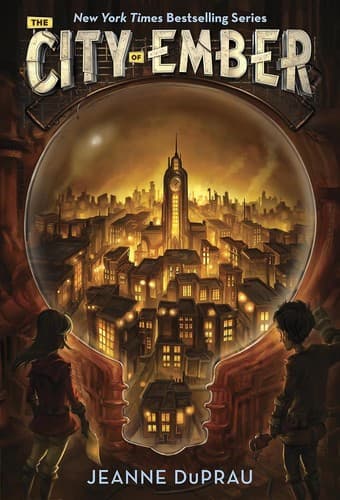
Book details and cover from Google Books.
Ready to read The City of Ember (The First Book of Ember)?
Get your copy on Amazon, or listen to it on Audible. We earn a commission if you buy through these links.