
We earn a commission if you buy through these links. Learn more
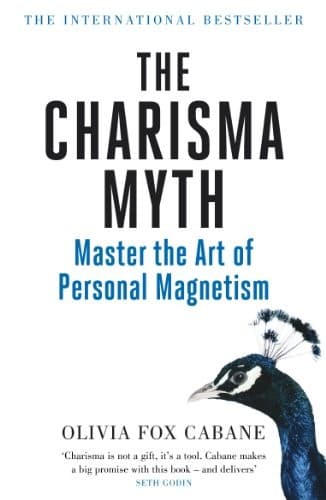
The charisma myth
by Olivia Fox Cabane, Olivia Cabane
Guide by the Books of the Day editors · Updated · How we write our guides
Olivia Fox Cabane's book treats charisma as a set of trainable habits in presence, power and warmth, offering practical exercises for people who feel they lack natural social magnetism.
What Creators Say About The charisma myth
2 creators reviewed The charisma myth on YouTube between 2016 and 2018, with 283.3K views between them. Their opinions are their own; we picked these reviews, we didn't write them.
What It's About
The Charisma Myth is built on a simple claim: charisma is not a fixed personality trait that some people are born with, but a collection of learnable behaviors. Cabane organizes that collection around three qualities she calls presence, power and warmth, and she spends most chapters on the specific habits that create each one. The book is listed under Tech on this site, but it sits squarely in business and self-help, aimed at professionals who speak in meetings, pitch ideas, lead teams or simply want to make a better impression.
The approach is practical rather than theoretical. Cabane draws on research about nonverbal behavior, attention and social perception, then turns those findings into exercises a reader can try the same week. Many of the suggestions concern attention: how you listen, where you direct your focus, and how you manage nerves so they do not leak into your posture and voice. The tone is upbeat and encouraging, with plenty of examples meant to make abstract advice feel usable.
Reading it feels like working through a coaching program. It is brisk and easy to follow, and it rewards readers who actually practice the techniques rather than just nodding along. Those who expect a deep investigation of why some people charm others, or a rigorous scientific account, will find it lighter than that.
Read this if you…
- want concrete exercises for conversations, meetings or presentations
- believe your social impact is weaker than you would like and want a structured starting point
- prefer a practical, encouraging guide over dense academic argument
Skip it if you…
- are looking for a rigorous scientific account of social perception or persuasion
- want a book about technology, since this one is firmly in business and self-help
Key Ideas
- 1
Charisma can be learned, not inherited
The book's central argument is that charisma is a skill set rather than a mysterious gift. Cabane's goal is to demystify the quality so that readers who see themselves as naturally quiet or awkward can treat it as something to practice, one behavior at a time.
- 2
Presence means fully attending to the moment
Presence is the first pillar and concerns being mentally and physically here with the person in front of you. Cabane argues that much of what looks like charm is simply undivided attention, and she offers ways to quiet distractions and stop rehearsing your next line while someone else is talking.
- 3
Power is projected through confidence and composure
Power covers how you come across as capable and steady, including posture, voice and the way you handle pressure. The book emphasizes that people read confidence from small physical and vocal cues, so managing those signals can change how others respond to you even before you say much.
- 4
Warmth makes influence feel safe
Warmth addresses goodwill, empathy and the sense that you are on the other person's side. Cabane suggests that people respond to those who seem genuinely interested in them, and that warmth and power work together, since confidence without kindness often reads as intimidation.
- 5
Charisma depends on what you bring to others
A recurring theme is that charismatic people focus outward, on the needs and reactions of others, rather than on how they are being judged. That shift in attention is what the book keeps returning to as the source of the qualities it describes.
Limitations
The book leans heavily on anecdotes and on the author's own framing, and some readers find its research references loosely connected to the advice. Critics also note that treating charisma as purely a set of techniques can understate the role of temperament, background and luck. Its focus is on individual behavior, so it says little about how social norms, bias or workplace structures shape who is perceived as charismatic. The advice is most useful for people in professional and social settings similar to those the author addresses.
Questions Readers Ask
- Is The Charisma Myth worth reading if I am shy?
- Often yes, because the book's core premise is that charisma is learnable rather than innate. Its exercises focus on attention and composure, which are practical for quieter people. Expect to practice rather than simply absorb the ideas, and treat it as a starting point rather than a complete cure for social anxiety.
- How does it compare with Dale Carnegie's How to Win Friends and Influence People?
- Carnegie is older, more anecdotal and focused on how to make people like you through specific social habits. Cabane is more organized around a three-part framework and draws more explicitly on research about nonverbal behavior. Readers who want a classic, story-driven guide may prefer Carnegie, while those wanting a structured model may prefer Cabane.
- Published
- 2012
- ISBN
- 9781591844563
- Difficulty
- beginner
- Category
- Tech
Book details and cover from Google Books.
Ready to read The charisma myth?
Get your copy on Amazon, or listen to it on Audible. We earn a commission if you buy through these links.