
We earn a commission if you buy through these links. Learn more
The Cay
A short, sharp survival story about a boy who loses his sight and an older Black man stranded together on a Caribbean islet, and how their forced partnership unsettles prejudice.
What It's About
The Cay is a short novel for young readers, first published in 1969, that follows a boy whose wartime ship is sunk and who ends up on a small raft with one companion. It is a work of fiction, not a practical guide, despite the Tech label on this page, so readers looking for technical survival instruction will be disappointed. Taylor writes in plain, spare prose with brief chapters, and the narration stays close to the boy's point of view, so his assumptions and his gradual shifts in thinking are the main lens on events.
The tension comes mostly from concrete problems: thirst, heat, injury, and the constant question of how two people with little in common can keep each other alive. The pace is brisk, and the emotional weight builds slowly rather than arriving through melodrama. The book asks its questions quietly, through ordinary decisions and the rhythm of daily survival, instead of through speeches.
Reading it feels like sitting with a survival story that keeps raising a moral question underneath the action. It is short enough to finish in an afternoon or two, which explains its frequent use in classrooms, and it rewards rereading. Many adults who first encountered it as children find that it reads differently once they notice what the characters take for granted.
Read this if you…
- enjoy a tight survival story with a clear moral core
- want a short novel that works for both younger readers and adults
- are interested in how fiction from the 1960s handles race, pride, and empathy
Skip it if you…
- want a technical or practical survival manual, despite the Tech category
- need a complex plot with many characters or a long, layered narrative
Key Ideas
- 1
Prejudice tested by necessity
The boy arrives with views about race that he has absorbed without question. Stranded with a man he was taught to see as lesser, he has to rely on that man for water, shelter, and knowledge. The book uses this forced dependence to show how easily assumptions crack when daily life depends on someone else's competence.
- 2
Dependence that reverses the usual power
Much of the boy's identity rests on being the one who is looked after. In the new setting, the balance flips, and he must accept guidance he would once have dismissed. The story treats this reversal as uncomfortable but useful, showing how pride can stand between a person and the help that would keep them alive.
- 3
Competence as a form of respect
Survival in the novel depends on knowing things: how to find food, read weather, and manage limited resources. The book quietly suggests that respect grows from seeing someone's skill in action, not from their background. The lesson is practical as much as moral, which keeps the message from feeling like a lecture.
- 4
Sight, hearing, and judging by voice
The boy's loss of sight changes how he experiences the people around him. Without seeing faces or skin, he has to rely on voice, touch, and what he is told. This turns the story into a study of how appearance shapes judgment, and what changes when those cues are taken away.
Limitations
The novel's racial dynamics are shaped by its era. Some readers find that parts of the portrayal of the older character lean on attitudes and dialogue that feel dated now, and the story is told from the boy's perspective, so his inner life is developed far more fully than the other man's. The book is short and deliberately simple, so it does not explore the wider wartime context or the characters' pasts in any depth. Readers wanting a nuanced picture of Caribbean life may find it limited.
Questions Readers Ask
- Is The Cay appropriate for adults, or only for young readers?
- It is written for younger readers, but its themes and brevity make it worth reading as an adult. Many adults return to it and notice more about the characters' assumptions and the way the boy's views change. It works well as a single-sitting read and pairs well with group discussion.
- Is The Cay still relevant today?
- Its central question about how people judge one another remains current, but the language and some attitudes reflect the period in which it was written. Readers today often use it to talk about history and race, and it is valuable for that conversation as long as the context is addressed alongside the story.
- Published
- 1969
- ISBN
- 9780440229124
- Difficulty
- beginner
- Category
- Tech
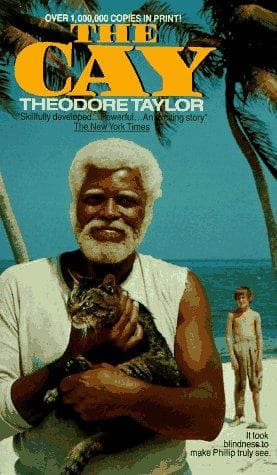
Book details and cover from Google Books.
Ready to read The Cay?
Get your copy on Amazon, or listen to it on Audible. We earn a commission if you buy through these links.