
We earn a commission if you buy through these links. Learn more
The boy on the wooden box
by Leon Leyson
Guide by the Books of the Day editors · Updated · How we write our guides
A short, plain memoir from one of the youngest children on Oskar Schindler's list, written by a survivor who wanted young readers to understand what happened and why one ordinary workplace mattered.
What Creators Say About The boy on the wooden box
2 creators reviewed The boy on the wooden box on YouTube between 2015 and 2021, with 2.4K views between them. Their opinions are their own; we picked these reviews, we didn't write them.
What It's About
The Boy on the Wooden Box is Leon Leyson's memoir of growing up Jewish in Poland during the Second World War and of the years that followed his family's forced move into the orbit of Nazi occupation. Its title comes from a small, specific memory: a boy too short to reach his machine at Oskar Schindler's enamelware factory, who needed a box to stand on. That detail sums up the book's approach. Leyson does not stretch his story into a grand argument. He describes what he saw, what he was told, and what he was afraid of, and he trusts the reader to feel the weight of it.
The prose is direct and unadorned, which makes the book feel close to speech. It is written with younger readers in mind, so the violence is present but never lingered on, and the emotional force comes from restraint and from small, concrete moments: a job that kept a family alive, a decision that was not his to make, a conversation that changed what he could hope for. Because the memoir is short, it moves quickly, and the reading experience is more like sitting with an older relative who has decided to tell you the important parts.
The book works best as a first, personal entry into Holocaust literature, or as a companion to a classroom unit. Readers who want deep historical context, analysis of the wider machinery of persecution, or a detailed account of Schindler himself will need to look elsewhere. What it offers is a clear, humane witness from a child's vantage point, and a reminder that survival often depended on luck, improvisation, and a few people willing to take risks.
Read this if you…
- Want a clear, personal introduction to Holocaust history told from a child's perspective
- Are teaching or raising readers who are ready for a serious but age-appropriate survival story
- Prefer short, direct memoirs over long, analytical histories
Skip it if you…
- Want a detailed historical analysis of the Holocaust or of Schindler's own motives and business dealings
- Are looking for a book that explores the emotional aftermath of trauma in depth
Key Ideas
- 1
Survival through ordinary, daily work
Leyson's account shows how factory employment became a fragile shield against deportation. The job itself was often hard and dangerous, but being useful to a business run by a German manufacturer offered a kind of protection that was hard to see from outside. The book makes clear how much of survival turned on being assigned to the right place at the right time.
- 2
A child's view of an adult catastrophe
Because Leyson was a boy when these events happened, he notices things adults often explained away: who was afraid, who was lying, who was kind when it cost them something. The book is valuable for showing how much a young person understands and how little control he has. It keeps the reader close to confusion, hunger, and sudden loss rather than to hindsight.
- 3
Small acts of individual courage
Much of the memoir concerns individuals who made choices with real risk attached. Leyson does not present these people as heroes in an abstract sense. He presents them as specific adults who did something concrete, sometimes at a cost they could not fully predict. This gives the book a moral clarity that is grounded rather than sentimental.
- 4
Memory, witness, and the duty to tell
The book is shaped by the fact that Leyson lived long enough to speak publicly about his experiences, especially to students. Its plainness reflects a conviction that testimony matters because it is personal. Readers can see the memoir as an act of remembering on behalf of people who did not survive, and as an invitation for the next generation to take that memory seriously.
Limitations
The memoir is brief, and some readers will wish for more context about the wider political and economic forces around the events it describes. Its child's-eye perspective means that adult decisions and wider events often arrive as fragments, not as a full picture. Because it was written for a general and younger audience, it avoids graphic detail and analysis that more advanced readers may want. It also centers one life and one workplace, so it cannot stand in for the broader record of persecution and resistance across Europe.
Questions Readers Ask
- Is The Boy on the Wooden Box suitable for teenagers?
- Yes, it is often used with younger and middle-grade readers and works well for teens. The language is simple and the story is short. Its subject is still deeply disturbing, so it helps to be ready to talk through the events with a teacher, parent, or friend, especially for younger readers.
- How does it compare to Schindler's List or The Diary of Anne Frank?
- It is less cinematic than the Spielberg film and less literary than Anne Frank's diary. Its strength is a grounded, first-person account from a boy who worked in Schindler's factory. Readers wanting a broader historical frame may pair it with a more analytical book after finishing.
- Published
- 2013
- ISBN
- 9781442497825
- Difficulty
- beginner
- Category
- Biographies
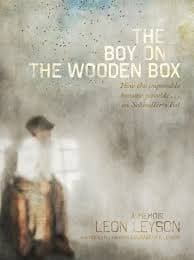
Book details and cover from Google Books.
Ready to read The boy on the wooden box?
Get your copy on Amazon, or listen to it on Audible. We earn a commission if you buy through these links.