
We earn a commission if you buy through these links. Learn more
The Boy at the Back of the Class
Guide by the Books of the Day editors · Updated · How we write our guides
A warm, quick middle-grade novel that uses a classmate's eyes to show how a refugee boy is overlooked, then gradually understood, making it a good first book on displacement and empathy.
What Creators Say About The Boy at the Back of the Class
2 creators reviewed The Boy at the Back of the Class on YouTube between 2018 and 2019, with 40.5K views between them. Their opinions are their own; we picked these reviews, we didn't write them.
What It's About
The Boy at the Back of the Class is a middle-grade novel for readers roughly eight to twelve. It follows a class of ten-year-olds in a British primary school when a quiet new arrival, a boy who has fled war and lost touch with his family, takes the empty desk at the back of the room. Most of the class ignores him, and the story is about how that slowly changes.
The book is narrated by a classmate, which keeps the focus on how children notice, misjudge, and gradually understand someone they have decided not to know. Onjali Q Raúf writes in a light, conversational voice with short chapters, humour, and plenty of kid logic, so heavier material arrives gradually rather than as lecture. Much of the emotional weight sits in small moments: a question nobody thinks to ask, a lunchtime that goes wrong, a classmate realising he has been unkind.
The experience is closer to a warm, fast read than a demanding one, though it does not look away from fear, uncertainty, or the paperwork and waiting that refugee families face. Teachers and parents reading alongside children will find it a useful opening for conversations about belonging and what it means to be a good friend. It works well read aloud or shared, and many readers finish it in a sitting or two.
Read this if you…
- want a gentle, accessible introduction to refugee experiences for children
- are looking for a book to share with a class or a young reader about empathy
- enjoy quick, warm stories with humour and heart
Skip it if you…
- want detailed real-world context on asylum law or the Syrian conflict
- prefer fantasy, mystery, or fast-paced adventure
Key Ideas
- 1
How exclusion happens without malice
The class does not set out to be cruel to the new boy. They simply follow habit, groupthink, and the easy option of not asking questions. The narrator's gradual awareness of this is the book's most useful lesson, because it shows readers how ordinary people end up leaving someone out, and what it takes to notice and stop.
- 2
Displacement explained in plain terms
The book introduces war, separation from family, and life as a refugee in language a child can follow, without graphic detail. It treats the boy as a person with his own feelings and history rather than as a case study, which makes the subject approachable for young readers encountering it for the first time.
- 3
Friendship as a choice that costs something
Friendship here is slow and awkward, and it is tested by peer pressure and fear of looking foolish. The story suggests that being kind often means risking your own standing with the group, and it gives children a realistic picture of what that choice feels like.
- 4
Small actions with real consequences
The children's efforts are bounded by what children can actually do, and the story keeps that scale. This gives young readers a sense that they can act meaningfully without pretending they can solve the larger problems that caused the boy's situation.
Limitations
Some readers find the resolution tidy and the emotional beats predictable, which is common in books written for this age group. The child narrator simplifies the political and legal realities of displacement, so the wider context stays in the background. A few critics feel the plot leans on the idea of a classmate rescuing a newcomer, which can centre the majority's perspective more than the refugee boy's own. Readers wanting full complexity should look for books written for older readers or by authors with direct experience of displacement.
Questions Readers Ask
- Is The Boy at the Back of the Class suitable for young readers?
- It is written for middle-grade readers, roughly eight to twelve, and deals with war and displacement in an age-appropriate way without graphic detail. Parents may want to read it first for a sensitive child, but most children handle its themes well, especially when an adult is available to talk through questions that come up.
- Is it worth reading as an adult?
- Yes, particularly if you work with children or want a quick, honest look at how classrooms handle difference. Adults may find the simplicity limiting, since the story is pitched at a young audience, but its portrayal of exclusion and the quiet courage of friendship lands well for readers of any age.
- Published
- 2019
- ISBN
- 9781984850782
- Difficulty
- beginner
- Category
- Children's Books
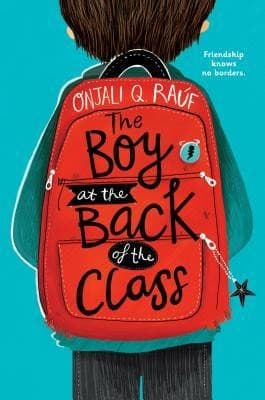
Book details and cover from Google Books.
Ready to read The Boy at the Back of the Class?
Get your copy on Amazon, or listen to it on Audible. We earn a commission if you buy through these links.