
We earn a commission if you buy through these links. Learn more
The Bookshop
A wry, restrained novel about a widow who opens a bookshop in a resistant English town and the quiet power struggle it provokes.
What It's About
The Bookshop is a short novel set in 1959 in Hardborough, a fictional small town on the flat, grey coast of East Anglia. Florence Green, a widow of modest means, decides to open a bookshop in an old, damp house that has stood empty for years. Her plan meets resistance from the town's most influential woman, who has her own ideas for the building, and the struggle that follows is conducted through polite letters, committee manners and social pressure rather than open conflict.
Fitzgerald's style is dry, precise and often funny. Her narrator observes from slightly above the characters and rarely explains what anyone feels. Sentences are economical, and she trusts the reader to notice what is left unsaid. The result is closer to a sharply observed comedy of manners, or even a fable, than to a conventional novel of inner life. Small events carry disproportionate weight, and the tone shifts between gentle irony and something much colder.
Reading it feels like being admitted into a small world where every decision matters. It can be finished in an evening or two, but it lingers. The pleasure lies in the accumulation of tiny details and in the gap between what Florence hopes for and what the town is willing to allow.
Read this if you…
- enjoy short, precise novels that say a great deal in few pages
- like quiet, ironic comedy about small-town politics and social manners
- are curious about postwar British life or about what running a bookshop really involves
Skip it if you…
- need plot-driven suspense or a steady stream of incident
- want a warm, uplifting story with clear emotional payoffs
Key Ideas
- 1
Books as a quiet act of defiance
Florence's shop is a bet that a community will value reading, and the novel asks what it costs to act on a belief when others want something else from the same space. It treats a bookshop as both a business and a moral statement, without making either one sentimental.
- 2
Power that works through manners
Influence in a small community rarely looks like force. It moves through invitations, reputations, committees and the careful wording of letters. Fitzgerald shows how a single respected voice can shape what is possible for everyone else, and how much of that power depends on people agreeing to be polite.
- 3
Restraint as the storytelling method
Fitzgerald leaves most emotion unstated, so the reader has to assemble feelings from gestures and small choices. Much of the comedy and sadness comes from understatement, and readers who want their emotions named for them may find the method frustrating at first.
- 4
Outsiders and the question of belonging
Florence is a newcomer who never quite fits in, and the book examines how a town decides who counts as one of its own. Her position lets Fitzgerald look at the community from the edge, noticing the rules that insiders no longer see.
- 5
An unexplained presence in the house
The old house carries a faint, unexplained disturbance that the novel never fully resolves. Fitzgerald keeps it ambiguous, so the uncanny element works less as a ghost story and more as a test of how much the characters, and the reader, are willing to believe.
Limitations
The book's brevity can make it feel slight to some readers, who find that its large themes receive only a few pages of development. The cool, detached narration keeps many readers at arm's length, and the characters can seem more like types than people. The social world it depicts is very specific to its period and class, which some will find charming and others dated. Its ending divides readers, and those who want a fuller account of characters' inner lives may come away unsatisfied.
Questions Readers Ask
- How long is The Bookshop and how long does it take to read?
- It is a short novel, and most readers finish it in one or two sittings. Its length is part of its appeal, since Fitzgerald packs a lot of observation and irony into a small space. Because the sentences are compact and the implications sometimes subtle, it rewards slower reading more than speed.
- Is The Bookshop still worth reading today?
- Yes, particularly if you care about community, gatekeeping and the fragile economics of independent shops. The specific 1950s setting is historical, but the questions about who decides what a town needs, and who pays for a cultural project, remain familiar. The writing itself has not aged in its precision.
- How does it compare to other British comedies of manners?
- Readers who enjoy Barbara Pym will recognise the gentle irony and attention to small social codes, though Fitzgerald is often sharper and more stripped down. If you like Pym's lightness, expect a colder edge here and less reassurance about how things will turn out.
- Published
- 1978
- ISBN
- 9783458360469
- Difficulty
- intermediate
- Category
- Fiction
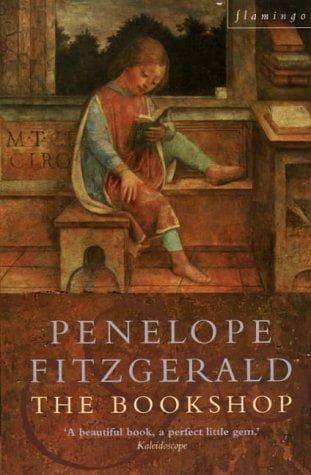
Book details and cover from Google Books.
Ready to read The Bookshop?
Get your copy on Amazon, or listen to it on Audible. We earn a commission if you buy through these links.