
We earn a commission if you buy through these links. Learn more
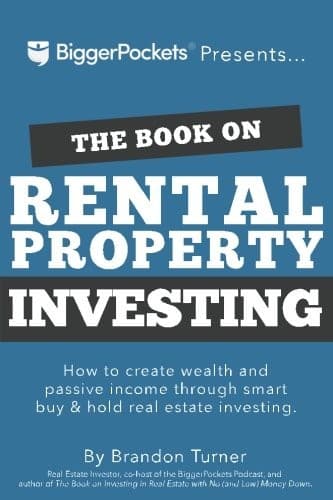
The Book on Rental Property Investing: How to Create Wealth and Passive Income Through Intelligent Buy & Hold Real Estate Investing!
Guide by the Books of the Day editors · Updated · How we write our guides
A thorough, practical primer for buying single-family and small multifamily rentals to hold long term, covering deal analysis, financing, and running the property day to day.
What Creators Say About The Book on Rental Property Investing: How to Create Wealth and Passive Income Through Intelligent Buy & Hold Real Estate Investing!
2 creators reviewed The Book on Rental Property Investing: How to Create Wealth and Passive Income Through Intelligent Buy & Hold Real Estate Investing! on YouTube between 2019 and 2025, with 266.7K views between them. Their opinions are their own; we picked these reviews, we didn't write them.
What It's About
The Book on Rental Property Investing is a long, practical guide to buying residential property and keeping it as a rental for years. Brandon Turner, a longtime investor and co-founder of the BiggerPockets community, writes in a conversational voice that feels closer to a mentor walking you through his spreadsheet than to a theory text. The focus is buy-and-hold: acquiring properties that generate monthly cash flow and build equity over time, rather than flipping for a quick profit.
Much of the book is about the unglamorous parts that decide whether a rental pays off: estimating expenses and vacancy, reading a deal's numbers, understanding how financing terms shape your returns, and finding and vetting contractors, property managers, and tenants. Turner repeatedly treats a rental as a small business, and he argues that conservative assumptions protect you more than optimism does. Expect plenty of concrete numbers and step-by-step explanation rather than abstract formulas.
The experience is that of a dense, skimmable reference. You may read it cover to cover once and then return to specific sections when a decision comes up. Its US-centric financing and tax material will not match every reader's situation, so treat the specifics as a starting point and verify them locally.
Read this if you…
- are buying your first rental and want a thorough, step-by-step foundation
- prefer a buy-and-hold strategy built on steady income over flipping for quick profit
- want to understand the numbers well enough to judge a deal yourself
Skip it if you…
- are looking for a fast flipping or wholesaling playbook
- want advice tailored to commercial property, a non-US market, or short-term rental operations
Key Ideas
- 1
Cash flow over appreciation
The book treats monthly cash flow as the primary test of a rental. Appreciation is uncertain and cannot be spent, while a property that pays for itself each month gives you room to be wrong about the market. Turner's approach asks you to prove a deal works on income before you count on rising prices.
- 2
Conservative numbers protect the deal
Most rental losses come from optimistic assumptions: low vacancy, cheap repairs, and forgotten costs like capital expenditures and management fees. The book pushes you to underwrite with realistic allowances for these items, so a deal still makes sense when a few things go wrong at once.
- 3
Financing shapes the whole return
Down payment size, loan terms, and cash reserves change what a property earns and how much risk you carry. The book explains how leverage can magnify gains and losses, and why a deal that looks strong on paper can become fragile once the loan is factored in.
- 4
Running the rental like a business
Beyond buying, the book covers the daily work: screening tenants, handling maintenance, deciding whether to self-manage or hire a manager, and keeping clean records. It frames these tasks as the operating side of the investment, where many returns are either protected or quietly lost.
- 5
Build your team before you need it
Turner stresses assembling reliable agents, lenders, inspectors, accountants, and attorneys early. A good local network makes it easier to evaluate deals and respond to problems, and it reduces the chance of costly mistakes made while learning under pressure.
Limitations
Because the book is US-focused, its discussion of financing, taxes, and landlord law will not apply cleanly elsewhere, and laws and lending rules change, so specific details may be dated. Some readers find the writing repetitive, and the book is long for anyone who only wants an overview. It covers residential buy-and-hold in depth but says little about commercial real estate, short-term rentals, or syndication. Its examples reflect one investor's market experience, so treat its numbers as illustrations rather than benchmarks.
Questions Readers Ask
- Is the book still useful with today's interest rates and rents?
- The core principles, such as conservative underwriting, cash flow analysis, and careful financing, remain sound regardless of the market. Specific figures like interest rates, purchase prices, and rent levels change over time, so you should rerun any example with current local data before making decisions.
- How does it compare to other beginner real estate books?
- It is more hands-on and number-focused than broad wealth-building books, and less theoretical than some investing classics. Its value is in the practical mechanics of buying and operating rentals, so pair it with local market research and advice from professionals who know your area.
- Published
- 2015
- ISBN
- 9780990711797
- Difficulty
- beginner
- Category
- Business
Book details and cover from Google Books.
Ready to read The Book on Rental Property Investing: How to Create Wealth and Passive Income Through Intelligent Buy & Hold Real Estate Investing!?
Get your copy on Amazon, or listen to it on Audible. We earn a commission if you buy through these links.