
We earn a commission if you buy through these links. Learn more
The Book of Lost Names
Guide by the Books of the Day editors · Updated · How we write our guides
A WWII novel about a young woman who forges identity papers for Jewish children in occupied France, worth reading for its suspense and its focus on quiet, everyday resistance.
What Creators Say About The Book of Lost Names
2 creators reviewed The Book of Lost Names on YouTube in 2022, with 3.9K views between them. Their opinions are their own; we picked these reviews, we didn't write them.
What It's About
The Book of Lost Names is a historical novel set in occupied France during the Second World War. It follows a young woman whose skill with documents becomes a way to resist the Nazi occupation. Her work involves creating false identities for children who need to disappear from the authorities, and the novel treats that work as both a moral risk and a daily act of courage.
Harmel writes in a clear, fast-moving style that favors tension and emotional stakes over dense historical detail. Chapters tend to end on a turn that pulls you forward, so the book reads quickly. The period atmosphere is present without being overwhelming, and the emphasis stays on the characters' choices and fears rather than on battle scenes.
Reading it is an absorbing, emotionally direct experience. It works best as a page-turner with a serious core: you will care about the people involved, and you will likely finish it wanting to know more about the real networks that helped hide people during the occupation.
Read this if you…
- enjoy historical fiction driven by suspense and character
- want a WWII story centered on civilian courage rather than combat
- like emotionally direct novels that are easy to read in a few sittings
Skip it if you…
- want precise, deeply researched historical detail or a literary style
- prefer stories with complex structures or slow, reflective pacing
Key Ideas
- 1
Resistance through paperwork and small acts
The book shows that resistance was not only armed action. Forging documents, keeping records hidden, and quietly lying to officials were dangerous, unglamorous tasks, and the novel gives them real weight and consequence.
- 2
Identity as something that can be made and unmade
Because the protagonist creates fake identities, the story keeps returning to what a name and a past really mean. Characters must decide what they are willing to give up to keep someone alive, and what it costs to carry a false self.
- 3
Moral risk inside a just cause
The novel does not treat its heroes as beyond question. Helping people carries the constant chance of exposure, and the story examines how fear, loyalty, and secrecy can shape decisions in ways that are hard to justify afterward.
- 4
Memory, loss, and the cost of survival
Titles like this one point to what is lost in war: families, records, and whole lives. The book is concerned with how people carry those losses forward and whether remembering is itself a form of resistance.
Limitations
Critics of novels in this vein often point to familiar WWII storytelling conventions, including heroic protagonists, romantic subplots, and tidy emotional payoffs. Readers who know the period well may find the historical texture lighter than they hoped. The prose is functional rather than memorable, and the characterization of some secondary figures can feel sketched rather than fully developed. The book is best approached as an accessible entry point into the subject, not as a definitive account of the era or its networks.
Questions Readers Ask
- Is The Book of Lost Names a good first WWII novel?
- Yes, it is a good starting point for readers who want to explore the Second World War through fiction. The writing is accessible, the chapters are short and engaging, and the story centers on personal stakes rather than dense military or political history. Readers who want more depth afterward can move on to more detailed novels or nonfiction.
- How does it compare to other WWII novels about resistance?
- It is more plot-driven and emotionally immediate than many literary WWII novels, and it is lighter on historical exposition. If you liked stories about ordinary people taking risks to save others, you will likely enjoy it. If you want the sweeping scope or stylistic ambition of the most acclaimed books in the genre, you may find it less rich.
- Published
- 2020
- ISBN
- 9781797105604
- Difficulty
- beginner
- Category
- Fiction
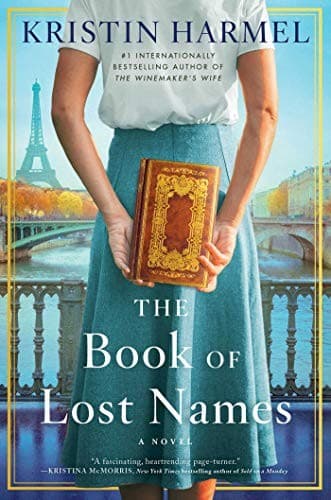
Book details and cover from Google Books.
Ready to read The Book of Lost Names?
Get your copy on Amazon, or listen to it on Audible. We earn a commission if you buy through these links.