
We earn a commission if you buy through these links. Learn more
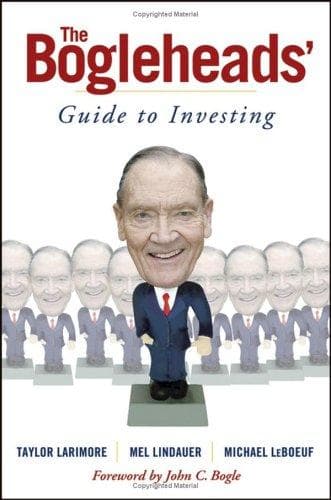
The Bogleheads' guide to investing
A clear, low-cost blueprint for building a long-term portfolio with index funds, written for people who want a simple plan rather than market predictions.
What It's About
The Bogleheads' Guide to Investing is a practical handbook for people who want to build savings without becoming market experts. Taylor Larimore wrote it with Mel Lindauer and Michael LeBoeuf, all longtime participants in the Bogleheads community, a forum of investors who take their cue from the index-fund ideas associated with John Bogle. The book is organized around one argument: most people do better by keeping costs low, diversifying broadly, and staying the course than by trying to outguess the market.
The approach is deliberately plain. The authors explain why costs matter so much, how to choose an asset allocation that fits your time horizon and temperament, and how to build a portfolio from a small number of low-cost index funds. A good part of the text covers the practical machinery around investing, including retirement accounts, taxes, rebalancing, and the behavioral habits that keep people from selling at the wrong moment.
Reading it feels more like working through a set of checklists and worked examples than being lectured. Some passages repeat themselves on purpose, and the tone is earnest and friendly rather than flashy. Expect a US-centric lens and a fair amount of detail on account types. The payoff is a clear map you can act on, rather than a stream of forecasts.
Read this if you…
- want a simple, durable plan for long-term saving and do not want to follow markets daily
- are new to investing and want the reasoning behind index funds, not just a list of funds
- already invest but tend to panic-sell or chase hot trends
Skip it if you…
- want a book about individual stock picking, trading, or market timing
- live outside the United States and need guidance on local accounts and tax rules
Key Ideas
- 1
Costs quietly compound against you
Fees and expense ratios come out of your returns every year, whether the market rises or falls. Over decades, the gap between a cheap fund and an expensive one can grow large. The book treats cost as one of the few variables investors fully control, and it returns to this point repeatedly as the foundation for every other choice.
- 2
Diversification as a default, not a gamble
Holding a broad index spreads your money across many companies, so you do not need to identify future winners. The authors treat individual stock picking as a poor use of most people's time and energy. The core message is that owning the whole market is a reasonable starting point, not a compromise for lazy investors.
- 3
Asset allocation shapes most of your risk
The split between stocks and bonds drives how much your portfolio swings and how it behaves in downturns. The book focuses on deciding that split based on when you will need the money and how much loss you can tolerate. It treats this decision as more important than picking particular funds.
- 4
Staying the course against your instincts
Much of investing failure comes from behavior: panic selling, chasing last year's winners, and abandoning a plan after a bad stretch. The book suggests habits such as regular contributions and scheduled rebalancing to reduce the influence of emotion. The discipline matters as much as the portfolio itself.
- 5
Using tax-advantaged accounts wisely
Retirement accounts and the order in which you fill them can meaningfully affect what you keep. The book explains the general logic of tax-advantaged saving and how it interacts with your investments. Because the rules are US-specific, this section is most useful for American readers and needs checking against current law.
Limitations
The book is written for US investors, so the retirement account and tax sections will not map neatly onto other countries. Specific fund recommendations, contribution limits, and account rules date quickly, so verify current figures elsewhere. The authors are committed advocates of indexing, and readers looking for a balanced treatment of active strategies, alternative assets, or income investing will find little here. Some material is repetitive, and the book does not replace personalized advice for complex situations such as business ownership or estate planning.
Questions Readers Ask
- Is it still relevant given how much has changed in investing?
- The core ideas about costs, diversification, and behavior have held up across decades of market history. What has aged is the detail: fund lineups, contribution limits, and tax thresholds change over time. Read the principles as durable and check the specifics against current rules before acting on them.
- How does it compare to A Random Walk Down Wall Street?
- Malkiel's book is a broader tour of market theory, history, and the case against stock picking, and it is more of an argument than a manual. The Bogleheads' guide is narrower and more practical, focused on helping you build and maintain an indexed portfolio. Many readers find them complementary.
- Do I need to read the whole book to benefit?
- Not necessarily. The early material on costs and asset allocation delivers most of the core value. The later sections on accounts and taxes work well as reference material you can return to when a specific decision comes up.
- Published
- 2006
- ISBN
- 9780471730330
- Difficulty
- beginner
- Category
- Business
Book details and cover from Google Books.
Ready to read The Bogleheads' guide to investing?
Get your copy on Amazon, or listen to it on Audible. We earn a commission if you buy through these links.