
We earn a commission if you buy through these links. Learn more
The Body
by Bill Bryson
Guide by the Books of the Day editors · Updated · How we write our guides
Bryson turns the human body into a cheerful, fact-filled tour that makes ordinary biology feel astonishing, even when the science gets dense.
What Creators Say About The Body
2 creators reviewed The Body on YouTube between 2019 and 2020, with 19.5K views between them. Their opinions are their own; we picked these reviews, we didn't write them.
What It's About
The Body: A Guide for Occupants (2019) is Bill Bryson's tour of the human body, moving through it system by system and asking how it works and how it goes wrong. He starts at the scale of cells and works outward, covering skin, bones, blood, the brain and the senses, along with much else on the way. Rather than reading like a textbook, it feels like a long conversation with someone who finds the subject thrilling and absurd by turns.
The style is what most readers come for: short anecdotes, historical detours about the researchers who worked things out, and a steady stream of numbers and odd facts. Bryson is a self-deprecating guide who keeps pointing out how remarkable it is that we function at all. Chapters are easy to dip into, and the pace stays brisk even when the material gets technical.
The experience is less like studying and more like being shown around a complicated building by someone who has read the blueprints and enjoys the quirks. You will likely finish with a sharper sense of your own body and a healthy respect for how much about it remains unexplained.
Read this if you…
- want a warm, funny introduction to how the human body works
- enjoy science told through anecdotes and history rather than equations
- like trivia and surprising numbers and don't mind them being packed in
Skip it if you…
- want a clinical reference or a guide to managing a specific condition
- need deep, rigorous treatment of one system, such as the brain or immunology
Key Ideas
- 1
The body is more improbable than it looks
The book's underlying theme is wonder at how much must go right for us to stay alive. Bryson keeps returning to processes that run constantly without conscious effort, such as cell division, clotting and the coordination of organs, and asks readers to notice how fragile and precise those systems are.
- 2
Medicine knows a lot but still guesses
A recurring thread is how much of medical knowledge rests on partial understanding, trial and error, and luck. Bryson does not treat current science as finished, and he is candid about the gaps, which gives the book a humbling tone that many readers find refreshing.
- 3
History of discovery as a source of insight
Much of the narrative comes from the stories of the people who mapped the body, and how often they were slow, wrong or ignored. These detours make the science memorable, because you see how each fact was established and argued over rather than just handed down.
- 4
Small facts that build a larger picture
The book leans on vivid numbers about scale, speed and quantity to make the body feel concrete. This works well for retention and pleasure, though it means individual topics are sketched rather than explored in depth.
Limitations
The book covers a lot of ground quickly, so most topics get an overview rather than thorough analysis. Some readers find the jokey tone and constant trivia wearing over a long book. Medical details age, and the research it reports may have been superseded by later findings. Mental health and psychology receive less attention than the physical systems, and the book is not a source for treatment advice.
Questions Readers Ask
- Is The Body by Bill Bryson good for someone with no science background?
- Yes, it is written for general adult readers and explains terms as it goes. Some sections on cells, chemistry and the immune system get technical, but Bryson keeps the pace moving and usually gives a plain-language summary. It works well as a first popular science book about the body.
- How does it compare to Gray's Anatomy?
- They serve different purposes. Gray's Anatomy is a detailed reference for medical students and clinicians, with dense illustrations and structural precision. Bryson's book is a narrative overview meant for pleasure and general understanding, so it gives you the big picture and stories rather than the detail you would need for study or practice.
- Published
- 2019
- ISBN
- 9781473508156
- Difficulty
- beginner
- Category
- Science
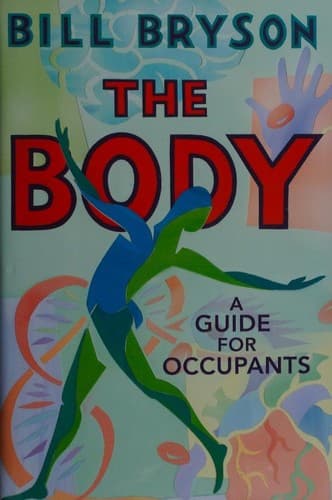
Book details and cover from Google Books.
Ready to read The Body?
Get your copy on Amazon, or listen to it on Audible. We earn a commission if you buy through these links.