
We earn a commission if you buy through these links. Learn more
The big short
by Michael Lewis, Francisco José Ramos Mena
Michael Lewis's account of the few investors who saw the 2008 housing crash coming and bet against the market, explaining the financial machinery behind it with unusual clarity.
What It's About
The Big Short, published in 2010, tells how a small group of outsiders in finance spotted that American mortgage bonds built on risky home loans were far more fragile than their prices suggested, and then wagered heavily that they would fail. Lewis follows a handful of these people closely: a California hedge fund manager who read loan documents line by line, a cynical Wall Street trader who was surprised anyone cared, and a pair of small-fund partners who stumbled into the trade. Their stories give the book a spine, and the chapters move between their offices, their doubts, and the banks they were betting against.
The real subject is the machinery. Lewis unpacks mortgage-backed securities, collateralized debt obligations, and credit default swaps through people who had to learn them, so you pick up the mechanics without a textbook. His style is conversational, sardonic, and quick, with a habit of lingering on absurd details, such as sales pitches and the rating agencies' role, that a drier writer would skip.
The experience is closer to a well-told narrative than a policy analysis. You come away with a clear picture of why so many professionals missed the risk, and some anger at the incentives involved. It rewards readers who want to understand how the crisis happened, not those seeking a full history of 2008 or a blueprint for reform.
Read this if you…
- are curious how the 2008 crisis actually worked, explained in plain language
- enjoy character-driven nonfiction with a dry sense of humor
- want to understand why experienced professionals missed obvious warning signs
Skip it if you…
- want a comprehensive history of the crisis, including the government response and regulation
- prefer rigorous, data-heavy analysis over a story built around a few people
Key Ideas
- 1
Complexity can hide the risk underneath
Ordinary home loans were bundled, sliced into tranches, and repackaged into new securities. Each layer looked safer than the loans beneath it, and the labels made it hard to see what was actually backing the investment. Lewis shows how that layering let a fragile foundation pass for solid ground.
- 2
Reading the boring documents pays off
The investors who profited were the ones who went through loan-level data and the fine print of bond prospectuses instead of trusting the consensus. Their edge was not genius but persistence. The book makes a convincing case that diligence in unglamorous paperwork can matter more than any clever model.
- 3
Incentives shaped what people were willing to see
Bankers were paid for volume, and the agencies that rated the bonds were paid by the issuers. Those pressures rewarded looking away. Lewis returns again and again to the question of why people with access to the same information drew such different conclusions, and his answer is largely about who gets paid for what.
- 4
Contrarian bets are slow and expensive
Betting against the market meant paying steady premiums on what amounted to insurance against a collapse that might take a long time to arrive. The investors endured mockery, investor pressure, and the risk of being early. Lewis gives the waiting real weight, which makes the eventual payoff feel earned rather than lucky.
Limitations
The book centers on a small cast, and Lewis sometimes casts them as heroes, which can flatten the wider picture. Many people across banks, regulators, and ratings agencies share responsibility, and the book touches on them only briefly. The focus is largely American, so global spillovers get less attention. Because it was written in 2010, it does not cover later reforms or subsequent debates about the crisis. Some readers also find the tone too glib about the human cost of foreclosures.
Questions Readers Ask
- Do I need a finance background to read The Big Short?
- No. Lewis explains the key instruments as the story goes, mostly through the people who had to learn them themselves. Some jargon still appears, but you can follow the narrative without prior knowledge. A general adult reader curious about the crisis should find it accessible, though a few chapters on derivatives require closer attention.
- How does it compare to Crashed by Adam Tooze?
- They cover overlapping events from different angles. The Big Short is a character-driven story of a few investors inside American finance. Crashed by Adam Tooze takes a much wider, global view and is far more academic. Read Lewis first for the human story, then Tooze for the broader context.
- Is the 2015 film worth watching before or after the book?
- The 2015 film, directed by Adam McKay, dramatizes the same events with energy and celebrity cameos that explain complex terms. It compresses the story and simplifies some reasoning. The book offers more detail on the investors' thinking and the research behind their bets, so reading it gives you more depth either way.
- Published
- 2009
- ISBN
- 9780141930565
- Difficulty
- beginner
- Category
- Finance
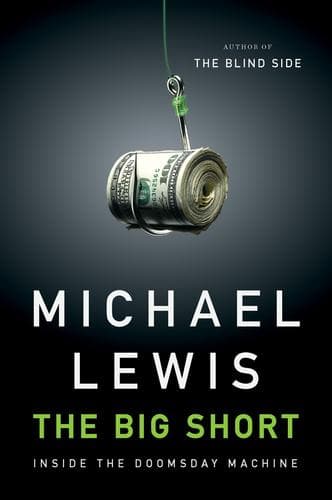
Book details and cover from Google Books.
Ready to read The big short?
Get your copy on Amazon, or listen to it on Audible. We earn a commission if you buy through these links.