
We earn a commission if you buy through these links. Learn more
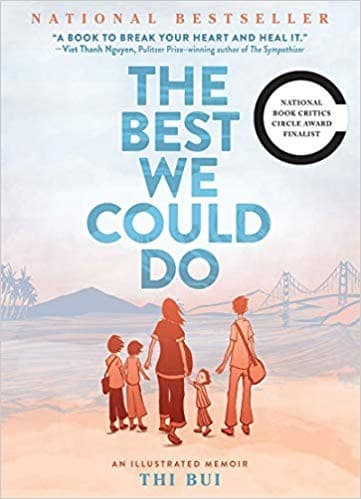
The Best We Could Do
by Thi Bui
Guide by the Books of the Day editors · Updated · How we write our guides
A graphic memoir that turns the birth of her own son into a search for why her parents lived as they did, tracing a family's flight from Vietnam with rare honesty and restraint.
What Creators Say About The Best We Could Do
2 creators reviewed The Best We Could Do on YouTube between 2018 and 2019, with 29.4K views between them. Their opinions are their own; we picked these reviews, we didn't write them.
What It's About
The Best We Could Do is a graphic memoir by Thi Bui, a designer who was born in Vietnam during the war and grew up in the United States after her family fled. The book is built around a single stretch of time: the months around the birth of her own son, when she found herself unable to answer basic questions about why her parents had made the choices they did. Her search for those answers becomes the spine of the book.
Rather than a straight chronology, Bui moves between the present, where she is a new mother worn down by exhaustion and fear, and the past, which she reconstructs from her parents' stories, family photographs, and her own research into colonial and wartime Vietnam. The drawing is spare, mostly ink with muted color washes, and the pages are laid out with real care, so the book reads quickly even when the material is heavy. Each section adds a layer, and the gaps where her parents would not or could not speak are part of the story.
Reading it feels like sitting with someone who is thinking aloud and changing her mind. It is intimate without being sentimental, and it resists tidy conclusions about parents, war, or migration. You finish it with a clearer sense of how large historical events land on individual families, and of how much children inherit without ever being told.
Read this if you…
- want a memoir that uses history to understand a parent rather than to settle old scores
- are curious about the Vietnam War as lived by ordinary families, not generals and policymakers
- want to see what the graphic memoir form can do with quiet, complicated personal material
Skip it if you…
- want a fast plot, a clear narrative arc, or a dramatic climax
- need a comprehensive history of the Vietnam War, since this is one family's perspective
Key Ideas
- 1
History seen through one family's life
Bui places her parents inside the larger story of colonial rule, war, and displacement without turning the book into a textbook. Major events arrive as things that happened to people who were trying to get through an ordinary day. This makes the history feel concrete and personal, and it shows how political decisions shape marriages, jobs, and who a person becomes long after the fighting ends.
- 2
Parents before they were parents
A central move of the book is to picture her mother and father as young people with their own hopes, fears, and mistakes. Bui's effort to see them in that earlier light changes how she understands their strictness and silences. The idea is less about forgiveness than about recognizing that the people who raised you once had lives that were entirely their own.
- 3
What families leave unsaid
Much of the book's weight comes from what her parents never explained. Bui treats these silences as evidence rather than as blank space, and she is candid about the guesswork involved in filling them. Readers who grew up with a parent who would not talk about the past will likely recognize how inherited trauma can pass through habits, moods, and expectations.
- 4
Why the comics form matters here
The drawings are not decoration. Bui uses sketches of photographs, simple panel layouts, and shifts in color to move between generations and to show what memory can and cannot hold. The restraint of the art gives emotional scenes room to breathe, and the form itself reflects the uncertainty at the center of the story.
Limitations
The book is necessarily one family's story, so the wider political history appears in sketches and is not analyzed in depth. Some readers find the present-day sections repetitive, with the narrator circling the same anxieties about motherhood and identity. The sparse art style is deliberate but may feel slight to people expecting more visual richness. The book also leaves some questions about her parents unanswered. That is part of its honesty, but readers who want firm resolution may find it frustrating.
Questions Readers Ask
- Is The Best We Could Do a good first graphic memoir?
- Yes, for many readers it is. The art is clear, the layouts are easy to follow, and the text is not dense. The emotional material is serious, including war, loss, and family conflict, so it asks for attention even though it is not hard to read. It works well for people new to the form who are ready for a demanding subject.
- How does it compare to Maus?
- Both are graphic memoirs about parents who survived historical catastrophe, and both examine how that history passed to their children. Maus uses animal allegory and a more structured frame. Bui's book is drawn in a more direct, realistic style and focuses as much on her own experience of becoming a parent as on her family's past.
- Published
- 2017
- ISBN
- 9781419718779
- Difficulty
- beginner
- Category
- Biographies
Book details and cover from Google Books.
Ready to read The Best We Could Do?
Get your copy on Amazon, or listen to it on Audible. We earn a commission if you buy through these links.