
We earn a commission if you buy through these links. Learn more
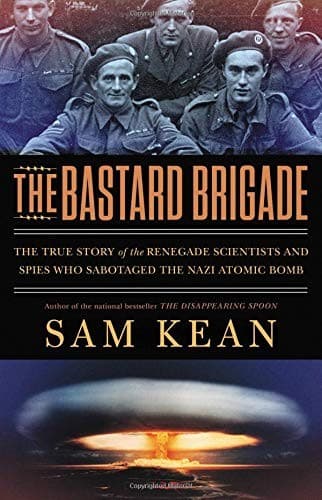
The Bastard Brigade
by Sam Kean
A narrative history of Jewish fighters who resisted Nazi Germany, from a writer known for making complicated stories vivid and readable.
What It's About
The Bastard Brigade presents itself as a narrative history of Jewish men and women who fought back against Nazi Germany rather than accepting passivity as their only story. That subject often gets less space than accounts of persecution, so the book's main value is in widening the picture. Sam Kean is best known for popular science books that use anecdote to explain how things work, and this book carries that habit into the wartime past. It moves between individuals and larger events, keeping people at the center rather than strategy alone.
Reading it is likely to feel like following a set of linked personal stories while the larger shape of the war comes into view. Expect short scenes, concrete detail, and a pace suited to general readers. Because the emphasis falls on individual lives, the book works better as a human account than as a systematic study of military operations or resistance movements as a whole.
Treat this page as a guide to the book's scope and style rather than a verdict on every detail. This page is written with limited certainty about specific passages, so check names, dates, and claims against the text or other sources before relying on them for research. Readers who already know the period well may find the coverage broad rather than deep.
Read this if you…
- are interested in World War II resistance stories told through individual people
- enjoy narrative history written in the style of popular science writing
- want an accessible entry point into Jewish resistance during the Holocaust era
Skip it if you…
- need a rigorous academic account with full citations and historiographical debate
- already know this period in depth and want new archival research
Key Ideas
- 1
Resistance beyond victimhood
The book's core interest is in Jewish people who fought back as soldiers, partisans, or saboteurs, pushing against a common picture of helplessness. Reading it, you get a sense of how varied those forms of resistance were, from organized units to small independent groups, and how hard they were to sustain under occupation.
- 2
Individual lives as a window on war
Kean uses personal stories to carry the reader through large events. Rather than summarizing campaigns, the book follows people whose choices and risks make the broader history feel immediate. Expect to care about particular individuals, which is the book's main strength for general readers.
- 3
Popular science storytelling applied to history
Kean's clear, anecdotal style, shaped by his earlier books on science and chemistry, turns dense material into accessible chapters. Explanations tend to be concrete and paced for a lay audience. Readers who want exhaustive sourcing or scholarly debate should expect something lighter than an academic monograph.
- 4
Courage without tidy heroism
A good history of resistance should show the gap between heroic myth and messier reality, including fear, scarcity, betrayal, and moral compromise. Watch how the book handles that tension, since it determines whether the fighters come across as people or as symbols.
Limitations
Because this page relies on limited detailed knowledge of the text, it cannot confirm how thoroughly each group, campaign, or region is covered. Popular narrative histories often compress complicated political and military context, and some readers may want more on the wider Jewish resistance across occupied Europe or what happened to fighters afterward. Specialists may also expect more sourcing than a general-audience book typically offers. These are common trade-offs for the genre rather than necessarily flaws.
Questions Readers Ask
- Is this a good starting point for learning about Jewish resistance in World War II?
- Probably yes, since it is written for general readers and organized around individual stories. It offers a human entry point but is not a survey of the whole field. After reading, consider a broader survey or a specialist work on partisan movements and uprisings to fill in the wider context.
- How does it compare with Kean's science books?
- Kean's earlier books, such as The Disappearing Spoon, are known for linking science to surprising, memorable stories. This history shares that storytelling instinct, so readers who enjoyed his prose will likely find the tone familiar, even though the subject is human conflict and moral choice rather than the periodic table.
- Is the book still relevant?
- Yes. Questions about how people respond to persecution remain central to historical and civic discussion, and accessible narratives like this one continue to introduce readers to episodes that are often overshadowed by the story of victimhood and by more familiar accounts of the war.
- Published
- 2019
- ISBN
- 9781529374872
- Difficulty
- beginner
- Category
- History
Book details and cover from Google Books.
Ready to read The Bastard Brigade?
Get your copy on Amazon, or listen to it on Audible. We earn a commission if you buy through these links.