
We earn a commission if you buy through these links. Learn more
Thank you, Mr. Falker
Guide by the Books of the Day editors · Updated · How we write our guides
A short, tender picture book about a bright girl who hides her struggle to read, and the one teacher who notices. It is useful for children, parents, and teachers alike.
What Creators Say About Thank you, Mr. Falker
2 creators reviewed Thank you, Mr. Falker on YouTube between 2015 and 2020, with 47.1K views between them. Their opinions are their own; we picked these reviews, we didn't write them.
What It's About
Thank you, Mr. Falker is a picture book about Trisha, a girl who cannot make the letters on the page make sense, even though she is funny, observant, and loves the stories adults read aloud to her. The book follows the years she spends hiding that struggle, pretending she is fine, and the shame that builds when classmates start to notice.
Patricia Polacco based the story on her own childhood experience with dyslexia, and that personal origin gives it its weight. The text is short and direct, easy to read aloud, while the illustrations carry much of the emotion through expressive faces and scenes that show what the words leave unsaid.
The reading experience is brief, quiet, and moving. It takes about as long as a single sitting, but adults often find it lands harder than expected, especially if they remember feeling behind at school. The focus is less on reading instruction than on the relationship between a child and the adult who sees what is happening and refuses to give up on her.
Read this if you…
- are a parent, teacher, or caregiver of a child who finds reading hard
- want a picture book about dyslexia that feels personal rather than clinical
- remember feeling behind at school and want a story that takes that feeling seriously
Skip it if you…
- want a practical guide to teaching reading or identifying dyslexia
- are looking for a picture book with a complex plot or sustained literary challenge
Key Ideas
- 1
Hiding a learning difficulty out of shame
The book shows how a capable child can build an elaborate cover story to avoid being seen as slow. Trisha's pretending is presented with sympathy, not judgment, and it helps readers understand why struggling students often seem fine on the surface while quietly falling further behind.
- 2
One attentive adult can change everything
The turning point depends on a teacher who pays close attention rather than labeling a child as a problem. The story argues that patience, individual notice, and a willingness to try something different matter more than any single method or formal intervention.
- 3
Struggling to read is not a measure of intelligence
Trisha is clearly intelligent, creative, and attuned to the world around her, which makes her difficulty more confusing to the people around her. The book quietly challenges the idea that a child who cannot read yet is lazy or unintelligent.
- 4
Family support as a quiet safety net
Trisha's home life provides comfort and reassurance that the school environment does not. The book suggests that a child's sense of self can survive difficult classroom years when someone at home believes in them, and this theme gives adult readers a useful lens.
- 5
Illustration carrying the emotional weight
Polacco's soft, warm artwork does much of the storytelling, showing Trisha's isolation and relief through posture, expression, and setting. Reading the pictures closely adds a layer that the sparse text leaves open, which rewards a second or third reading.
Limitations
The book is one child's story, told warmly and with a clear emotional arc, so it does not represent the wide range of experiences people have with dyslexia. Its portrayal of the teacher is idealized, and the path to progress is simpler than it usually is in real classrooms. Some details of the school setting feel dated to modern readers. It is not a source of information about dyslexia, and anyone seeking that should look to specialist resources alongside it.
Questions Readers Ask
- Who is Thank you, Mr. Falker best for?
- It is best for children roughly five to nine, read aloud by an adult, and for parents and teachers who want to talk with a child about reading struggles. Older readers and adults often connect with it deeply too, especially those who remember difficult school years. It works well as a conversation starter rather than a lesson.
- Is the book still relevant today?
- Yes. Its core message about shame, hidden difficulty, and the value of an attentive teacher remains widely recognized in discussions of learning differences. Some classroom details reflect an older era, but the emotional truth of the story has not dated, and it is still widely used in schools and libraries.
- How does it compare to informational books about dyslexia?
- Informational books explain how reading difficulties work and what helps. This book does something different: it lets a child reader feel what it is like to hide a struggle and be seen. Many families use both, with the picture book opening the emotional conversation and an informational resource supplying practical detail.
- Published
- 1998
- ISBN
- 9781930332034
- Difficulty
- beginner
- Category
- Fiction
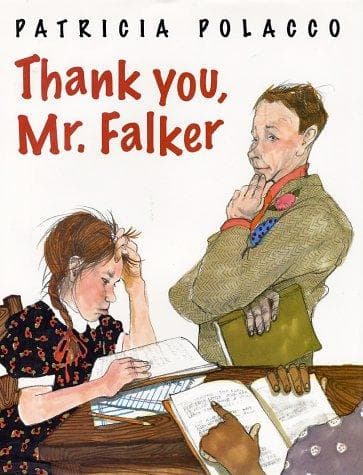
Book details and cover from Google Books.
Ready to read Thank you, Mr. Falker?
Get your copy on Amazon, or listen to it on Audible. We earn a commission if you buy through these links.