
We earn a commission if you buy through these links. Learn more
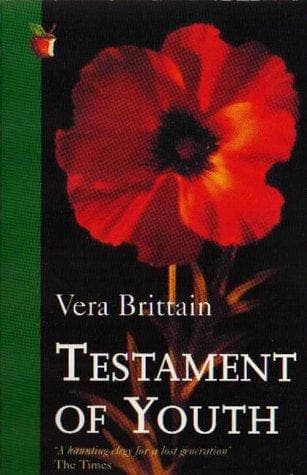
Testament of youth
Vera Brittain's memoir of Oxford, wartime nursing, and grief is one of the most honest first-person accounts of the First World War from a civilian's view.
What It's About
Testament of Youth is Vera Brittain's memoir of her life from roughly 1900 to the mid-1920s, centred on the First World War. She grew up in a provincial English family, and the early chapters catch the stifling but hopeful atmosphere of an education she had to fight hard to get, including a place at Oxford at a time when many people still doubted that women should attend university.
The war then takes over. Brittain leaves her studies to train and work as a volunteer nurse, and much of the book concerns what she saw in hospitals in England and abroad. Alongside this runs the story of the men she loved and the friends she made at Oxford, several of whom were killed. Brittain built the book from her diaries and letters, so many feelings have the rawness of things written at the time, while the prose has the formal, deliberate cadence of a writer who knew she was making a record.
Reading it is an emotional experience rather than a brisk one. It moves slowly through long stretches of waiting and mourning, and it is openly partisan about the futility of the war, which gives it urgency. You come away with a close sense of one intelligent young woman's inner life during a catastrophe, more than a tidy account of events.
Read this if you…
- are interested in the First World War from a civilian or nursing perspective
- want a first-person account of a young woman's education and ambitions in early twentieth-century Britain
- can handle slow, grief-heavy reading and want to see how personal loss shapes political conviction
Skip it if you…
- want a military history with battle maps and strategic analysis
- need fast-paced narrative or prefer memoirs that are light on sorrow
Key Ideas
- 1
Ambition against the grain of its time
Brittain's determination to go to university drives the early chapters. The book shows how family expectations, class, and a provincial upbringing pushed against her plans, and why her eventual place at Oxford felt like a hard-won victory rather than a given.
- 2
Nursing as a view from behind the lines
Her work as a volunteer nurse places her among the wounded and dying rather than at the front in a strategic sense. The hospital passages are plain and unsentimental, and they show how the war's costs were absorbed by ordinary people far from the battlefield, a perspective many war memoirs lack.
- 3
Private grief as a public argument
The deaths of people close to her are the emotional core. Brittain does not present her pacifism as an abstract creed reached calmly; she shows it forming through repeated loss, and the anger in the later chapters comes from that accumulation as much as from political argument.
- 4
Memory shaped by diaries and hindsight
She drew on diaries and letters written during the years described, and she often lets her younger self speak with the certainties and blind spots of the time. The older narrator is still selecting and framing, which makes the book both intimate and constructed.
Limitations
The book is long and can feel repetitive in its grief, with the emotional register staying high for stretches. Its social perspective is that of a comfortable middle-class family, and some readers find the early chapters slow or self-regarding. Brittain's later political views, including her pacifism and some of her judgments, are openly argued, so the book is not neutral history. It covers her life only up to the mid-1920s; the rest of her story appears in later volumes.
Questions Readers Ask
- Is Testament of Youth still worth reading as history?
- Yes, especially as a source for how civilians and volunteer nurses experienced the war. It is a memoir rather than a neutral history, so treat its claims as one witness's account and read it alongside other sources. Its emotional honesty about grief remains its strongest quality.
- How does it compare to Robert Graves's Goodbye to All That?
- Graves writes about the war as a combat officer, with dry, sardonic wit. Brittain writes as a nurse and a grieving woman with a more openly emotional voice. Graves is faster and funnier; Brittain is slower and more searching about loss and what the war meant to those left behind.
- Published
- 1933
- ISBN
- 9780872236721
- Difficulty
- intermediate
- Category
- Biographies
Book details and cover from Google Books.
Ready to read Testament of youth?
Get your copy on Amazon, or listen to it on Audible. We earn a commission if you buy through these links.