
We earn a commission if you buy through these links. Learn more
Tell No One
by Harlan Coben
A pediatrician haunted by his wife's murder gets a message suggesting she might still be alive, in a fast, witty thriller that runs on grief as much as suspense.
What It's About
Tell No One follows David Beck, a New Jersey pediatrician whose wife, Elizabeth, was murdered eight years before the story opens. The case was never solved, and Beck has spent those years living inside that loss, his grief settled into a stubborn routine. Then two bodies turn up near the scene of the old crime, and an anonymous message arrives that appears to come from Elizabeth. The premise is simple, but Coben builds momentum by pulling Beck into a situation where he is watching for danger while trying to work out who is watching him, and why.
Coben's style is what carries the book. Chapters are short and often end on a hook, the prose is brisk and conversational, and the humor is dry rather than gag-driven. The plot moves through a chain of revelations that keep reframing what the reader knows, and much of the pleasure lies in watching the pieces fit together. Expect a page-turner in which the surprises arrive steadily rather than all at once.
The experience is less cerebral than emotional. Beck is a sympathetic, slightly wry protagonist whose grief gives the chase its weight, and the book keeps asking how well anyone knows the people they love. It reads quickly, often in a few sittings, and it is best approached as a propulsive escape with a real heart rather than a puzzle to solve on your own.
Read this if you…
- enjoy fast, plot-driven thrillers where momentum matters more than atmosphere
- want a mystery with emotional stakes and a sympathetic everyman at the center
- like short chapters and a steady stream of reversals you can finish in a weekend
Skip it if you…
- want slow, atmospheric crime fiction with a dense cast and detailed police procedure
- find coincidence or twists built on withheld information hard to forgive
Key Ideas
- 1
Grief as the engine of the plot
Beck's loss is not decoration. It shapes how he reads every clue, why he is willing to take risks, and what he is prepared to believe. Because the emotional stakes are personal, the chase carries weight beyond the mechanics of the puzzle, and the story feels driven by a need rather than a plot device.
- 2
Reversals that reframe what came before
Coben's central method is repeatedly shifting the reader's understanding so that earlier scenes take on new meaning. The pleasure comes from the sense that the pieces were there all along. The book rewards attention, but it does not require you to solve it before the characters do, which keeps the reading accessible.
- 3
How well we know the people we love
The novel asks how easily a life can be rearranged by a single doubt. Beck's marriage, which he thought he understood, becomes a question rather than a settled memory. This theme gives the thriller a quieter undercurrent, suggesting that intimacy can hide as much as it reveals.
- 4
Dry humor as a counterweight to dread
Coben uses wit and quick, conversational exchanges to keep a dark story from feeling oppressive. The lightness is not frivolous. It makes the sudden turns land harder, because the reader has been lulled into a rhythm that the plot then breaks.
Limitations
Coben's style is deliberately high-velocity, and some readers find the twists stretched or the coincidences convenient. Characters can feel more like instruments of the plot than fully drawn people, and the snappy banter may seem formulaic to readers who know his later books. The novel is also less interested in social texture than in the mechanics of the chase. Reading it now, the thriller devices feel familiar, since many books in the genre have borrowed them since.
Questions Readers Ask
- Is Tell No One a good starting point for Harlan Coben?
- Yes. It works well as a standalone and does not depend on his other series. It shows his usual strengths: quick pacing, a wry narrator, and a plot built on reversals. Readers who enjoy it can move on to his other standalone novels afterward, and the style will feel familiar.
- How does the book compare to the French film adaptation?
- A 2006 French film, Ne le dis à personne, adapted the novel. Film versions must compress subplots and shift emphasis, so the book gives more room to Beck's interior life and to secondary characters. If you have seen the film, reading the novel will still offer more texture and background than the adaptation could fit.
- Is Tell No One still worth reading today?
- Mostly, yes. Its core pleasures are propulsion and emotional stakes, which do not age. Some technology and communication details reflect its era, and the thriller devices may feel familiar to readers who have read widely in the genre since its publication. Those who come to it for the pacing will find it holds up well.
- Published
- 2000
- ISBN
- 9781409117025
- Difficulty
- beginner
- Category
- Mystery & Thriller
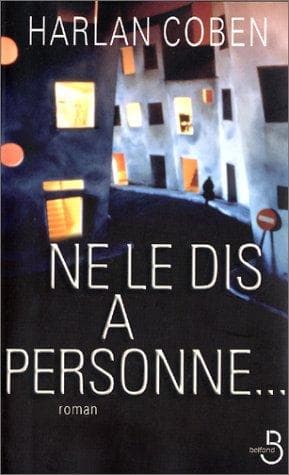
Book details and cover from Google Books.
Ready to read Tell No One?
Get your copy on Amazon, or listen to it on Audible. We earn a commission if you buy through these links.