
We earn a commission if you buy through these links. Learn more
Tarzan of the Apes
A foundling raised by apes in the African jungle, Tarzan is a pulp adventure that still moves quickly, with a wild hero whose outsider status drives the story.
What It's About
Tarzan of the Apes is the 1912 novel that launched Edgar Rice Burroughs's long-running jungle series. It begins with a couple stranded on the African coast, then follows the boy who survives them, growing up among a tribe of great apes and learning to hunt, climb, and survive on instinct alone. Burroughs wrote it for magazine readers, and the book is built the way serial fiction is built: short scenes, constant danger, and chapters that end on a hook.
The writing is brisk and deliberately uncomplicated. Burroughs spends little time on interiority and much more on action, tracking, and the physical details of jungle life. The hero works more as a force of nature than as a character with a psychological arc, and the prose rarely slows for reflection. Some stretches feel like pure adventure machinery, and the plot leans on coincidence. Still, the momentum carries the book, and the sense of a self-taught person finding his way toward a larger world gives the later sections a different texture from the early ones.
Reading it now is less like reading a literary classic and more like sitting down with a fast, old-fashioned serial. Expect a short, quick read that rewards fans of adventure fiction and of the idea of a civilized mind meeting raw nature. Expect also the assumptions of its era, which shape how the book portrays Africans and frames its hero's superiority. Readers should weigh those before deciding how much to invest.
Read this if you…
- enjoy classic pulp adventure and want to see where the jungle-hero genre began
- want a quick, uncomplicated read with strong forward momentum
- are curious how early twentieth-century popular fiction imagined wild nature and civilization
Skip it if you…
- need complex characterization or literary prose
- are uncomfortable with the racial assumptions of 1910s popular fiction and would rather not read them critically
Key Ideas
- 1
Nature versus nurture as an adventure premise
The book's central experiment asks what a human becomes without human company. Tarzan's animal-like skills are presented as evidence of raw human capacity, and the story tests how much of a person is inherited and how much is learned through the body and the senses. It is a simple idea handled with a strong sense of physical detail.
- 2
An outsider who belongs to neither world
The hero is at home neither in the jungle nor in polite society. Burroughs uses that tension to ask what civilization adds and what it takes away. Instinct and manners pull against each other, and the reader sees both worlds through someone who is only partly fluent in either.
- 3
Serial storytelling built on momentum
Scenes are short, the stakes reset quickly, and reflection is kept to a minimum. This structure explains why the book reads so fast and why it can feel repetitive to modern readers. Its pacing is the main reason it has lasted, even as its plotting looks rough by today's standards.
- 4
Colonial attitudes shaping the adventure
The novel reflects the racial and imperial views common in popular fiction of its time. Africans appear through stereotypes, and the hero's natural authority is assumed rather than examined. Reading it well means seeing those assumptions clearly, both as history and as a limit on what the story can say.
Limitations
The most serious criticism is the book's racial and colonial outlook. Africans are portrayed through the stereotypes of its time, and the hero's natural superiority is taken for granted rather than questioned. Characterization is thin, women are mostly figures to be rescued, and the plot relies on coincidence and convenient timing. Burroughs also writes in a style that can feel repetitive and overwritten to modern readers. The book does not explore the wider African landscape or its people in any real depth.
Questions Readers Ask
- Is Tarzan of the Apes still worth reading today?
- Yes, mainly as a fast adventure and as the origin point of the jungle-hero genre. Its plotting is dated, and its attitudes toward Africans and empire need to be read critically. If you want the original myth in its earliest form, it is short and engaging. If you want a modern novel of ideas, look elsewhere.
- How does it compare to Kipling's The Jungle Book?
- Kipling's stories are fable-like, animal-centered, and rich in language, with a strong moral and poetic sensibility. Burroughs is more direct and action-driven, focused on a single hero's physical survival and rescue plots. Readers who enjoy Kipling's animal world may find Burroughs faster but thinner, and more openly dated in its views of race.
- Published
- 1912
- ISBN
- 9781656635716
- Difficulty
- beginner
- Category
- Fiction
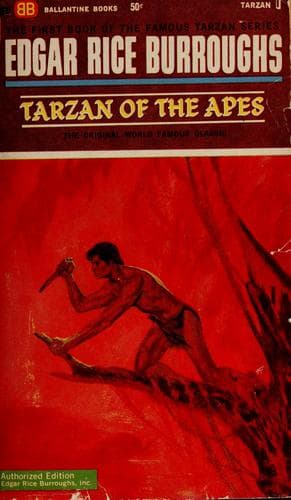
Book details and cover from Google Books.
Ready to read Tarzan of the Apes?
Get your copy on Amazon, or listen to it on Audible. We earn a commission if you buy through these links.