
We earn a commission if you buy through these links. Learn more
Sula
Guide by the Books of the Day editors · Updated · How we write our guides
A compact, unsettling novel about a childhood friendship, loyalty, and the pull of a close-knit Black community, told in a voice that speaks for the whole town.
What Creators Say About Sula
2 creators reviewed Sula on YouTube between 2022 and 2024, with 19.6K views between them. Their opinions are their own; we picked these reviews, we didn't write them.
What It's About
Sula is a short, dense novel about two Black girls who grow up in Medallion, a small Ohio town, in a neighborhood its residents call the Bottom. Nel Wright and Sula Peace become close friends in childhood, bound by a shared sense of being outsiders in their own community. Their paths split as they grow into women, and the novel follows the friendship, the families around them, and the town across several decades, from the years before the First World War into the 1960s.
Morrison does not tell this story in a straight line. She moves forward and back, sometimes stepping ahead to announce what will happen, and she writes with a communal narrator who speaks for the town as a whole, gossiping and judging as much as observing. The sentences are rich and rhythmic, full of folk speech, rumor, and sudden lyrical turns. Reading it feels less like following a plot than like listening to a neighborhood talk about itself.
The book is slim, but it asks a lot of its reader. Characters' motives are rarely stated outright, and the moral weight of the friendship is left for you to sift. The experience is unsettling and rewarding in equal measure, especially if you like fiction that trusts you to hold contradictions.
Read this if you…
- you enjoy novels where the prose and voice matter as much as the plot
- you want a close look at friendship's complicated loyalties and rivalries
- you don't mind working out meaning from indirect, nonlinear storytelling
Skip it if you…
- you want a fast, linear plot with clear heroes and villains
- you prefer uplifting books without much darkness or violence
Key Ideas
- 1
Friendship as love and rivalry
The bond between Nel and Sula is intense, possessive, and formative. Neither woman is simply the good one or the bad one, and the novel resists turning their history into a morality tale. Much of the book's tension comes from watching two people shape each other while wanting different things from life.
- 2
The town as narrator and judge
The collective voice of the community gossips, remembers, and passes judgment, and it shapes how people's reputations form and last. Morrison uses this chorus to show how a neighborhood can be both a source of protection and a place of cruel scrutiny. It also gives the story a sense of history that no single character could provide.
- 3
Freedom weighed against belonging
Sula rejects the expected roles of marriage and motherhood, and the book asks what that independence costs her and the people around her. The novel does not offer a clean verdict. Instead it shows how personal liberty and the need for community can pull against each other.
- 4
Memory that will not stay in the past
The nonlinear structure lets earlier events keep intruding on the present, so the reader feels how the past continues to govern the characters. Time loops back, and small moments gain weight as the story goes on. This makes the book feel less like a sequence of events and more like a remembered place.
- 5
Community life under segregation and hardship
The Bottom is shown with its own dignity, humor, and rules, even as the wider world of racism, economic strain, and war presses in from outside. Morrison portrays a Black community without reducing it to victimhood, which is one of the book's most striking achievements.
Limitations
The nonlinear structure and the shifting, communal narrator can frustrate readers who want a steady line of cause and effect. The plot is thin compared with the emotional and social texture, so some people find it slow. Its portrayal of death, violence, and bleak choices is unsparing, and a few readers feel the characters are more symbolic than fully rounded. The novel also looks at a particular place and era, so it does not offer a broad panorama of Black life in America.
Questions Readers Ask
- Is Sula hard to read?
- The sentences are lyrical and the timeline jumps around, so it takes more attention than a typical contemporary novel. It is short, though, and most readers who settle into its rhythm find it absorbing. Reading slowly and paying attention to the narrator's voice helps a great deal.
- How does Sula compare to Beloved?
- Sula is smaller in scope and more intimate, focused on two women and one town. Beloved is larger, more haunting, and more demanding, and it is the book many readers reach first. If you liked Beloved's language and want something more compact, Sula is a natural next step.
- Is Sula still worth reading today?
- Yes. Its questions about friendship, independence, and the pressure a community places on people remain sharp. The book was written in the 1970s, so some attitudes and details feel of their time, but its emotional and formal concerns still hold up well.
- Published
- 1973
- ISBN
- 9781448105021
- Difficulty
- intermediate
- Category
- Fiction
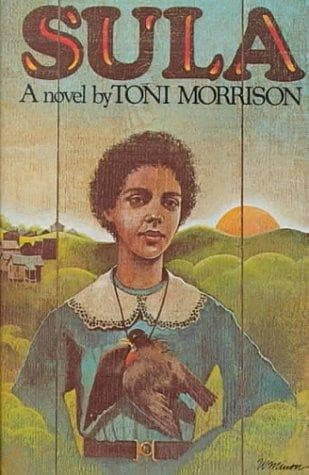
Book details and cover from Google Books.
Ready to read Sula?
Get your copy on Amazon, or listen to it on Audible. We earn a commission if you buy through these links.